The belly button piercing has long outgrown its reputation as a fleeting craze. It sits at the intersection of self-expression, craftsmanship and bodily awareness. At its simplest, a navel piercing passes a needle through the tissue around the umbilicus to hold jewellery. In practice, the process starts with anatomy, not metal. The contour of your navel, how the skin folds when you sit, even how the area moves as you breathe, will decide whether a piercing is feasible and which style will heal cleanly. A consultation with an experienced professional is therefore the first non-negotiable step.
Standard, inverse and everything in between
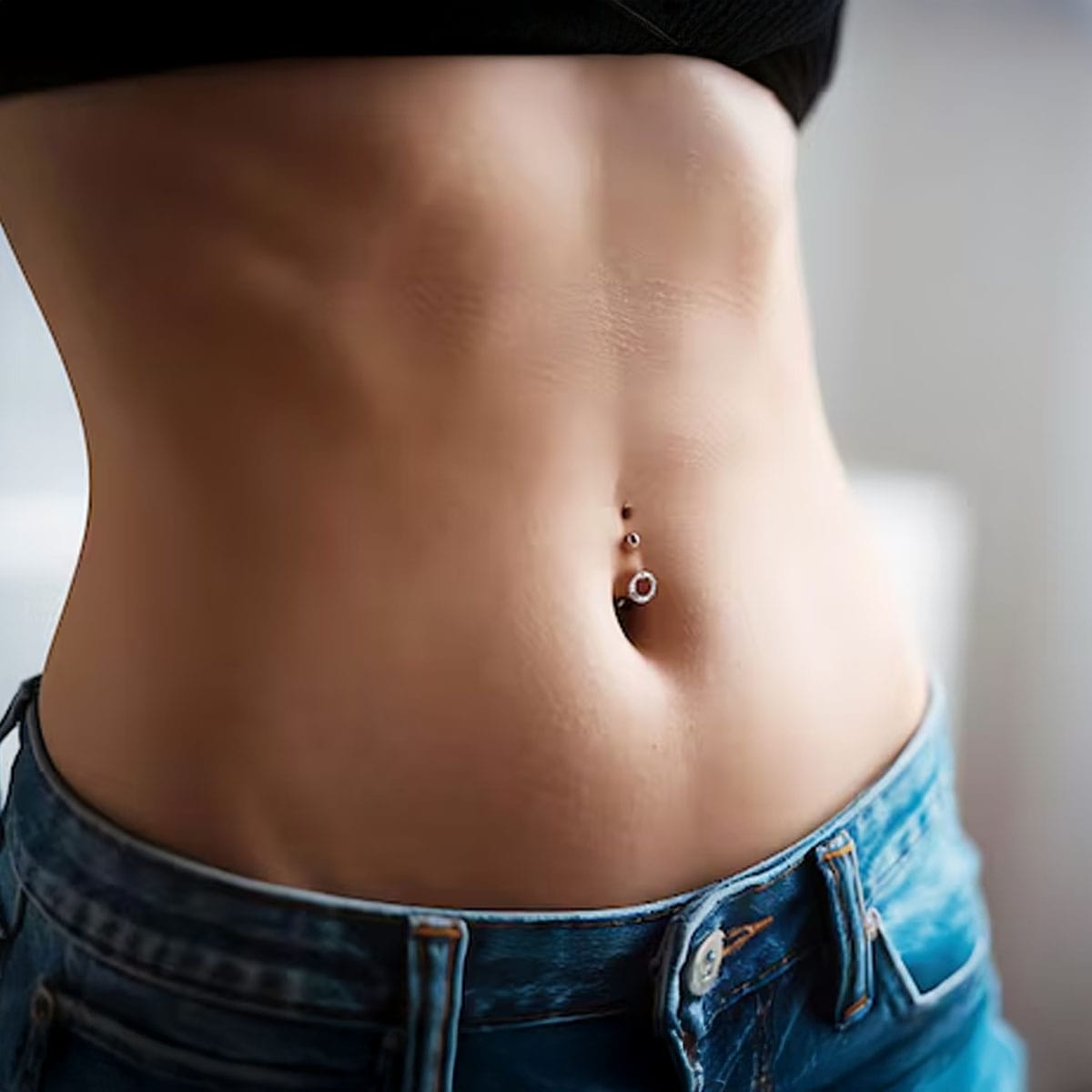
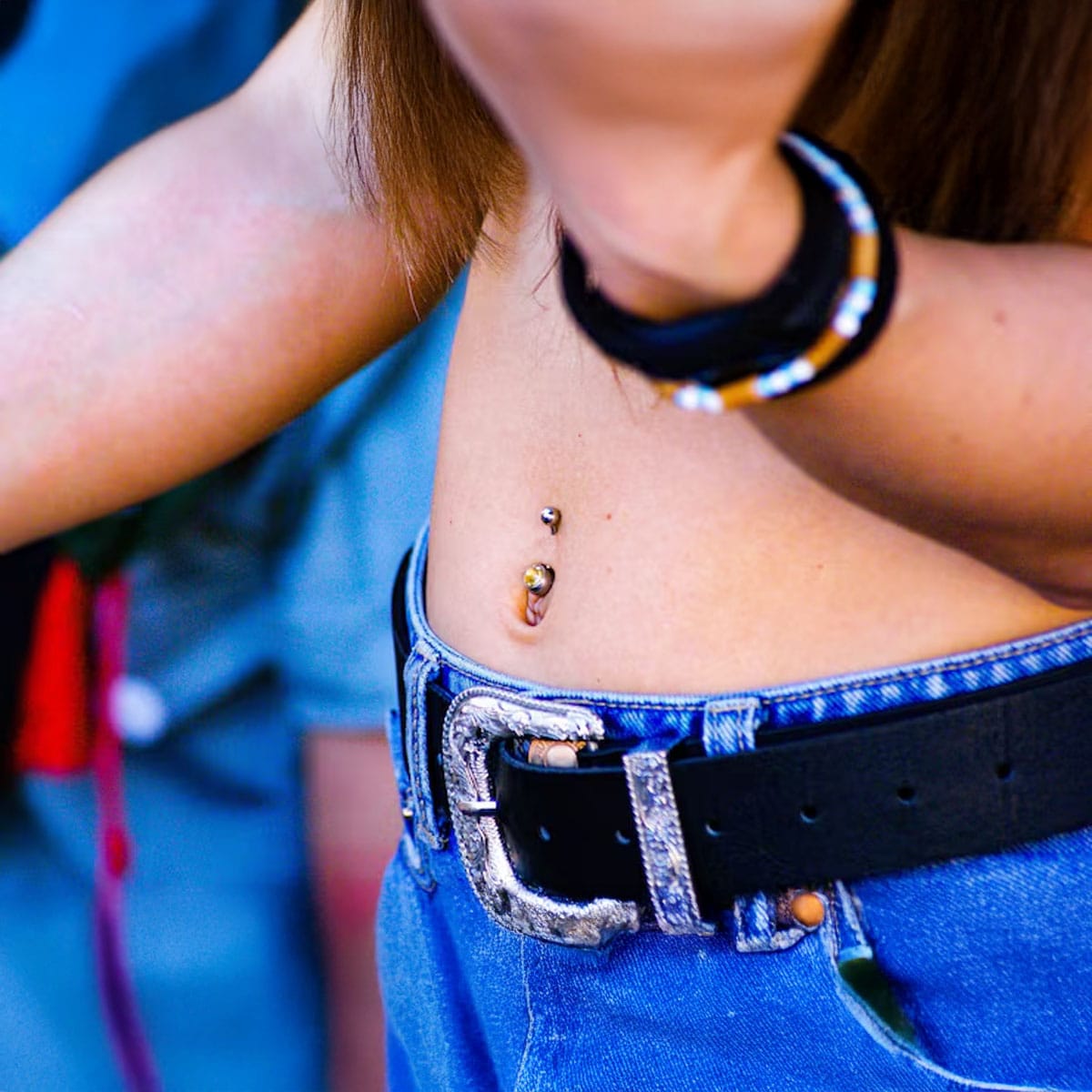
"Belly button piercing" is an umbrella term. The most familiar version is the standard navel piercing, placed through the upper rim of skin above the hollow. A curved barbell or captive bead ring sits vertically, the decorative end lying over the navel. Its popularity endures because it flatters most bodies and accommodates many jewellery designs.
The inverse navel piercing (often called a lower or bottom piercing) passes through the lower rim beneath the navel. It suits people with a pronounced lower fold or anyone who prefers to upend convention.
Some opt for more complex arrangements. A double navel piercing pairs upper and lower placements for a stacked effect, sometimes linked by an elaborate piece. Horizontal surface piercings across the navel also exist. However, they are more prone to migration and rejection, and require a deft, highly skilled piercer.
Anatomy decides whether a navel piercing works for you
Unlike earlobes, navels vary widely. A successful piercing needs a clear "lip" of tissue to hold jewellery safely. Your piercer will check whether that flap is substantial enough, gauge the depth of the hollow and watch what happens when you move from standing to sitting. If the navel collapses or "winks" shut and pinches the proposed channel, healing will likely be poor.
For shallower navels or those that close on sitting, a floating navel piercing can solve the problem. The entry point mirrors a standard piercing, but the jewellery changes: a curved barbell with a small flat disc inside the navel replaces the usual lower gem. This reduces pressure and allows the fistula to mature undisturbed, creating the look of a stone "floating" on the surface. Again, this nuance highlights why the initial assessment is crucial. Technique and jewellery choice are inseparable from anatomy.
Why the piercing keeps its grip on culture
Among women, it remains second only to earlobes in prevalence, a testament to its power as a tool of positive self-image. Research published in Psychological Science reported that navel piercings can enhance people's perception of their own bodies. Many wearers describe a lift in confidence, a sense of autonomy and an appreciation of their own form.
A story told by subculture, fashion and folklore
The modern navel piercing traces back to the 1970s and 1980s, when Western subcultures used body modification to mark identity and resist conservative norms. Its breakthrough moment came in 1993 when Christy Turlington and Naomi Campbell stepped onto a London catwalk with their navels pierced. Madonna's endorsement and a memorable Aerosmith video helped popularise the look in global pop culture. Throughout the late 1990s and early 2000s, it became emblematic of the Y2K style, worn by Britney Spears and Christina Aguilera.
Today, the cycle has spun again. With Y2K aesthetics back in vogue, figures such as Tyla, Ice Spice and Kim Kardashian have reignited interest. The piercing now reads as timeless rather than transient, reshaped by each generation.
Unpicking the Egyptian myth
A seductive origin story claims that pharaohs alone wore navel rings in ancient Egypt. It is fiction. Doug Malloy, a key figure in the US piercing scene of the late 1970s, fabricated this and other histories to add romance to the craft, a tale later echoed by colleague Jim Ward. Archaeology shows Egyptians pierced ears and tattooed skin, especially women, but no credible evidence supports navel piercing in that civilisation.
Symbolism that predates the piercing
Even if the piercing itself is a modern trend, the navel has held deep meaning across cultures. In Hindu and Buddhist thought, the Manipura chakra at the navel represents personal power and self-esteem. Hindu cosmology describes a lotus growing from Vishnu's navel, which gives birth to Brahma, the creator of the world. In Japan, the heso is seen as a centre of life and warmth, something to protect. Choosing to adorn the navel now taps into that long tradition. For many wearers, it is an act of reclaiming and celebrating femininity and agency.
Inside a professional appointment
A good studio treats the procedure as a collaboration grounded in hygiene.
Consultation and prep: Your piercer assesses anatomy, discusses placement and cleans the area with medical-grade antiseptic while wearing fresh gloves.
Marking: They use a sterile surgical marker to dot entry and exit points. You check in a mirror, standing and sitting, until you are satisfied.
Piercing: Sterile tools emerge from autoclaved packaging in front of you. Forceps may hold the tissue steady. You inhale, then exhale as a single-use hollow needle passes through in one smooth motion.
Jewellery insertion: A sterile curved barbell, typically 7/16 inch (about 11 mm), is fitted immediately to allow for swelling.
Final clean and aftercare briefing: You leave with written and verbal care instructions. The entire visit is efficient but meticulous.
Pain, honestly described
On a 1 to 10 subjective scale, most place the sensation between 3 and 5. It feels like a sharp pinch, similar to a flu jab. The navel rim is fleshy and less innervated than cartilage. Discomfort may persist for a few days afterwards. Skill matters: a confident practitioner shortens the unpleasant part.
Tools, sterilisation and what to refuse
Safety lives in the details. Only brand-new, single-use, hollow needles should touch you. Piercing guns are wrong for navels because they bluntly force jewellery through tissue, causing trauma and poor placement.
Anything that comes into contact with your skin must be sterilised in an autoclave and opened in front of you. Gloves are changed if they touch a non-sterile surface. Following these steps ensures that hygiene is taken seriously.
Healing is the long game
The outer skin may look calm for weeks, yet the fistula inside needs time. Expect 6 to 12 months, sometimes longer, for full maturation. Impatience is the principal enemy. Early jewellery changes, lax cleaning or exposure to irritants can undo months of progress.
Your aftercare ritual
Consistency and gentleness are the mantra: keep it clean, dry and undisturbed.
Cleaning: Twice daily with sterile saline wound wash. If mixing your own, dissolve 1/4 teaspoon of non-iodised sea salt in 8 oz (approximately 240 ml) of warm, boiled water.
Soaking: The "shot glass" technique is most effective. Fill a clean small glass, press it against your stomach to create a seal, lie back and soak for 5 to 10 minutes to loosen discharge.
Drying: Pat dry with a disposable paper towel or non-woven gauze. Avoid fabric towels, which harbour bacteria and snag.
Hands off: Never twist or play with the jewellery. Touch only when cleaning, and only with freshly washed hands.
Clothing and activities: Loose, breathable garments prevent friction. Strictly avoid swimming pools, hot tubs, lakes, rivers or the sea until fully healed.
The essential aftercare routine
Do
- Clean twice daily with sterile saline
- Soak for 5 to 10 minutes each time
- Pat completely dry with a disposable paper towel
- Wear loose, breathable clothing
- Wash your hands thoroughly before any contact
Don't
- Use rubbing alcohol, hydrogen peroxide or antibacterial soap on the wound
- Apply ointments, creams or oils that trap bacteria
- Twist or rotate the jewellery
- Swim in pools, hot tubs or natural water before full healing
- Change the initial jewellery before 6 to 12 months
Spotting problems early
Infection: Early healing typically involves mild redness, swelling, and clear discharge. Infection signals escalate: intense pain, burning, bright redness or streaks, warmth, fever or thick yellow or green pus with odour.
Rejection or migration: If the entry and exit sites move closer, exposing more bar than you started with, the body may be pushing it out. Soreness, itchiness, and thinning, shiny skin are other signs. Causes include poor placement, trauma or cheap metals.
Keloid scarring: A keloid overgrows the original wound, appearing months later as a firm, smooth, often darker mass. Genetics play a role, with a higher risk in those with darker skin tones or a family history.
When to seek help
Suspect rejection or migration? See your piercer promptly. Often, removal is needed to minimise scarring.
See a doctor for clear signs of infection. Do not remove the jewellery yourself, since closing the surface can trap pus and form an abscess.
Fun fact: The first widely reported catwalk flash of a navel piercing happened in London in 1993 when Christy Turlington and Naomi Campbell reportedly revealed theirs, turning a subculture signal into a global headline.
Jewellery materials that respect your body
What sits in your piercing lives against healing or healed tissue all day. Quality metals matter.
- Implant grade titanium (ASTM F 136): Lightweight, corrosion resistant, nickel-free and highly inert. The professional default for new piercings and for anyone with sensitivities.
- 14k or 18k solid gold: Yellow, white or rose, provided it is nickel free. Durable, tarnish-resistant and luxurious once healing is complete.
- Niobium: Another hypoallergenic elemental metal, ideal for those with pronounced metal allergies.
- Surgical steel (316LVM): Common and affordable but contains trace nickel. Many people tolerate it, but it can irritate sensitive wearers and is not recommended for new piercings.
- Sterling silver (.925): Beautiful in necklaces, problematic in piercings. It tarnishes in contact with fluids, potentially staining the channel black.
- Plated metals: Coatings chip, revealing rough, reactive base metals that trap bacteria.
- Acrylic and PTFE: Plastics are porous and degrade. PTFE can be useful temporarily in pregnancy for flexibility, but plastics are poor long-term choices.
Craftsmanship that you can feel, not just see
Material is only half the story. The engineering of a barbell affects comfort and longevity.
High-quality pieces use internal threading or threadless push-pin systems, allowing a smooth post to pass through the fistula. Externally threaded bars drag rough threads through tissue, causing micro tears and irritation.
A high polish finish reduces pores and bacterial cling. Correct sizing matters too: gauge is usually 14G for navels, with a healed length around 3/8 inch (roughly 10 mm). A custom fit prevents pressure points and excessive movement.
Form, weight and design choices
With the basics secure, design becomes play.
- Curved barbells are the everyday staple. Minimalist, fixed gem styles minimise snagging.
- Dangling jewellery adds drama with movement and length. Reserve it for special occasions once healing is complete.
- Hoops and rings, such as CBRs or seamless rings, provide a distinct silhouette in mature piercings.
- Floating navel pieces pair a top gem with a flat disc inside, essential for certain anatomies and popular with those who prefer a clean, modern look.
Bespoke work elevates the piece
Commissioning a handcrafted item allows you to select the metal, gemstones, and motifs that reflect your taste or story. A custom barbell transforms a piercing into wearable art and will outlast fast-fashion alternatives.
The first change of jewellery
The most anticipated milestone arrives months later. Timing and technique protect the fistula you have nurtured.
Knowing you are ready
Allow for complete healing, which typically takes a minimum of 6 to 12 months. You should see several weeks with zero soreness, redness, swelling, crusting or discharge. Skin tone should be even and calm, and the channel should feel stable. If unsure, ask your piercer to check.
Switching with care
Ideally, let your piercer perform the first change under sterile conditions.
If you change it yourself:
- Prep: Wash hands thoroughly. Lay out clean paper towels.
- Clean: Saline the area. Wash new jewellery in mild fragrance-free soap, rinse and dry with paper towel.
- Remove old piece: Wear disposable gloves for grip. For threaded jewellery, hold the bottom, unscrew the top counterclockwise. For threadless, pull the top straight out with a gentle wiggle. Never force a stuck bar.
- Insert new piece: A tiny amount of sterile water-based lubricant helps. Guide the bar slowly from bottom to top. Attach the end securely. If it will not glide, stop and seek help.
- Final clean: Rinse with saline again.
Common mistakes
- Rushing the change: Introduces trauma and restarts healing.
- Cheap metals: Trigger allergies even years later.
- Bad sizing or weight: Too short risks embedding. Heavy dangles catch on fabric and can tear even long after healing.
Styling the piercing within your wardrobe
A healed navel piercing can be subtle or striking.
Crop tops, low-rise jeans and swimwear naturally showcase the midriff, so brighter gemstones or delicate charms shine here. For evening wear, a flash of 14k gold or a single diamond under a silk cut out adds quiet luxury. Match your jewellery to your mood and activity: opt for simple forms on active days, and choose statement pieces for more formal settings.
Integrating with other jewellery
Think holistically. Pair metals for cohesion or mix for contrast. A gold navel bar and gold hoops read as intentional. Mixing silver and gold feels contemporary. Tattoos nearby can complement the sparkle, forming a coherent personal narrative.
Summer spotlight, winter strategy
Summer invites bare midriffs and light fabrics, yet it is the worst period for a fresh navel piercing. Swimming bans, heat, sweat and tight waistbands are hostile to healing. Autumn or winter piercings allow the most fragile phase to pass under looser clothing and cooler conditions. By the next summer, the piercing is ready for the beach and pool.
Health, life stages and legalities
Pregnancy
Do not get pierced while pregnant. Immunity is suppressed, thereby increasing the risk of infection. Most professional studios refuse to pierce in these circumstances. If you already have a fully healed piercing, you can usually keep it, though a longer, flexible PTFE bar may be needed as the abdomen grows. Metal jewellery may need to be removed for a planned Caesarean section.
Metal allergies
Nickel sensitivity is common. Symptoms include intense itching, redness and blistering. Choose implant grade titanium, niobium or certified nickel-free 14k or 18k gold. Tell your piercer about any past reactions.
Keloid risk
If you or a close relative forms keloids, proceed cautiously. These scars can appear 3 to 12 months after injury, extending beyond the original wound. Consult with a doctor or dermatologist before making a decision.
Age rules in the UK
There is no national minimum age for a navel piercing, but local councils license studios and usually set 16 as the minimum. Studios must check photographic ID, such as a passport or driving licence. Where permitted, children under 16 generally require parental consent. Piercing nipples or genitals under 16 can constitute an offence, so reputable studios are strict about policy.
Preparing for the appointment
Small choices the day before help you feel steady.
- Eat a proper meal 4 to 6 hours beforehand
- Hydrate well throughout the day
- Sleep properly the night before
- Avoid alcohol for at least 24 hours and limit caffeine
- Skip non-essential blood thinners like aspirin unless prescribed (consult your doctor)
- Wear loose clothing that will not rub the fresh piercing.
These practical steps reduce faintness, bleeding and irritation, setting you up for a smooth experience.
The emotional arc, expert guidance and what to do next
A navel piercing begins as a desire to mark your body with intention. It moves through a technical assessment, a precise procedure, months of care, and finally, the pleasure of choosing jewellery that reflects you. The science of tissue healing, the craft of metalwork and the psychology of self-image all intersect here. Approach it like any serious piece of body art: informed, patient, invested in quality.
In the end, a well-chosen, well-healed navel piercing can feel like a small star fixed at your centre. It draws the eye when you want it to, yet its true value may lie in how it changes the way you inhabit your own skin. Measure twice, pierce once, treat the healing like a long project and let your jewellery tell the story. As the saying goes, "slow and steady wins the race", only if the pace suits the body you are caring for.