
When you’re walking through Soho in the modern day, you’ll walk by everything from Japanese ramen bars to natural wine rooms and jazz clubs that have been around for decades. It’s one of the best areas for entertainment anywhere in the world today, with tons of variety.
People who enjoy online casino games these days don’t often realise the hidden gambling stories that were part of Soho’s history. This includes illegal card clubs, corrupt policemen, desperate artists, and East End gangsters.
Behind Unmarked Doors
Before online casinos and the Hippodrome were around, gamblers fulfilled an important role of gamblers. This originated as a Yiddish word and is part of London’s vocabulary thanks to the Jewish communities that settled in the East and West Ends in the early 20th century.
A Spieler was an illegal gambling club. It was often an unmarked room above a cafe or a generic door where card games would run all night, and there would be cash changing hands with no legal oversight.
Soho’s streets in the 1960s were full of spielers and speakeasy bars, strip shows. The landscape of fishmongers and greengrocers transformed at night.
The narrow streets were full of intrigue as there could be gang dens in attics or back rooms. It was a mix of vibrant entertainment, scandals and artists all living on top of each other. This is the type of environment where illegal gambling thrives. Spielers often operated three floors above restaurants and bars without the owners knowing anything about these illicit operations.
Gangsters on Gerrard Street
The gambling dens in Soho had a criminal element to them, and not just because they were illegal. Many East End gangs engaged in regular battles over who controlled the gambling dens in Soho. They competed to run tables to get a cut of the takings. Control of a profitable spieler meant that violence was inevitable to stave off up-and-comers.
An order was established after the Second World War. The Krays are well known after being portrayed in a movie. They controlled much of their operations on Gerrard Street in venues like the Hideaway Club that offered a mix of nightlife and illegal gambling.
Esmeralda’s Barn in Knightsbridge was one of the most glamorous of the Krays’ operations. Artists like Francis Bacon and Lucian Freud were obsessive gamblers and often placed there. The intersection of high culture and organised crime was commonplace in Soho at the time.
When Gambling Became Legal
Private gambling was not legal in Britain for the majority of the 20th century. All forms of gambling weren’t allowed until the formation of the Betting and Gaming Act of 1960. That means that every spieler, card game, and roulette wheel was in violation of the law.
Police usually knew about the operations where illegal gambling and alcohol flowed behind closed doors. Many police officers were bribed to turn a blind eye or to provide protection. The Betting and Gaming Act of 1960 officially came into effect in January 1961 following recommendations from the Royal Commission on Betting, Lotteries and Gaming.
The idea behind the legislation was to remove gambling from the streets and to no longer allow runners to collect money from bettors. The idea was to properly regulate the industry and eliminate the source of funding for criminals. However, this was easier said than done.
The Consequences
By allowing licensed bookmakers and casinos, the legislation led to big expansions. However, there wasn’t much regulation, which is why 1,000+ casinos quickly emerged. Many of them had inconsistencies, which led to the stricter Gaming Act of 1968.
By 1968, there were 15,000 licences issued for gambling. Criminals held onto their operations until the 1968 legislation closed many loopholes. Underground training centres of casino dealers were in place to keep tables staffed. Dealers were paid in proportion to how much money they made for the operator, which created close bonds between the staff and management.
What the 1968 Act did was tighten up regulations, which meant that the number of casinos by 1972 was just 125.

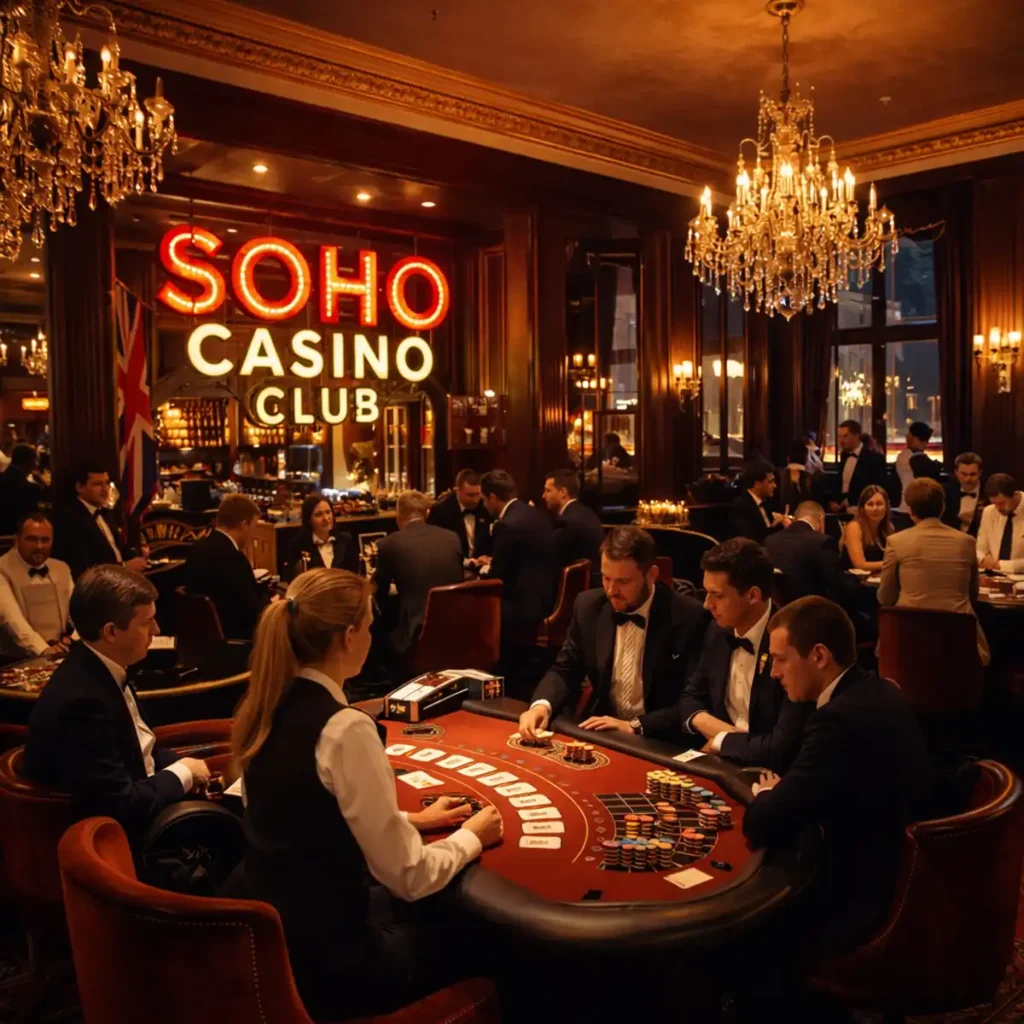
Going into the Digital Age
The demand for gambling never went away. Instead, it just flowed into whatever method was available at the time. No matter the legality, gambling has changed massively in recent decades. It’s now in the digital space, allowing players to place bets at all times of the day. Live dealer experiences make people feel like they’re actually sitting in a land-based facility.
The UK Gambling Commission is now in charge of regulating the industry. One of its key objectives is preventing gambling from being a source of crime. It’s also tasked with protecting vulnerable people from harm and ensuring that it’s always conducted in an open and fair way.
Where the illegal gambling dens of the 1940s and 1950s operated in darkness, under criminal protection and entirely without oversight, the modern UK online gambling industry is among the most heavily regulated in the world.
The Ghosts of Soho
When you walk through Soho these days, you won’t find any plaques or signs for the once-illegal gambling dens that were so prominent for decades. There’s no heritage trail leading tourists to where card games ran until dawn. Any physical traces of Spielers are now gone forever.
However, the impulse that drove people into these backrooms hasn’t gone away. It has just migrated to licensed West End casinos and modern apps that are available 24/7. Soho still remains a popular area for locals and tourists alike to visit.
There’s also the Hippodrome Casino on Leicester Square, which is only a few yards from the other boundary of Soho. It’s one of the most popular casinos in Europe, with millions of people going to it every year. It offers a mix of casino games, live entertainment and dining options.
What was once a struggling nightlife hub is now a location that serves the appetite for gamblers in central London. It shows that there’s still a strong appetite for live gaming experiences despite the convenience of online offerings.
Soho has always known what people want after dark. The neighbourhood’s genius has been its ability to provide it, legally or otherwise, in whatever form the times demanded.


