
An Invitation to Slow Down
The pavements of Soho hum with street-level jazz riffs, thundering delivery vans and drifting aromas from late-night ramen joints. Push open the discreet door at 41 Lexington Street and the noise thins to a hush. Inside Aesop Soho, polished enamel panels catch indirect light, the air is laced with geranium and bergamot, and the next few minutes unfold at half speed. The store’s calm is not an accident. It is a considered answer to the query people type each month – “best skincare shop in Soho” – and a conscious antidote to the district’s pace.
The welcome feels almost domestic: a soft greeting, an offered cup of tea, gentle questions about skin concerns rather than hurried sales prompts. Shoppers soon realise they have stepped into a place where the transaction matters less than the encounter. That switch from hustle to hush is the emotional first note of Aesop’s four-part score – Experience, Expertise, Trust and Action – all arranged for a local audience who value authenticity as much as efficacy.
Fun Fact: Before the coffee bars and creative agencies arrived, the plot that hosts Aesop once lay within Henry VIII’s royal hunting grounds. Five centuries later, visitors still “take the air” here – now flavoured with essential oils rather than wood-smoke.
Origins of a Quiet Revolution
Dennis Paphitis opened the first Aesop salon in Melbourne in 1987 after tiring of synthetic fragrances and hollow marketing boasts. His answer was simple: blend laboratory-tested actives with botanical extracts, present them with understatement, and never shout. Naming the company after the ancient Greek storyteller signalled a playful warning to an industry fond of tall tales.
Today the brand retains that restraint. Product launches are rare, arriving only when research – sometimes ten years’ worth – satisfies strict internal standards. There are no seasonal sales, no celebrity endorsements. Instead, word of mouth travels via architects, writers and frequent flyers who praise the products’ subtle scents and visible results. In a marketplace driven by repetition, Aesop chooses patience, trusting that substance will draw its own audience.
Design in Conversation with the Neighbourhood
French studio Ciguë approached the Lexington Street commission as an architectural dialogue. Their first move was to reveal the original stone shell, a reminder of the area’s craft heritage. Over this they layered white enamel sheets, each fixed with exposed bolts. Some sheets bend forward to form shelving, marrying function and sculpture in a single gesture.
Pale walls meet paint-flecked timber boards, blackened-steel frames and a central porcelain sink. The palette feels almost monastic, yet every choice carries a local reference: workshop hardware nods to the instrument makers who once traded nearby, while the enamel’s clean logic reflects Soho’s modern creative studios. Ciguë’s hand is evident but never imposing; the store reads as part of the street, not a foreign implant.
That site-specific approach repeats around the world. In Bath the interior mirrors the honey-coloured stone of Georgian façades; in Marylebone it recalls a traditional bookshop. Each space is a one-off, designed to be photographed, shared and discussed. Design media from Wallpaper to Dezeen reliably cover new Aesop openings, gifting the brand free editorial that no billboard could buy.
The Ritual of the Visit
Consultants greet guests at eye level, never from behind a till, and open a short conversation about climate, commute and complexion. Recommendations follow only after this exchange, making the process feel collaborative rather than prescriptive.
The focal point is always the sink – here a deep porcelain basin with industrial tapware. Textures are tested in the palm, fragrances released under running water. Customers often leave with hands revived by Resurrection Aromatique Hand Wash, a signature blend scented with mandarin rind and rosemary leaf. Sampling remains tactile and personal: two fragrances on opposite wrists, a pause of several hours to let top, heart and base notes unfold.
Bullet points on values are displayed beside the mirror, stated simply:
- 100 percent vegan – no honey, beeswax or lanolin
- Cruelty-free – certified by Leaping Bunny and listed by PETA
- Certified B Corporation – legally bound to balance profit with purpose
Sustainability extends to packaging. Most 500 mL bottles use at least 97 percent recycled PET, aluminium tubes are 100 percent recycled, and customers can return empties via the Rinse and Return initiative.

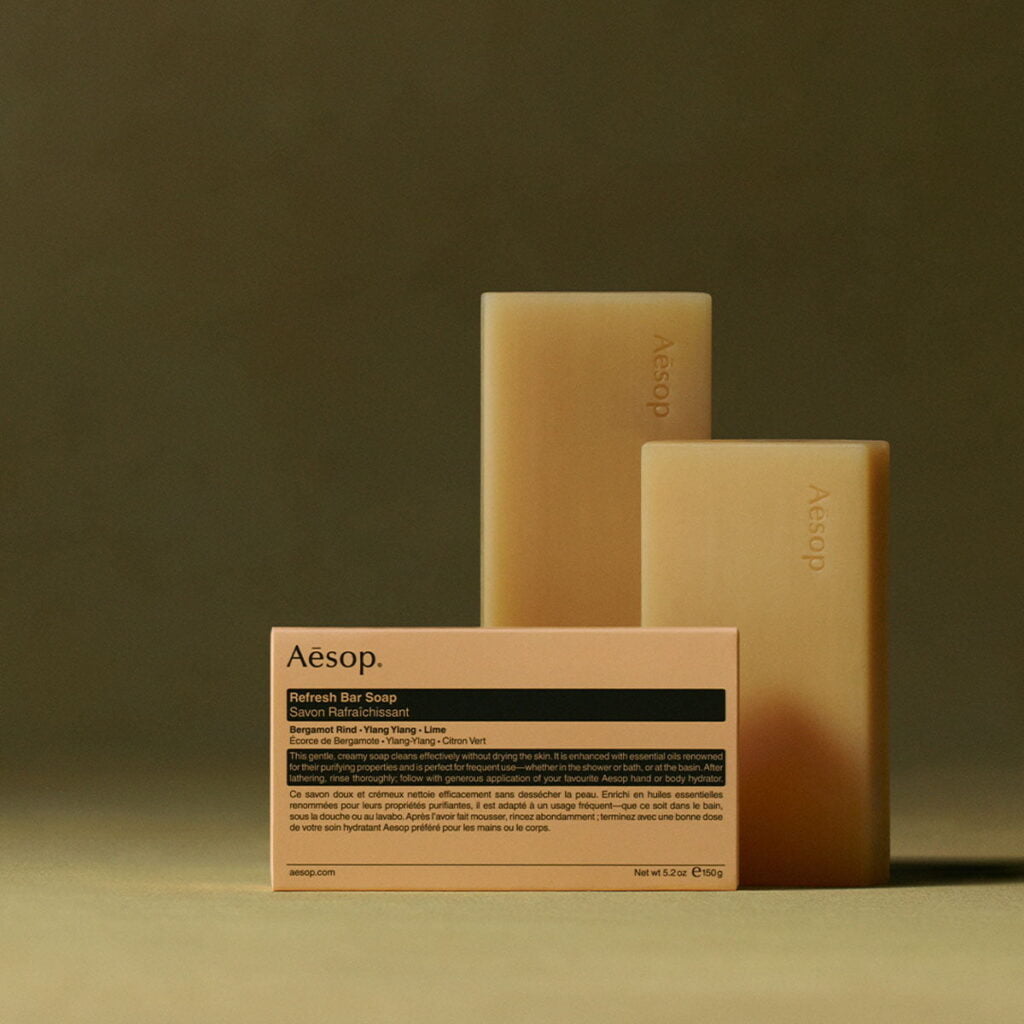
Integrity in Every Bottle
Walk through the range and a pattern emerges: antioxidant-rich parsley seed in serums, refreshing geranium leaf in body cleansers, and bergamot rind uplifting everything from shampoos to interior sprays. Each formula pairs plant extracts with synthesised molecules proven to stabilise, preserve or amplify performance. There are no gimmicks, only ingredients with peer-reviewed evidence behind them.
This balance of nature and science appeals to Londoners who navigate urban stress but value provenance. It also underpins Aesop’s decision to avoid the lightning-fast trend cycle of the wider beauty market. When a launch does appear, such as the lightweight Lucent Facial Concentrate or the smoky Miraceti Eau de Parfum, it arrives after rigorous in-house and independent testing. That measured cadence feeds trust: shoppers know the brand will not chase novelty at the cost of skin health.
Community Heartbeat in Pride Season
Each June, the Lexington Street store removes every bottle, jar and tube, then shelves hundreds of books by LGBTQIA+ authors. Visitors pick a title, free of charge, no purchase required. The Aesop Queer Library began during the pandemic when parades fell silent, evolving into a global initiative that prioritises voices often sidelined by mainstream publishing.
Curated with Gay’s The Word bookshop, the selection leans into memoir, poetry and essay genres that frame personal truth. Recent highlights include Shon Faye’s The Transgender Issue and Tourmaline’s picture-book biography Marsha. By giving away literature rather than branded merchandise, Aesop trades product visibility for cultural participation, deepening its connection with Soho’s queer heritage.
Philanthropy extends beyond Pride. Through the Aesop Foundation, the company has granted more than AUD 14 million since 2017 to groups supporting marginalised communities, and it serves as the Saatchi Gallery’s first Sensory Patron. These actions turn corporate values into visible commitments, reinforcing the trust built at the sink.
Neighbouring options underscore Aesop’s distinct character. Two streets west, Malin + Goetz sells no-frills cleansers designed for sensitive skin, while Soho Skin, developed for Soho House members, pushes a minimalist, results-led routine. Against that backdrop, Aesop registers as the intellectual elder sibling: slower, design-driven and quietly confident.
A Quiet Legacy in a Busy Quarter
Soho never sleeps, yet this shop teaches visitors to breathe, sniff, lather and listen. It proves that retail can host culture, champion ethics and still turn a healthy profit. Like a pocket park tucked between terraces, Aesop Soho offers a pocket of restoration that feels earned rather than staged.
Londoners say, “Small rain lays great dust.” In other words, consistent, thoughtful gestures – a free book, a recycled bottle, a sincere conversation – settle the din more effectively than grand one-off statements. Aesop’s presence on Lexington Street embodies that wisdom, inviting passers-by to slow their stride, wash their hands and consider the city anew.