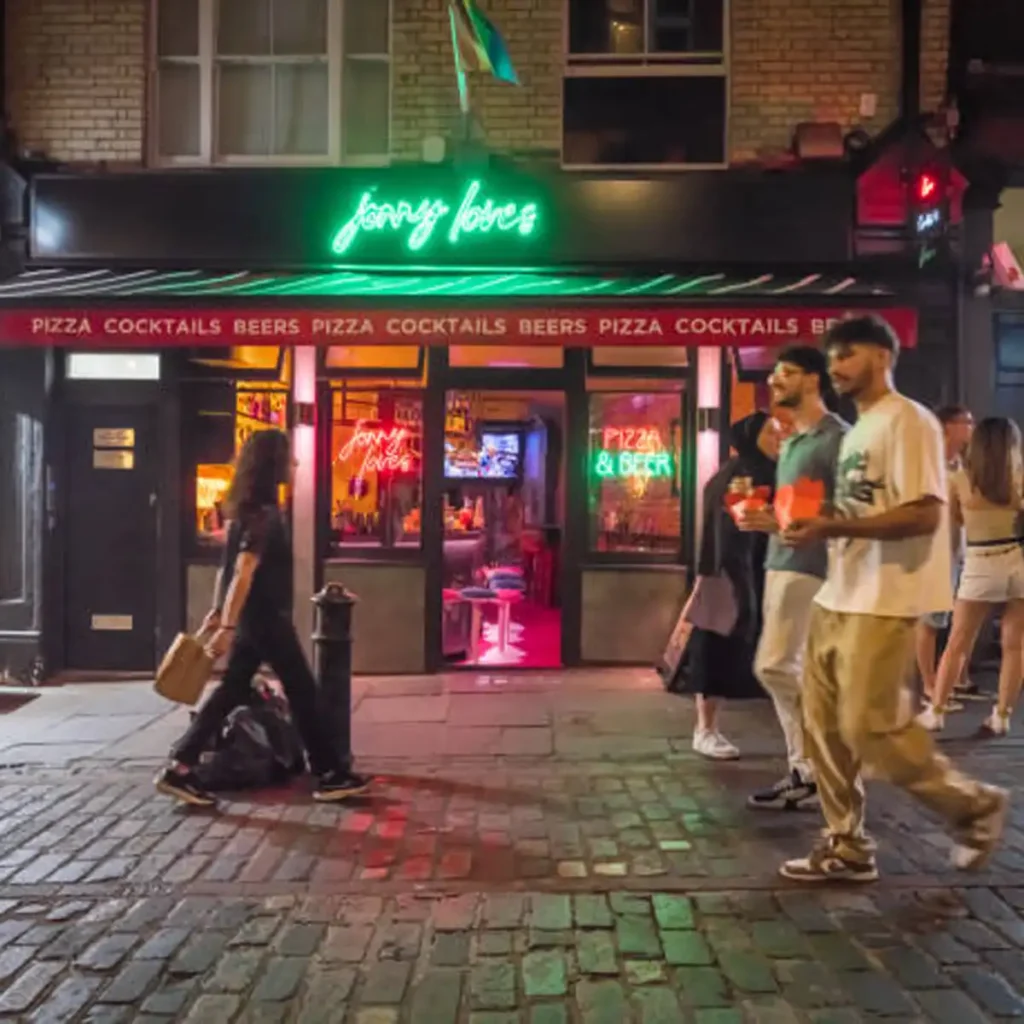
Old Compton Street does not ask permission. Since the late 1980s, when Soho became the district where queer Londoners could be visibly, publicly themselves without apology, it has carried a weight most neighbourhoods never face: the responsibility of representing an entire community’s right to occupy space. What Soho produced was not a cultural moment but a repeatable method, and the difference between the two is that moments get commemorated while methods get used.
What the Admiral Duncan Demonstrated
On April 30, 1999, neo-Nazi David Copeland detonated a nail bomb inside the Admiral Duncan pub on Old Compton Street. This ended up killing three people and injuring 83 others. The community’s response was more deliberate than a statement or a march. The pub reopened on July 2, 1999, at 18:37, which was the exact time the bomb had gone off nine weeks earlier. Then, Old Compton Street started filling up again. This was not declared a victory by people because it wasn’t framed as one. Instead, it merely showed the continuation of ordinary life in a place that had decided not to leave.
This is exactly the method: show up and stay visible. Use your presence as the argument before you even make the argument with your words.
Soho as the Mechanism, Not Just the Setting
The LGBTQ motivational speakers now working in corporate boardrooms and at major events draw on a tradition the neighbourhood helped build, and the connection is more direct than it looks. When Ian McKellen and a small group of activists founded Stonewall in 1989, in direct response to Section 28, at McKellen’s home, as a professional lobbying group rather than a protest movement, they were applying exactly the same logic: occupy the legitimate space, be publicly visible within it, and make the structural argument from inside the institution rather than outside it.
Soho concentrated that logic in a physical place. The bars and clubs were infrastructure for something bigger than nightlife; they were where the community practised being visible on its own terms, and the people who went through that scene carried the habit into every room they entered afterwards.

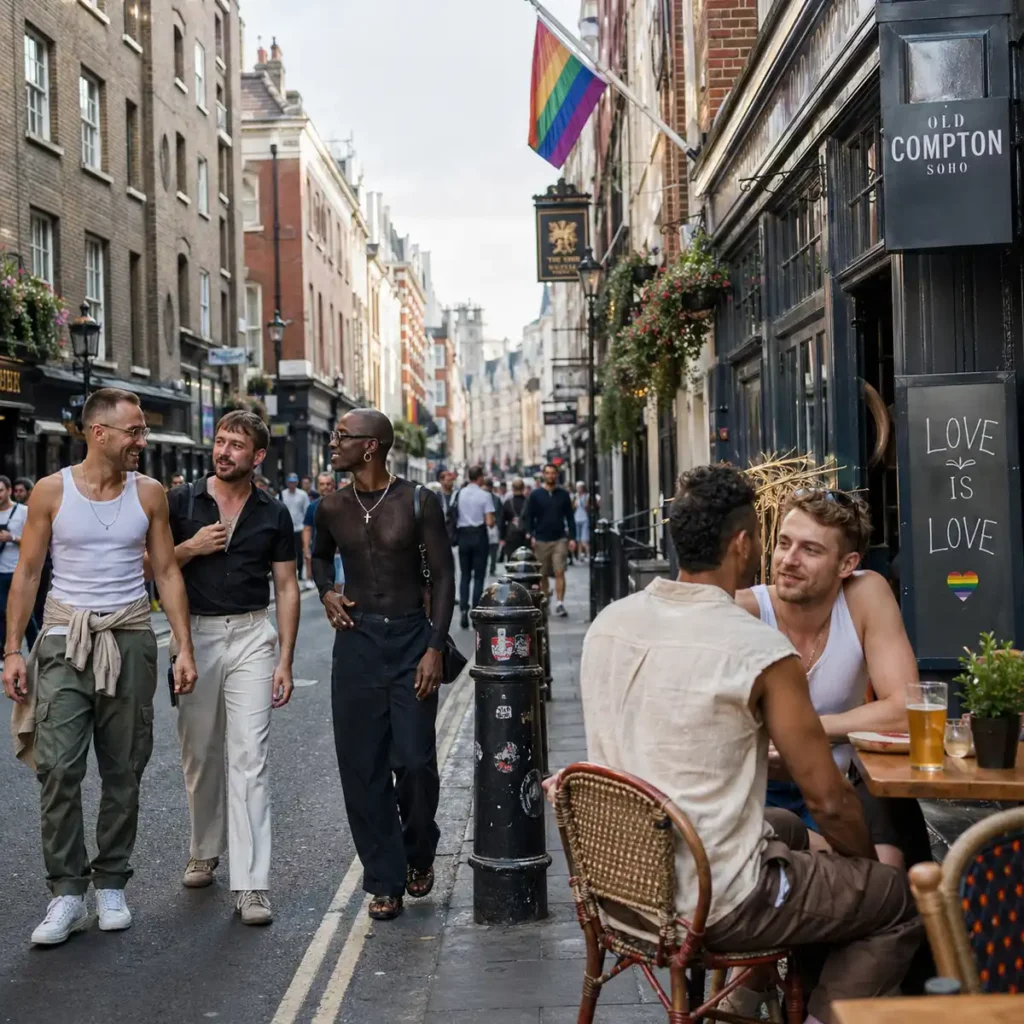
Why 58% of London’s LGBTQ Venues Closing Is Not a Straightforward Decline
London lost 58% of its LGBTQ venues between 2006 and 2017. The count fell from 125 to 53 based on research by the UCL Urban Laboratory, commissioned by the Mayor of London. The reasons behind the closures were rising rents and large-scale development. Dispersal was also a factor. The community grew large enough that it no longer needed four streets in W1 just to survive.
This does not read like a decline. This is because Soho’s LGBTQ identity succeeded partly because it made itself unnecessary as a refuge despite being necessary as a symbol. Soho, as a neighbourhood, still anchors conversations, events, and cultural moments because it was where the public argument was won first. This kind of precedent doesn’t expire with a lease.
The Argument Is Still Running
The legal ground has shifted considerably since 1999; the question of who gets to be visibly themselves in which rooms has not.
The people who are continuing with this work, whether it be on a conference stage or in a policy meeting, are extending it and not drawing on a finished history. Soho’s lasting legacy to the community is that showing up is the first act of argument. Up to this day, this has not changed at all. People who are willing to show up can do so and are entitled to do so.