A cold weekday dawn in Soho should feel grey, yet the glow spilling from Scarlett Green turns Noel Street warm before the caffeine even hits. Commuters pause at the windows, tempted by the hum of an espresso grinder and the promise of Australian coffee that never tastes rushed. Step inside, and the mood lifts: a mural of Bondi waves breaks over walnut and marble, flat whites glide to tables held by grinning baristas, and the pace of central London eases for a heartbeat. For readers searching for where to eat now, the answer is immediate: Scarlett Green is London’s love letter to the Aussie brunch culture that swept the capital.
Visitors land here with varied intent. Some want the celebrated Banana Bread Sandwich, others crave late-night cocktails, and many hope to feel brighter than the overcast sky outside. All leave, talking, posting, and planning a return. That loop of anticipation and memory is Scarlett Green’s speciality – a piece of Sydney sunshine embedded in historic streets that once powered British counter-culture. This is the beginning of a story about hospitality ambition, local identity, and the art of maintaining both in a delicate balance.
Born from a Caravan of Caffeine
The tale opens in 2012, when Prue Freeman left investment banking, bought a vintage ice cream van and began pouring flat whites to office workers. Her husband, Tom Onions, joined the gamble and the pair became early members of street-food collective KERB. Their coffee caravans taught them logistics, queue psychology, and the value of genuine chat at 7 am. More importantly, the vans proved Londoners would pay a premium for Antipodean quality if the experience felt authentic.
From that pop-up brew bar grew the Daisy Green Collection, now a constellation of more than seventeen sites sprinkled from Paddington Basin to the National Portrait Gallery. Each location features a female Australian name, its own design palette, and tailors its offerings to local habits. There is no flat-pack template. Instead, Freeman describes her blueprint as “sunlight, sound, fresh produce and good humour,” a phrase that reads simple yet demands careful orchestration.
Building a Hospitality Family with Character
Scaling without sameness is a constant hurdle in modern casual dining. The Collection solves it through narrative. Every site honours a slice of Freeman’s childhood on a New South Wales sheep farm or a detail from Melbourne’s laneway cafés. Kitchen teams share produce – vegetables from Covent Garden Market, meat from HG Walter – but daily specials vary, plates are served on distinct crockery, and playlists reflect the neighbourhood’s tempo. Collectively, the restaurants form a living map of London’s moods.
That discipline prepares the ground for Scarlett Green, pitched in May 2018 as the flagship. The address alone speaks confidence: 4 Noel Street sits among film-production houses, theatre queues and flagships from Soho’s design royalty. The former occupant, a progressive coffee shop, could not quite tame the rent. Daisy Green not only took the lease; it also ripped out partitions, excavated to the basement height, and invested in sound systems that carry from brunch to last orders at midnight. The result is an all-day dining London venue able to pivot through six trading periods without feeling transient.
Setting Foot in Soho
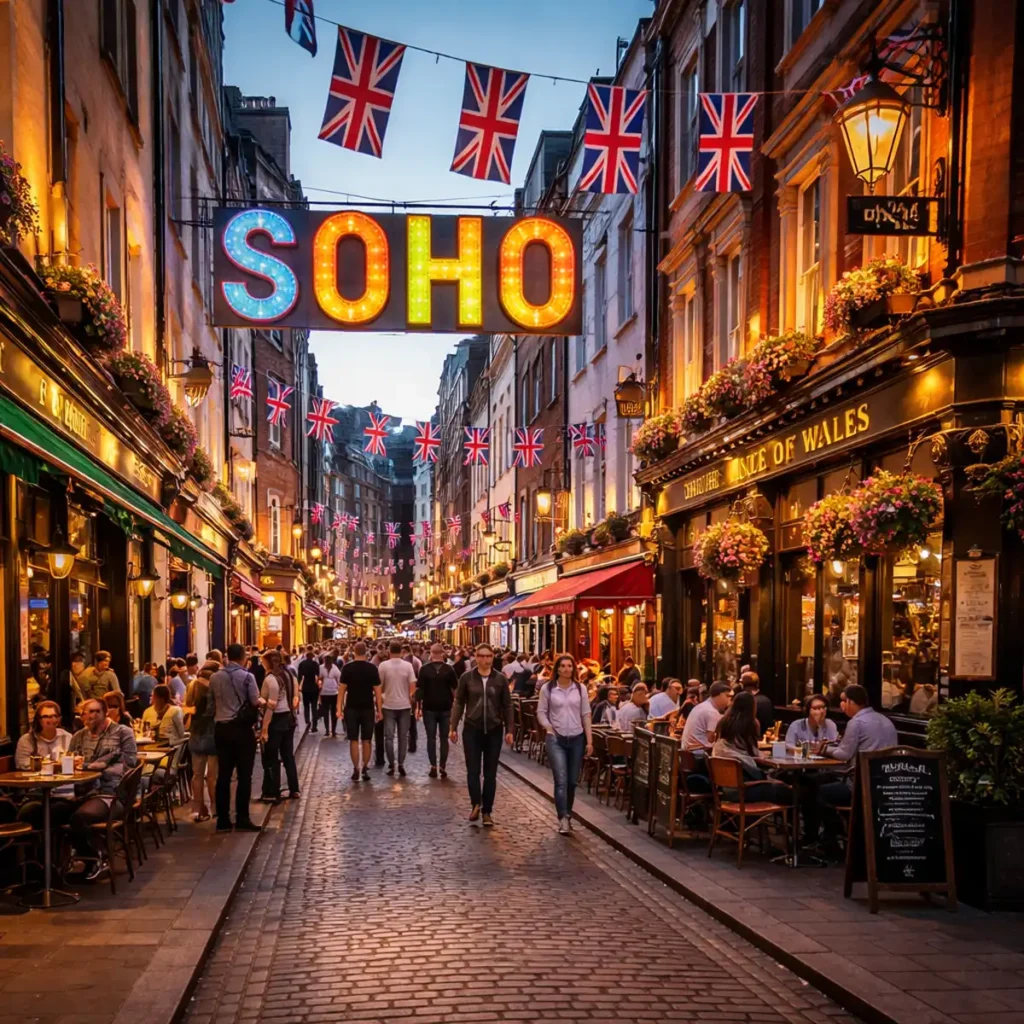
Why did Freeman choose this patch of W1 for her showpiece? Because Soho is still the neighbourhood where reputations are cemented fast, for better or worse. Footfall arrives hourly: morning media executives, lunchtime shoppers, pre-theatre couples, night people chasing the next playlist. Secure this crowd and the brand narrative explodes onto TikTok within days.
Location advantages include three Underground stations nearby:
- Tottenham Court Road – five minutes on foot
- Oxford Circus – under ten minutes
- Piccadilly Circus – also ten minutes
Those lines link Scarlett Green to every bolt of transport that crosses Zone 1, turning a weekend plan into a spontaneous visit. Crucially, the site reserves half its covers for walk-ins, a Soho rarity that converts passing trade into lifelong patrons.
Fun Fact: The basement of Scarlett Green still holds the original timber posts of a Victorian printworks, a subtle nod to Soho’s publishing past hiding beneath neon artwork upstairs.
Space that Moves with the Day
Interior studio Run For The Hills sculpted 4,000 square feet into two complementary worlds. The ground floor is sunlight personified: full-length glass, verdant planting, splashes of coral velvet, and terrazzo that mirrors Mediterranean terrazza tiles. People linger over laptop work, shoot flat-lay photos, or gather at the brass bar for piccolo lattes. Every surface begs a photo; no surprise that the venue trends under Instagrammable restaurant hashtags.
Descend the broad staircase, and the tone shifts. The ceiling rises, lights soften, an open Josper grill crackles. Velvet booths in powder pink hide celebrations, while a secondary bar pours Pet Nat by the glass. Acoustic sessions start at four each afternoon, handing over to DJs as evening gathers. It feels like two businesses, yet it operates on one P&L, thanks to deft zoning that absorbs breakfast traffic without disturbing the dinner ambience.
Atmosphere of Energy and Contrast
Scarlett Green’s most praised currency is “buzz.” Reviews cite “electric,” “lively,” “Friday feeling on a Tuesday.” That energy is curated deliberately: tables sit close enough for shared laughter, playlists sit just beneath conversation volume, and servers keep tempo brisk so nobody waits for their next Mimosa. Detractors call the room noisy. Supporters insist the volume is part of the show. Either way, Scarlett Green stands unapologetic. Soho never built its fame on quiet corners.
Musicians often line the staircase mid-evening, riffing over house tracks to blur live performances with a bar soundtrack. The intent is social lubrication; large parties find space downstairs, first dates prefer an alcove, and creatives clutch MacBooks upstairs through the afternoon. Staff know which zone fits each request, steering guests without fuss.
Menu Foundations and Brunch Stardom
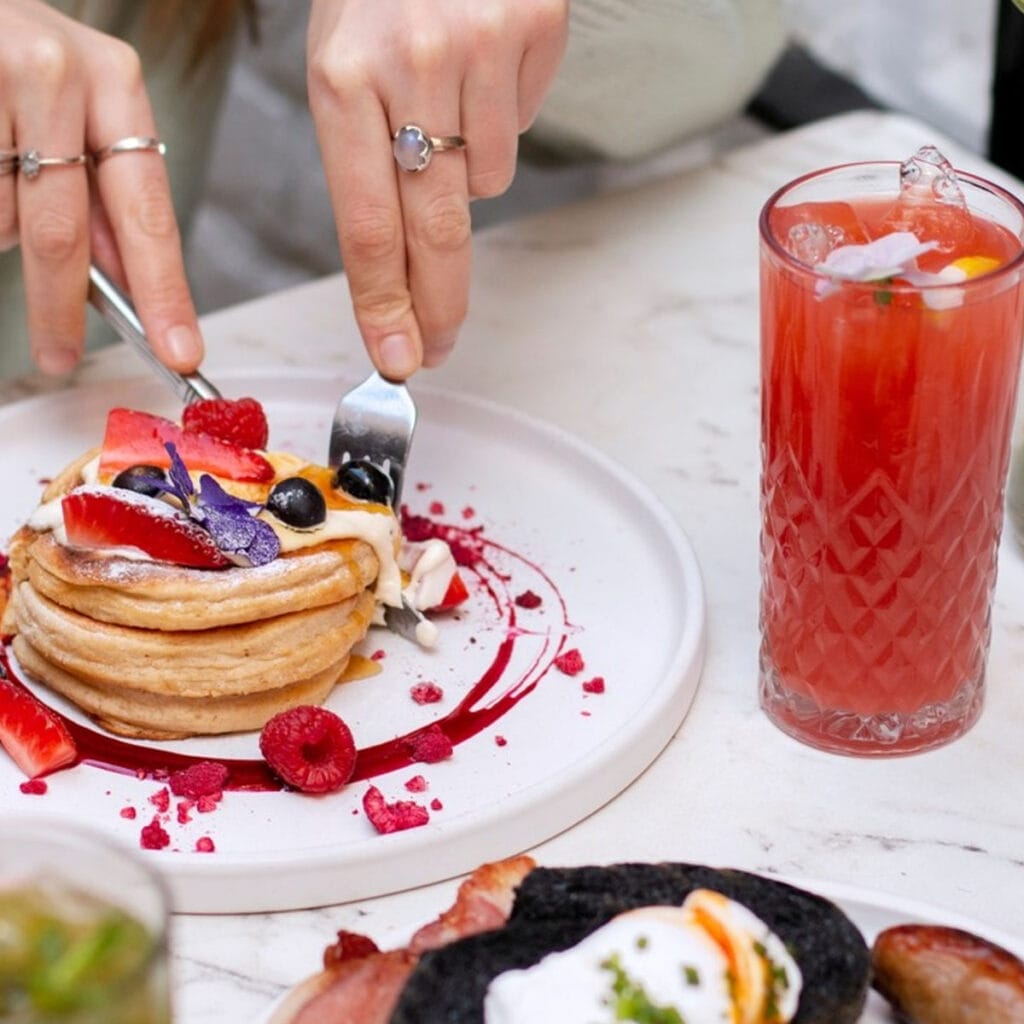
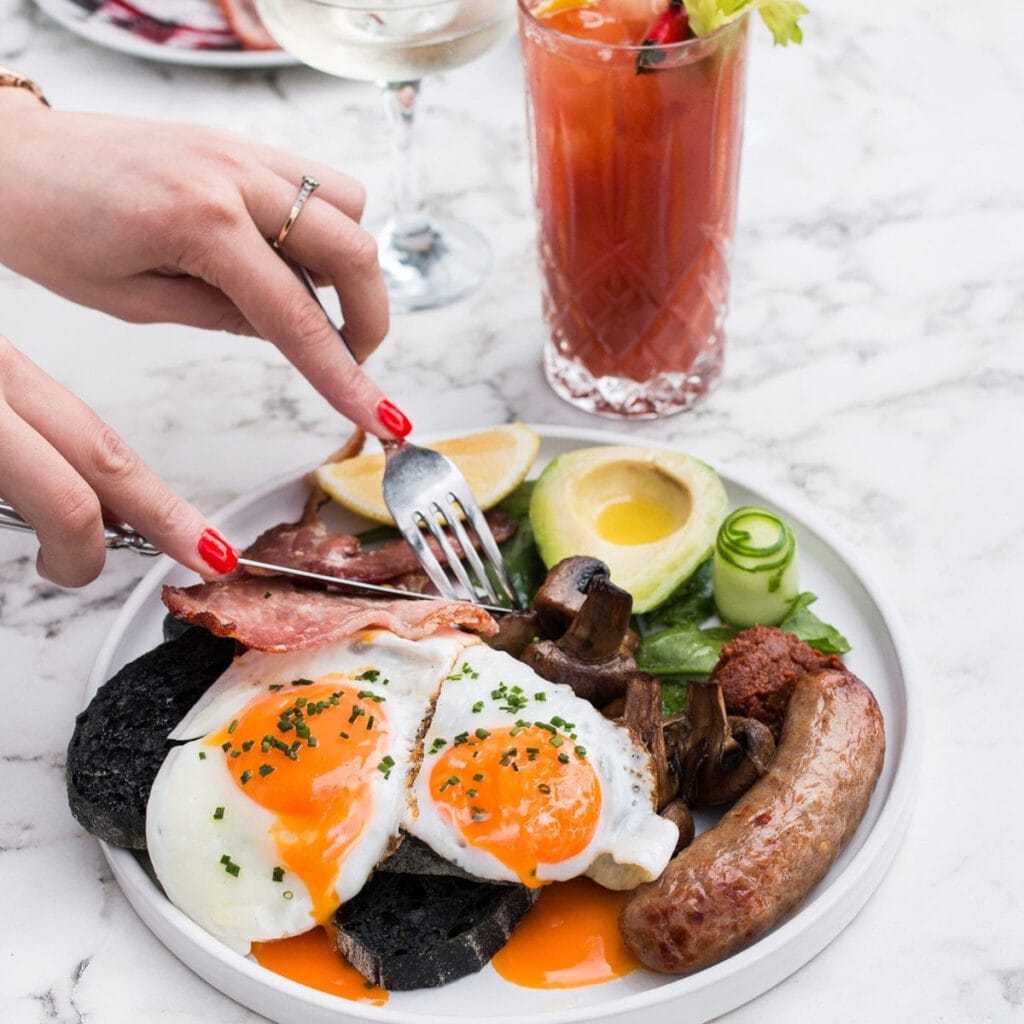
Scarlett Green’s menu deserves an entire second act, yet even a preview shows why TripAdvisor once ranked it the world’s top brunch spot. The star is still Freeman’s Banana Bread Sandwich: warm slab, whipped mascarpone, berries, honey, crunchy almonds. It captures nostalgia and indulgence in one plate. Savoury champions compete hard: the Fancy Bacon Roll wraps poached eggs and spiced hollandaise in flaky paratha, while sweetcorn fritters arrive stacked with avocado and chilli pesto. Prices hover in mid-teens, yet portions please London appetites used to paying more for less.
Weekend service turns into a bottomless brunch at London’s theatre. Ninety minutes, free-flow fizz, sweet-then-savoury order, and a Tea-Total option swapping prosecco for sparkling kombucha. Staff leave bottles on tables, letting groups pour as they please. The policy naturally fuels generous gratuities and cheerful Instagram reels, seeding more traffic.
Even so, Scarlett Green refuses to be pigeon-holed. As the afternoon slides into evening, the Josper roars, and the menu changes: Vegemite truffle doughnuts, sticky Korean cauliflower, 45-day ribeye, and Aussie BBQ sharing boards. Cocktails follow suit, from on-tap Aperol to kangaroo-themed signatures. The wine list hosts the capital’s largest Australian pour-by-glass selection, fulfilling the curiosity of every Soho restaurant explorer seeking something different.
Service Under Pressure
Hospitality folklore warns that vibes cover only so much; service must shine. Scarlett Green deploys a young, international brigade drilled in Antipodean warmth. Diners consistently mention servers by name, proof of personable engagement. Peak periods can stretch response times, yet most criticisms focus on crowding rather than attitude. Management mitigates the strain by limiting brunch sittings to 100 minutes and encouraging bar drinks while tables flip.
Value perception sits firmly at “premium casual.” Guests recognise West End rent in the bill yet rarely feel short-changed. OpenTable scores hover above four for food and ambience, dipping slightly on value – a spread that suggests satisfaction with a hint of London wallet fatigue. Still, the constant full reservation sheet shows the equation works.
The Digital Multiplier
Freeman’s earliest pop-up success relied on word-of-mouth queues; Scarlett Green evolved that playbook for smartphones. Every design choice begs a share: dusty pink plates, palm-print menus, and lamp-light glow against marble. Staff encourage diners to photograph, and the brand’s own social channels repost the best images, rewarding creative guests with exposure. That feedback loop has pushed the hashtag Scarlett Green Soho into hundreds of thousands of impressions, achieving reach that most PR budgets envy.
Who Loves Scarlett Green Most
Patterns within reservation data reveal five dominant tribes:
- Weekend Brunchers, often female groups marking birthdays
- Instagram Diners Chasing Photogenic Plates
- Creative Professionals needing a caffeine-plus-Wi-Fi HQ
- Aussie Expats hunting flat whites and chicken parmigiana
- Evening Socialisers aged twenty-something chasing DJs and Amaro-spritz twists
Together, they fill the room from dawn until the midnight bell, proving Scarlett Green’s chameleon model is more a revenue engine than a gimmick.
A Chameleon with Purpose
Scarlett Green’s true genius lies in a schedule plotted like a conductor’s score. At dawn, the ground floor hums with laptops and flat whites, a scene that convinces many they have found the best brunch Soho can muster. By late afternoon, staff dim the pendants, a DJ cues low-slung funk, and the basement ignites. The pivot feels natural because it was engineered from the outset: two kitchens, duplicated bars, and a sound system zoned so that background beats never leak into morning meetings. In a district famous for extremes, this fluid identity keeps covers full across seventeen trading hours.
Leveraging the Soundtrack of Soho
Music is not garnished here; it is infrastructure. Resident selectors spin five nights each week, threading house, disco edits, and Antipodean indie through a Funktion-One rig chosen for clarity at a conversational volume. Live acoustic sets on Fridays draw after-work crowds chasing the promise of discovery before the encore at Ronnie Scott’s. This soundtrack underwrites Scarlett Green’s positioning as a cocktail bar Soho regulars can trust: dance-adjacent but never nightclub loud, sociable yet sophisticated.
Instagram without the Gimmick
Scroll the restaurant’s tagged photos, and themes emerge. Patrons frame Josper-laced ribeye against terrazzo, pose with Pornstar Martini fountains, and catch midday rays streaking through floor-to-ceiling glass. Every share becomes unpaid marketing to followers hunting an Instagrammable restaurant that stays authentic. The design rule is simple: beauty must serve function. Marble withstands brunch traffic, coral-velvet stools invite longer stays, and the hero mural doubles as acoustic baffling. Form follows revenue, not vanity.
Sustaining Trust through Ingredient Integrity
Expertise shows on the plate and in procurement. Head chef Dominik Moledenhauer sources grass-fed beef from HG Walter, line-caught fish from day boats, and blueberries from Herefordshire farms with carbon-neutral pledges. Coffee partners The Roasting Party roast to a profile that expresses fruit yet stands up to milk. These details build credibility with the Australian restaurant London diaspora, who expect standards mirroring those of Melbourne’s laneway pioneers.
Transparency extends to dietary inclusion. Menus include gluten-free batters, vegan aioli, and dairy-free sorbets. Diners requesting swaps encounter zero resistance, a factor that drives loyalty among the vegan-friendly Soho community and simplifies large group bookings.
Pricing the Buzz
Costs hover in the mid-premium range: £14 for sweetcorn fritters, £28 for a ribeye with chimichurri, and £49.90 for the bottomless package. In post-pandemic London that price strikes a chord between ambition and attainability. Walk-in allocation rewards spontaneity while the no-show fee protects margins. Brunch sittings cap at one hundred minutes, a policy some label strict yet most accept as fair exchange for endless fizz.
Reputation in the Wild
OpenTable aggregates thousands of covers each month and returns scores north of 4.4 for food and ambience. Negative notes focus on table spacing or volume, critiques the team acknowledges yet declines to dilute. Scarcity is part of the thrill; if you want hushed linen service, Soho supplies alternatives. At Scarlett Green, the social contract is clear: embrace the vibe, and the vibe will embrace you back.
Competitive Map
Within 600 metres sit Mildreds, Hoppers, and Barrafina. Each excels in a tight lane: vegan plates, Sri Lankan hopper feasts, Spanish tapas. Scarlett Green competes laterally, offering range rather than niche. Its edge is duration; few rivals deliver speciality coffee at 07:00 and Pornstar fountains at 23:30 under one rent line. That continuity positions the venue as a London foodie destination for planners and spontaneous night owls alike.
Looking Ahead
Parent company Daisy Green hints at international expansion but keeps London as its laboratory. Innovations trialled here – a QR-driven wine flight, oat-milk soft serve, and compostable water filters – may roll out to future sites once guest feedback stabilises. Scarlett Green, therefore, operates as a flagship and R&D hub, proving that hospitality can scale without losing spark.
Conclusion with Action
For anyone plotting a Soho agenda, Scarlett Green offers an itinerary in miniature: sunrise espresso, Antipodean cuisine at noon, Australian Shiraz by night, and a playlist that tracks the city’s heartbeat. It stands as reminder that dining rooms succeed when they feel alive enough to earn regulars yet polished enough to impress first-timers. In the words of locals leaving at midnight, the place “catches the joy just right.” Visit with friends who laugh loudly, order the Banana Bread Sandwich first, and let the energy carry you. After all, as the saying goes, fortune favours the bold.
A journey of a thousand miles begins with a single step.