A fantastic amplifier tone is not something that just happens. When two separate musicians use the same amplifier, or even when the same player is in two different rooms, the results can sound quite different. Tones that are purposeful, reproducible, and truly appropriate for the music being played are produced by knowing what each control actually does rather than simply moving knobs until something sounds good. Because its designers were aware of the various factors that influence a final sound, amplifiers such as the Blackstar ID series offer a great deal of flexibility.
Start With the Guitar, Not the Amplifier
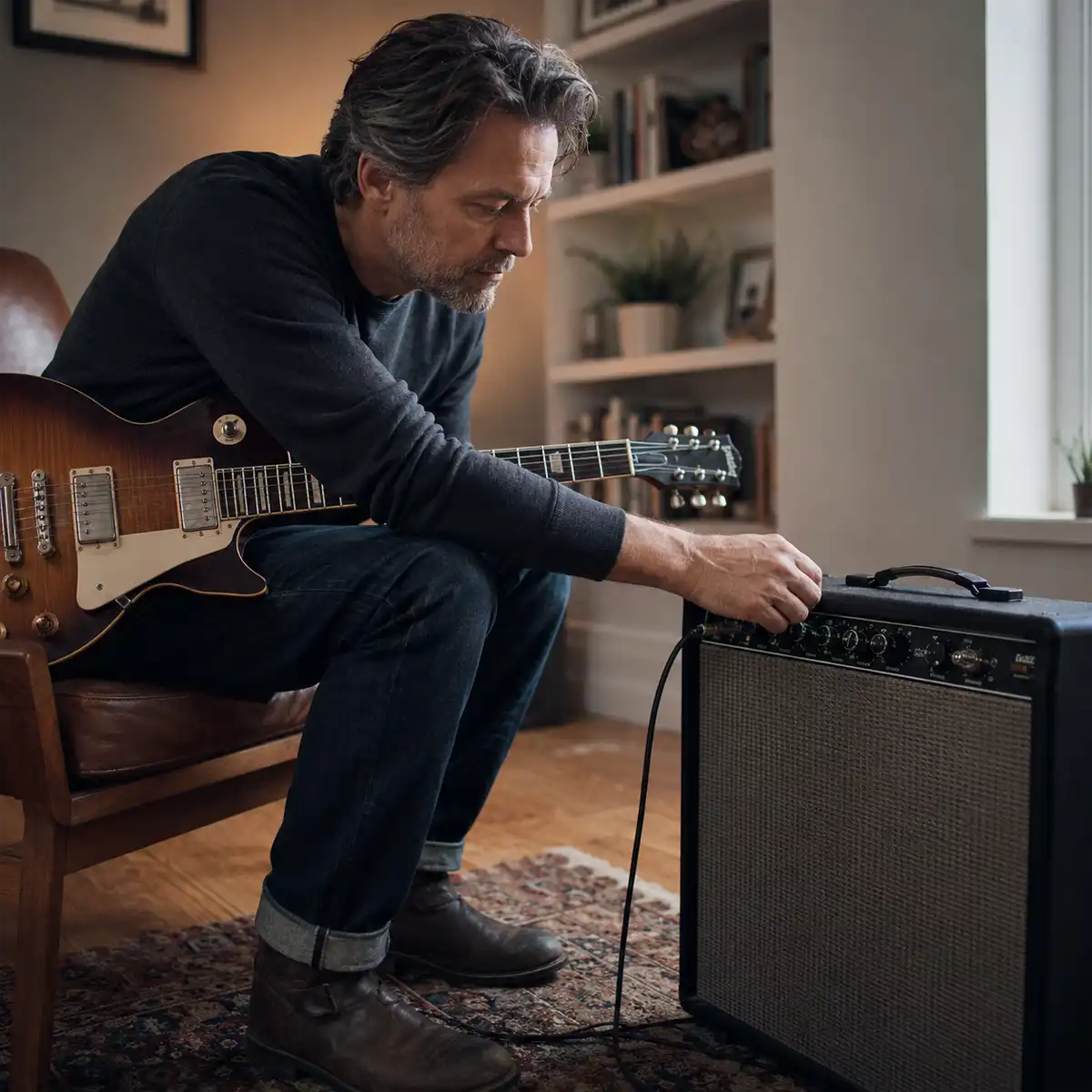
What the guitar transmits into an amplifier is reproduced by all amplifiers. No matter how the parameters are set, a thin, harsh pickup signal results in a thin, harsh amplified tone. Check to see that the guitar's controls are functioning properly before making any changes to the amplifier itself.
High-frequency roughness that gets tiresome at loud volumes can be somewhat mitigated by rolling the guitar's tone control back. In the process, lowering pickup height reduces output and frequently enhances note clarity. No amount of EQ correction can completely offset the effects of these minor upstream changes on the amplifier's input.
Understanding Gain and Volume Separately
The two controls that players with developing ears most frequently mistake are gain and volume. Gain controls how hard the preamp stage of the amplifier is driven. The amount of the signal that reaches the power amp and, eventually, the speaker is controlled by the volume.
By overloading the preamp circuitry, high gain settings cause distortion and compression. The signal is kept clear and uncompressed with low-gain settings. Whether a tone is totally saturated, slightly broken up, or clear depends on the relationship between the two settings. Setting the gain high to create distortion while keeping the volume low to control overall loudness is a typical error. This method frequently yields an indistinct, flabby outcome. Even at comparable overall levels, a crisper, more responsive sound is usually produced by lowering gain and letting volume work harder.
Working With the EQ Section
Unlike the equalisation found in recording software, amplifier EQ knobs interact with each other in different ways. Even when those parameters stay fixed, changing one frequency has an impact on how neighbouring frequencies are perceived.
Low frequencies that provide warmth and body are controlled by bass controls, but when they are set too high, they rapidly become muddy. The fundamental tone of an electric guitar is carried by middle frequencies, which also have a significant impact on the instrument's placement in a band mix. Treble settings have an impact on brightness and presence; when handled carefully, they give picked notes more definition; when pushed carelessly, they introduce harshness.
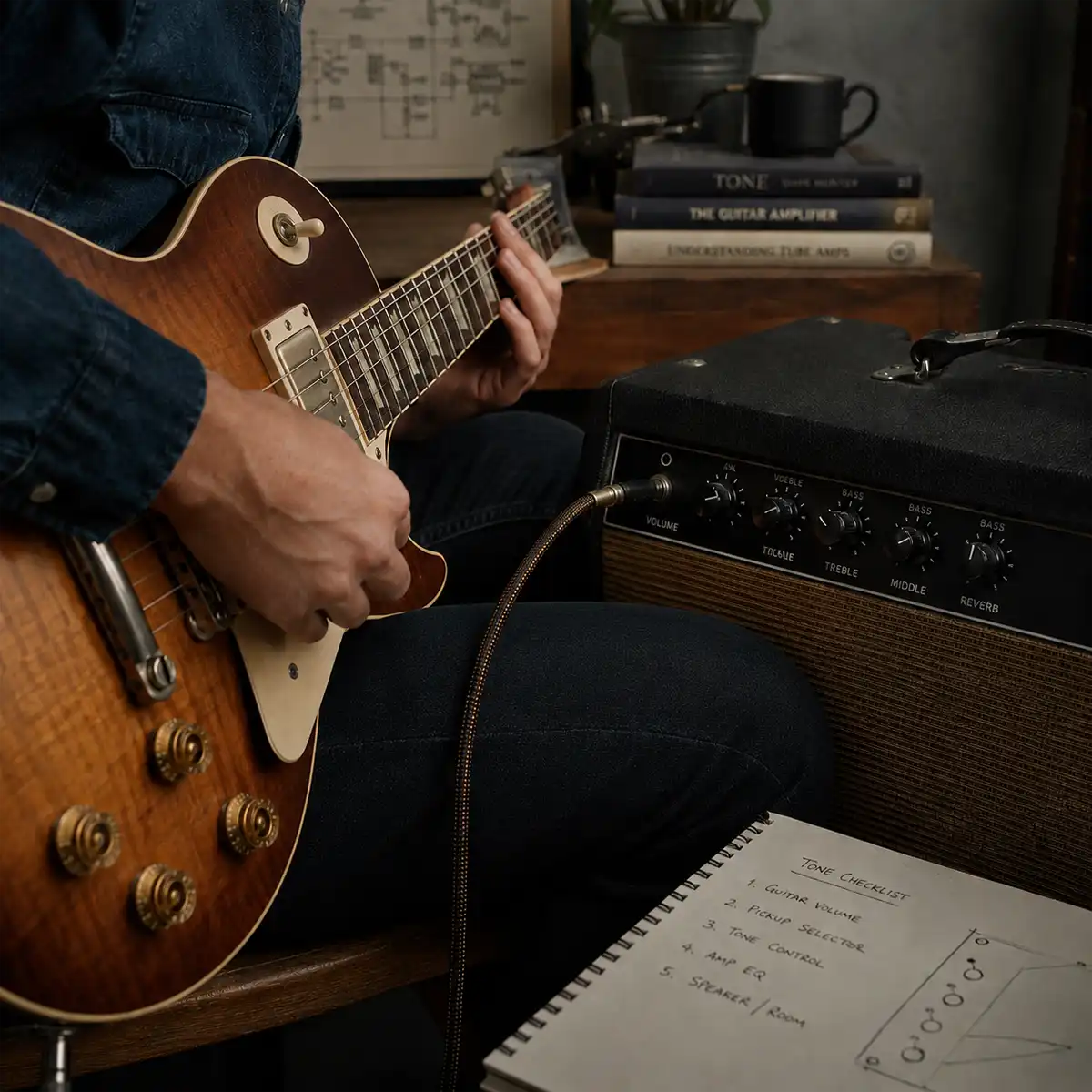
Setting all three settings to the midpoint is a helpful starting place. Then, the bass is adjusted to provide a foundation, the middle is adjusted to define overall character, and the treble is adjusted last to add or decrease edge. Further improvements are frequently revealed by going back to each control after adjusting the others.
Room Acoustics and Their Effect
The room around an amplifier has just as much of an impact on the tone that reaches the listener as any adjustment on the front panel. High frequencies are amplified by hard, shiny surfaces, giving them a bright, occasionally harsh character. Reflections are absorbed by soft furniture and uneven surfaces, creating a more controlled and cosy acoustic atmosphere.
By concurrently boosting low frequencies from two walls, an amplifier placed in a corner increases the apparent bass response. The tone heard directly is altered by raising a small amplifier off the ground and pointing it upward toward the player's ears. This technique frequently reveals details obscured when the speaker points at the listener's knees.
Using Effects Thoughtfully
A strong core tone is enhanced by additional effects. When a weak core tone is compensated for by effects, the fundamental issue is rarely resolved, and new ones are often introduced.
Reverb enhances spatial depth and works especially well with clean or slightly overdriven tones. Excessive reverb creates a wash that rapidly gets tiresome and obscures note clarity. Subtle levels of delay give single note lines depth without overpowering the sound, and when set sympathetically to the pace being played, delay produces rhythmic texture. Chorus and tremolo are examples of modulation effects that are appropriate for particular musical situations rather than being long-term additions to a tone.
Developing Your Ear Over Time
In the end, tone is a personal endeavour influenced by the music being composed and the performer. Improvement is significantly accelerated by learning to pinpoint precisely what is lacking or overbearing in a particular sound as opposed to merely characterising it as "not quite right". Great tone gradually becomes second nature as a result of each thoughtful adjustment made about its particular effect.