Step out of Oxford Circus station on a misty Saturday morning, and the crowd drifts towards Regent Street's plate-glass palaces. Then a sharp turn onto Great Marlborough Street stops you in your tracks. The black-and-white façade of Liberty London looms like a Tudor galleon moored among the traffic, its carved balconies stacked high with blooms from Wild at Heart. You catch the perfume of late-summer roses, hear the thrum of Carnaby's boutiques just beyond, and feel the irresistible pull of a place that has been setting London's style agenda for nearly 150 years. You are not entering a shop; you are boarding a voyage that threads craftsmanship, rebellion, and local lore through every board beneath your feet.
More Than a Store
Arthur Lasenby Liberty never meant to open a department store. In 1875, he launched an "Oriental warehouse" stocked with silks, ceramics, and curiosities chosen to thrill a metropolis hungry for new ideas. That curatorial impulse is still the heartbeat of Soho shopping today. Buyers scour studios and ateliers from Tokyo to Tottenham, pairing Loewe leather with an emerging jeweller from Peckham, confident that customers crave discovery rather than predictable labels. The result is a retail experience that feels more like a gallery arranged by a friend who understands both your taste and your urge to be surprised.
A Legacy of Curated Design Leadership
By the 1890s, Liberty was no longer importing trends; it was creating them. The in-house design studio printed its first fabrics, and artists of the Arts and Crafts movement queued to place their work in the windows. William Morris fabrics, Archibald Knox metalware, and Leonard Wyburd furniture turned Liberty into a launchpad for British modernism. The store's archive now holds more than 50,000 patterns. Yet, every season the studio paints new florals and geometrics by hand, honouring that founding promise of fresh ideas grounded in mastery.
When Liberty Became a Style
Liberty's influence crossed the Channel so decisively that Italian critics nicknamed Art Nouveau "Stile Liberty." The shop supplied dresses to Oscar Wilde, pewter lamps to Viennese collectors, and avant-garde metalwork to Parisian salons. Its name became shorthand for a look that mixed romantic historicism with cutting-edge technique. This tension still defines the brand. Walk into the fabric hall today and you will see the same swirl of colour that once inspired Yves Saint Laurent's 1970s couture, now reborn on Nike trainers or JW Anderson shirting.
From Regent Street to Soho Story
Liberty began in half a townhouse at 218a Regent Street. Within eighteen months, the loan that funded the venture was cleared and the neighbouring lease secured. Expansion continued through the back lanes of Soho, knitting together a patchwork of workshops and storefronts until the company decided to build a flagship worthy of its ambition.
- 1875 – Opening day with three staff and a cargo of Japanese silks
- 1883 – Furnishing & Decoration Studio founded, giving birth to Liberty furniture
- 1890 – Company becomes a public limited liability firm to finance rapid growth
- 1924 – Tudor-revival flagship on Great Marlborough Street completed
- 1972 – Building awarded Grade II* protection for national importance
Each milestone tightened Liberty's bond with the neighbourhood. Today, locals refer to it as a Soho anchor even though the postcode straddles Regent Street's gentility and Carnaby's counter-culture.
An Artistic Partnership
Liberty's relationship with the Arts and Crafts movement was never passive. Arthur Liberty commissioned patterns from William Morris, hosted exhibitions that championed handmade craft, and persuaded middle-class households that artistic living was attainable. The store's success offered artisans commercial security; in return, their work burnished Liberty's reputation for progressive taste. That symbiosis still thrives. The beauty hall gives cult skincare makers their first London counter, while the fragrance lounge introduces niche perfumers to a global audience. Liberty backs the daring early, then shapes public appetite until the avant-garde becomes mainstream.
Fun Fact: The Tudor frontage of Liberty is the exact length of HMS Hindustan, one of the Royal Navy warships whose recycled oak frames the store.
A Tudor Landmark on Great Marlborough Street
The flagship, completed in 1924, is a study in architectural storytelling. Designed by Edwin T. Hall and his son, it rejected the steel-and-stone modernism rising elsewhere in the West End. Instead, blackened oak beams, clustered chimneys, and mullioned casements summoned Elizabethan London. Every plank came from HMS Impregnable or HMS Hindustan, weaving national history into retail theatre. Pass through the heavy timber doors and three top-lit atriums soar above polished oak balustrades, their roofs patterned like great barns to celebrate handcraft over industry.
Timber, Warships, and Hidden Creatures
The romance deepens in the detail. Floors are laid with ship's decking; stair treads bear discreet nautical brass screws. Sixteen fireplaces warm showrooms styled as drawing-rooms, and carved animals hide on bannisters—the mischievous monkey near women's wear is a favourite selfie spot. Look up: 215 hand-painted windowpanes flicker with storybook scenes, while a gilded copper Mayflower weather-vane signals Liberty's long-standing fascination with exploration.
A Boutique Maze for Modern Shoppers
Unlike grid-planned department stores, Liberty unfolds in a warren of intimate rooms that coax visitors to wander. The ground floor beauty hall hums with powdered fragrance bottles and the clinking of piercings at Maria Tash. One level down, the fragrance lounge feels more like a library—consultants arrange scent "chapters" around leather armchairs. Ascend the broad staircase, read the carved First World War memorial, then lose yourself in jewel-box galleries of women's wear, men's wear, and the famous fabric bolts that cascade in rainbow order. This labyrinth slows the pace, turning purchase into pilgrimage.
Inside Liberty Fabrics and Signature Scents
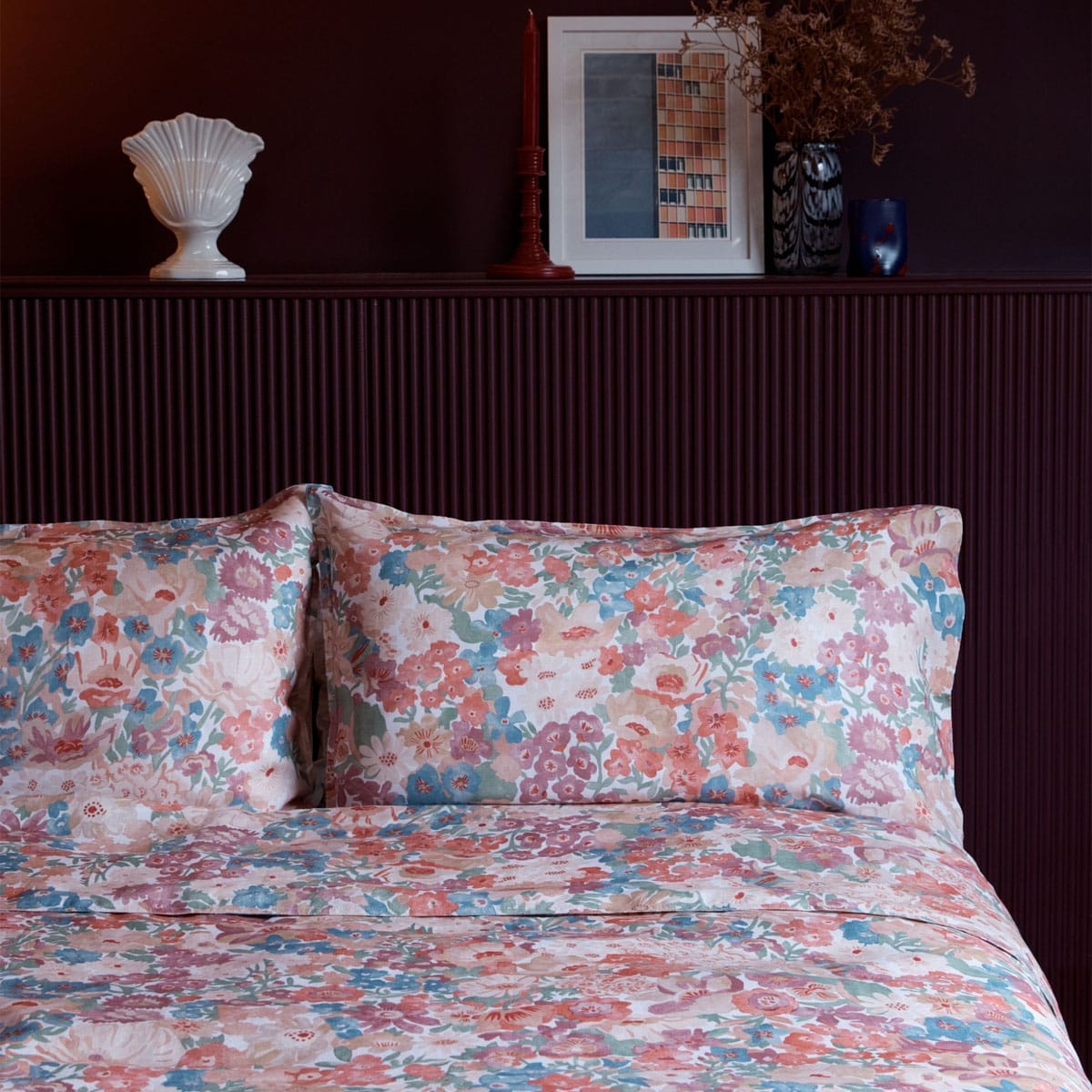
At the core of the brand lies Tana Lawn™ cotton, an ultra-fine weave whose ability to capture colour rescued many London wardrobes from drabness. Quilters favour the sturdier Lasenby cotton, while dressmakers reach for silk satin, crepe de chine, or Monument twill. Finished goods carry the prints into everyday life: Liberty scarves, Iphis-patterned totes, bedding, even the in-house LBTY. perfume line that bottles archival florals.
Meanwhile, the Wild at Heart florist spills hydrangeas and eucalyptus onto the pavement, echoing the patterns inside. Customers can match a bouquet to a print, engrave a fragrance bottle, then order fabric samples for a bedroom overhaul. This immersive triad stitches scent, bloom, and textile into one coherent brand story.
Culture Icons and Creative Collaborations
Liberty's guestbook reads like a Who's Who of British creativity. Oscar Wilde praised it as "the chosen resort of the artistic shopper." David Bowie's tailor sourced a vivid Liberty print for the Ziggy Stardust jumpsuit. The Young Princesses Elizabeth and Margaret appeared in Liberty dresses, cementing the store's royal cachet. Modern partnerships keep momentum: Nike drapes Air Force 1s in William Morris vines, Uniqlo transforms archive motifs into high-street staples, and JW Anderson debuts experimental shapes on the womenswear balcony before Paris takes notice.
Channel 4's Liberty of London documentary pulled back the curtain on buying meetings and Christmas window deadlines, proving that the drama behind the till is worthy of primetime. Recent tie-ins with the film Wicked turned atrium balustrades emerald green. They invited visitors to "follow the yellow brick road" through Little Liberty.
Plan Your Visit
Location – Great Marlborough Street, sandwiched between Regent Street elegance and Carnaby buzz.
Tube – Oxford Circus (Central, Victoria, Bakerloo) three-minute stroll; Piccadilly Circus five minutes south.
Opening hours – Monday to Saturday 10:00-20:00, Sunday 12:00-18:00 (browsing from 11:30).
Amenities – Step-free main entrance, lifts to all floors, accessible toilets on the first and fourth levels, dog-friendly policy, and the wood-panelled Seventy Five restaurant for a restorative plate of Welsh rarebit.
Why Liberty Still Matters
London retail rarely stands still, yet Liberty London thrives because it refuses to flatten heritage into nostalgia. Instead, it treats history as fertile ground for new stories, inviting each generation to reinterpret floral cotton, hand-beaten pewter, or Tudor chimneys on its own terms. In doing so, it anchors the West End economy, inspires designers worldwide, and offers locals a welcome tonic to homogeneous malls. Next time the rain clouds gather over Soho, follow the scent of roses to the Mayflower weathervane, step beneath the cedar beams, and let serendipity guide you. As Londoners like to say, "Little by little, a bird builds its nest."