When The Devonshire Soho opened in late 2023 at 17 Denman Street, it did not behave like a typical new pub. Within weeks, it was winning awards, filling social media feeds and drawing queues that wrapped around the corner from Piccadilly Circus into Soho. On the surface, the story sounded simple: a handsome London pub serving excellent Guinness and wood-fired food, packed from opening until close.
Look more closely and The Devonshire is something else entirely. It is a deliberately constructed hospitality engine: a hybrid of high-volume walk-in boozer and tightly controlled reservation-only grill restaurant, built on a leadership structure more familiar to corporate strategy than to traditional pub culture. It is also a carefully stage-managed exercise in nostalgia, trading on images of "old Soho" while being propelled by highly contemporary logistics, technology and financial discipline.
For an authority news platform covering London hospitality, The Devonshire offers a dense case study. It sits at the intersection of post-pandemic dining trends, commercial property reuse, supply chain integration, regulatory politics and the psychology of hype. Its founders describe it as the pub they always wished existed. For researchers, it is better understood as an experiment in how far the traditional pub can be industrially scaled without losing the atmosphere that makes it worth visiting in the first place.
This analysis examines operations on several fronts: the leadership model, the building and its history, the culinary strategy, the supply chain, customer dynamics, financial logic, licensing pressures, and the risks involved in turning one hugely successful pub into a replicable brand. The Devonshire has already become a reference point for operators and policymakers alike. Understanding how it works helps explain where London hospitality might be heading next.
Leadership triumvirate behind The Devonshire Soho
The Devonshire is led not by a single chef-patron or anonymous investors, but by a three-way partnership: Oisín Rogers, Charlie Carroll and Ashley Palmer-Watts. Each has a distinct professional identity and operational territory. Together they form a kind of hospitality "supergroup", with overlapping but clearly defined responsibilities.
Rogers, best known for his stewardship of The Ship in Wandsworth and The Guinea Grill in Mayfair, is the publican-in-chief. At The Guinea, he proved that a steak restaurant could coexist with a loud, standing-room pub without either side collapsing into the other. At The Devonshire, he is the visible landlord, moving through the rooms, greeting regulars, reading the temperature of the crowd and curating the energy of the ground-floor bar.
He also guards several key intangibles. One is Guinness quality, now a core part of the brand. The pub is reported to sell 15,000 to 20,000 pints of stout a week, and Rogers has turned the two-part pour into a kind of ritual. Another is high-level relationship management. The now-famous Green Room and private dining spaces operate partly on the strength of Rogers' personal network, attracting celebrity guests such as Ed Sheeran and Margot Robbie, whose presence generates organic publicity and a constant stream of social media content.
If Rogers supplies the soul, Charlie Carroll provides the operating system. As founder of Flat Iron, he has already demonstrated that London diners will embrace a tightly focused, affordable steak concept if the logistics are precise and the supply chain is under control. He brings that systems thinking to Denman Street. The Devonshire serves around 700 covers a day across its restaurant floors, with a menu that relies on wood-ember cooking. Making that scale reliable requires a robust staffing plan, significant purchasing power, and a back-office setup capable of managing roughly 150 employees.
Carroll's influence is most visible in the vertical integration of meat supply and the repeatability of service. He and Rogers reportedly bonded years ago over whole-animal cooking, and that shared interest underpins the pub's in-house butchery, dry-ageing and zero-waste approach to meat. Behind the scenes, his P&L focus ensures that the romance of the grill is matched by the reality of margins.
Completing the trio is Ashley Palmer-Watts, whose background sits at the very top of global fine dining. After 2 decades working with Heston Blumenthal, including leading The Fat Duck and Dinner by Heston Blumenthal, his move to a central Soho pub was a significant signal. It suggested that the centre of gravity in British food culture might be shifting from tasting menus to high-quality, more democratic formats.
Palmer-Watts brings obsessive technical attention to dishes that appear straightforward on the menu. He pushed for the installation of a large wood ember grill, despite its operational complexity, to prioritise flavour and texture over procedural convenience. Instead of water baths and vacuum bags, the kitchen runs on fire, smoke and timing. He has described The Devonshire as the "perfect place" that he and his partners wanted to visit themselves, suggesting that even at the apex of gastronomy, there was a search for somewhere more relaxed, provided standards remained forensic.
Together, the three partners cover front of house, logistics and kitchen in a way that reduces single-point failure. Their combined reputations also give the project a degree of credibility with both diners and industry peers that most new pubs cannot access.
A Soho corner steeped in London pub history
The building at 17 Denman Street is not an anonymous unit. A pub has stood on this corner since 1793, when it traded as The Devonshire Arms. For much of the 19th century, it served a working-class clientele, and contemporary reports show that it could be a volatile place. An 1894 account of a "desperate affray" describes a police constable stabbed during a disturbance outside the pub, underlining the rough character of the surrounding streets at the time.
Through the 20th century, The Devonshire Arms functioned as a typical Soho local, serving market workers, musicians and sex workers. It was not a gastronomic destination, but it was embedded in the daily life of the neighbourhood. That continuity was broken in 2012, when the pub closed amid rising rents and shifting demographics in the West End.
What followed was a decade-long corporate interlude. First, the site became part of the Jamie's Italian chain, with much of its Victorian fabric stripped to fit a standardised brand template. After the collapse of Jamie Oliver's UK restaurant group, it briefly housed Coqbull, a chicken and burger concept. In this period, the address functioned more as leased real estate than as a local institution.
When Rogers, Carroll and Palmer-Watts took over, they presented their work as a restoration. In reality, it was a wholesale reconstruction to turn the space into a modern super-pub. Floors were reinforced to cope with the weight and heat of the grill. New acoustic insulation was added to satisfy licensing conditions in a dense mixed-use area. A lift was installed to make the upper floors accessible.
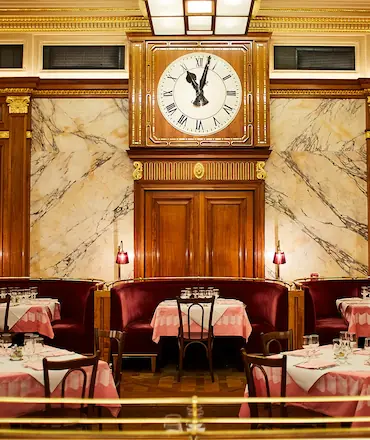
The design language leans heavily on traditional markers: dark wood panelling, leather banquettes, mosaic flooring, etched glass and historic-style signage. The intention was to make the pub feel as if it had always occupied this corner, quietly erasing the memory of its years as a branded chain restaurant. The result is not a museum piece, but a carefully curated fiction of continuity that suits both the story the operators want to tell and the expectations of their audience.
Interior zoning that engineers crowd psychology
The Devonshire is vertically organised, with each floor tuned to a specific mood and level of spend. This zoning allows the venue to hold multiple audiences at once, from after-work drinkers to corporate diners and celebrity guests.
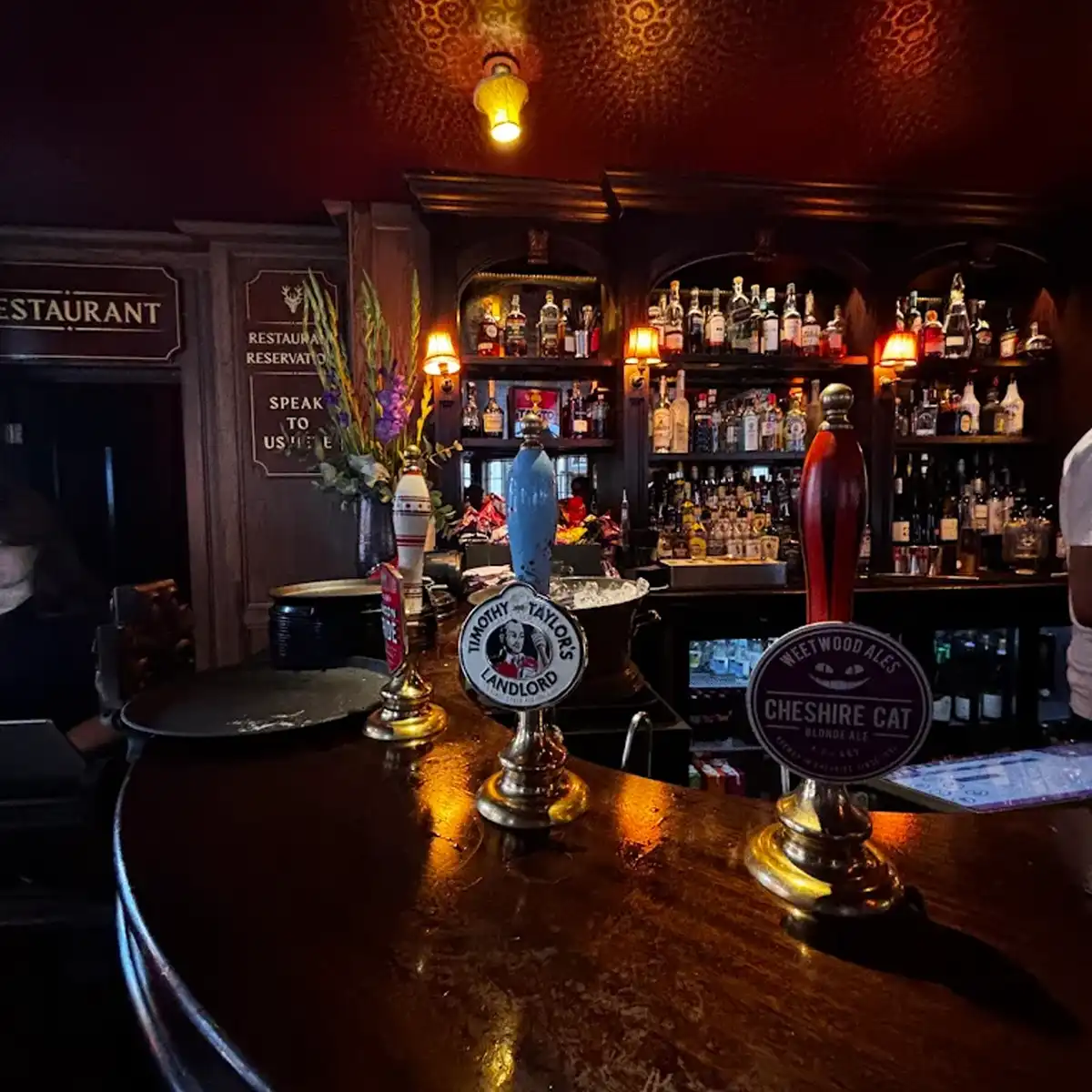
On the ground floor, the pub operates as a classic wet-led space. The long bar is built for throughput, with multiple Guinness taps and a layout that lets staff move quickly in a confined space. A feature known as the "Badger Hatch" acts as a dedicated service point to ease pressure on the main counter, speeding up orders and reducing congestion.
Behind the bar, three compact snugs offer semi-private corners with views of the room. These are particularly prized for their combination of visibility and shelter, and they support the social hierarchy of regulars and insiders that every successful pub cultivates. The design tolerates, and even encourages, high noise levels. Furniture is deliberately robust, drinkers spill onto the pavement, and the constantly visible queue itself becomes a piece of live marketing for the brand.
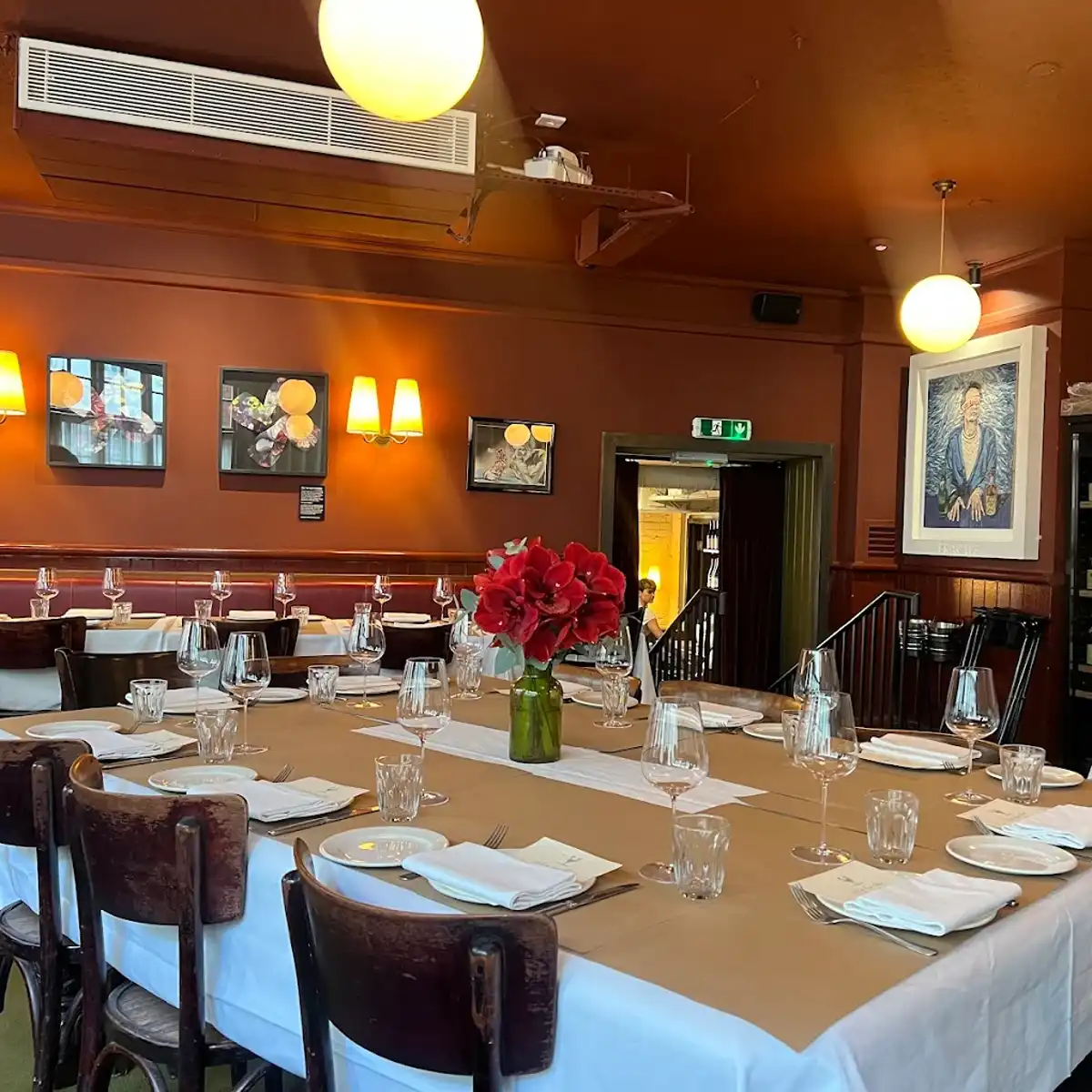
Move up to the first floor and the tone changes. This is the principal Grill Room, where the three-metre wood ember grill dominates the space both visually and thermally. Guests see whole ducks and large cuts of beef cooking over glowing embers. The dining room is hot, loud and tightly run, bridging the wildness of the bar below with the expectations of a reservation-led restaurant.
Visible to guests is a glass-fronted dry-ageing chamber, stacked with ribeye, sirloins and hanging birds. It functions both as storage and as a statement about provenance, signalling that meat is handled in-house rather than delivered in anonymous vacuum packs. The message is clear: this is a pub, but the kitchen operates at restaurant-grade standards.
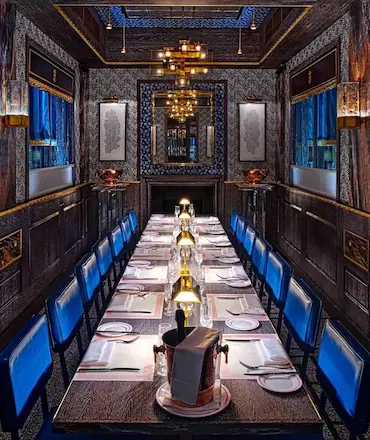
Higher floors become progressively quieter and more private. The Claret Room is designed for business lunches and more conversational dinners, with softer acoustics and a more restrained atmosphere. Around it, a network of private dining rooms spreads into neighbouring buildings: a larger David Bowie Room with blue tones and themed art that can hold around 60 guests, alongside smaller spaces named for Amy Winehouse and John Lennon. These rooms are configured for minimum-spend bookings, providing predictable revenue streams less vulnerable to fluctuations in walk-in trade.
Tucked within this vertical stack is the invitation-only Green Room, reached via a discreet route from the bar. Decorated with pieces such as a splatter painting by Ed Sheeran and tributes to Soho figures like Lesley Lewis, it recalls the bohemian clubs that once dotted the area. For high-profile guests, it offers a way to enjoy the pub's atmosphere while stepping out of public view when needed. For the operators, it acts as an important loyalty and relationship tool.
Fire led cooking and a menu of elevated nostalgia
The Devonshire's menu is built around elevated nostalgia rather than culinary experimentation. The aim is not to reinvent pub food but to deliver familiar dishes with unusual precision and consistency at scale.
The wood ember grill is central to that aim. Gas grills offer even heat and simplicity; embers demand constant attention but create a specific flavour profile. Oak and other hardwoods generate phenolic compounds that adhere to meat and fat, giving the steaks and chops their distinctive taste.
Beef is the main event. Scottish ribeye and fillet are offered at £38–£39, with larger sharing chops priced at roughly £11.50 per 100g. Cuts are dry-aged on site to concentrate flavour and break down muscle fibres before they reach the grill. Lamb appears as a "pile" of cutlets, cooked hot enough to crisp the fat while keeping the interior pink. Pork is represented by Ibérico chops, priced at about £24, sourced from Brett Graham's UK-reared pigs. The breed's high intramuscular fat stands up particularly well to ember cooking, and the association with the 3-star Ledbury adds another layer of prestige.
Palmer-Watts applies the same detail to humbler dishes. The Beef Cheek and Guinness Suet Pudding, at around £26, is emblematic. It uses Guinness from the bar and slow-cooked cheek from the butchery, wrapped in a traditional suet pastry that many commercial kitchens have abandoned because of the labour involved. Here, it has become a signature, connecting the pub's drinking culture directly with the restaurant plate.
Starters follow a similar pattern. Hand-dived scallops from Devon are paired with bacon and a malt vinegar from Cornwall that has been aged in oak for around 3 months, softening its acidity so that it seasons rather than overwhelms. Smoked salmon with house-baked soda bread, and straightforward dishes such as pea and ham soup at about £8, provide entry points for guests who want to eat more simply or spend less.
Downstairs, the bar menu plays a different role. Here the focus is on speed, comfort and margin. The sausage on a stick at around £2 is a classic piece of pricing psychology. In a venue where a pint may cost around £7, a £2 bar snack feels unusually accessible, encouraging guests to add it without much thought. A Scotch egg at roughly £8 likely uses trimmings from upstairs butchery, turning off-cuts into a profitable snack. The bacon sandwich at about £9 offers all-day sustenance for drinkers without slowing the kitchen.
Fun fact: Historical newspaper archives record an 1894 incident outside the original Devonshire Arms in which a police officer was stabbed during a disturbance, highlighting how different Denman Street's relationship with alcohol and public order once was.
Taken together, the menu positions The Devonshire as both a destination for serious meat cooking and a place where someone can still order soup, a pudding and a pint without feeling priced out.
Supply chains that turn provenance into strategy
The authority of the menu rests on more than rhetoric. The Devonshire has been structured to control a significant portion of its supply chain, turning provenance into both a marketing message and a cost management tool.
On the meat side, the business works with whole carcasses or large primals wherever possible. This demands dedicated butchers on staff, but the trade-off is lower cost per kilo and much greater flexibility. Prime cuts become steaks and chops. Off-cuts are diverted into burgers, sausages, pies, stocks, and sauces, helping to create a near-closed-loop approach to meat utilisation.
To supplement this internal system, The Devonshire partners with respected suppliers such as The Ginger Pig for consistent volumes of high-demand cuts. The link with Brett Graham's farming operation for Ibérico pigs is particularly significant, rooting the pub's meat offer in the same supply network as one of London's most celebrated fine-dining restaurants.
Seafood follows a similar philosophy. The kitchen buys from Flying Fish in Cornwall, specialising in day-boat landings. Fish such as turbot, brill and monkfish reach Soho within hours of being caught rather than after days on ice. Shellfish, including creel-caught langoustines from Oban priced at around £36, benefit from low-impact capture methods that preserve quality and appeal to increasingly sustainability-minded diners.
The cheese course is sourced from La Fromagerie in Marylebone, aligning the pub with one of London's most serious specialist cheesemongers. In the basement, an in-house bakery turns out soda bread, burger buns and other baked goods daily, giving the team control over a fundamental part of the offer that many venues still outsource.
Taken together, these relationships create not only a strong narrative for food-literate guests, but a degree of insulation from supply shocks and wholesale price volatility. They also underpin the venue's claim to be more than a pub with a grill, positioning it as a fully fledged restaurant operation operating in pub clothing.
Queues, crowds and the sociology of demand
From a sociological perspective, one of the most striking features of The Devonshire is not inside the building, but outside it. The queue on Denman Street has become a permanent part of the West End streetscape, a visible symbol of demand that functions as both gatekeeper and marketing device.
Unlike private members' clubs, the pub is technically open to anyone. In practice, scarcity shapes behaviour. Security staff manage the line to prevent pavement obstruction, a condition of the premises licence. They are briefed to act as hosts rather than bouncers, maintaining order while managing expectations and filtering out guests who are unlikely to comply with house rules.
For the restaurant, the booking system amplifies this sense of managed scarcity. Tables typically release in three-week blocks at a fixed weekly time, with waiting lists running into the thousands. The pattern is familiar from streetwear drops and ticketing for major cultural events. Guests learn to set reminders, and those who succeed reinforce the perception that a reservation is something to be won rather than simply acquired.
The crowd inside is deliberately mixed. After-work drinkers from nearby creative agencies occupy parts of the bar. Food-motivated visitors, who have seen the Guinness pour or the suet pudding on TikTok, travel from across London and beyond. Industry professionals, including chefs and managers from other venues, come to see how the operation works up close. Meanwhile, celebrities use the Green Room or blend into the main bar, adding to the sense that something is always happening.
This combination of openness and exclusivity, mediated by the queue, supports both revenue and reputation. It also raises questions for policymakers about how public space is informally reorganised around high-demand venues in tight urban quarters.
Systems staffing and the business of precision
Behind the convivial surface, The Devonshire runs on unusually structured systems. One of the most discussed is the use of a live Google Doc as the core floor management tool. At first glance, this looks makeshift compared with market-standard booking platforms. In reality, it offers the flexibility the team wants.
Because the document is shared and updated in real time, front-of-house staff can log notes such as "guest prefers corner table", "move party from Table 4 to Table 6" or "VIP arrival at 20:00" instantly, without fighting a rigid software interface. For a team of around 40 floor staff, this acts as an externalised shared brain, provided everyone is trained and disciplined enough to use it properly.
In the kitchen, an expanded brigade of about 25 chefs per service works in a structure broadly reminiscent of the classical French hierarchy, with stations for grill, garnish, sauces, pastry and prep. Palmer-Watts' background implies intensive training and a strong culture of standardisation. On the bar side, Rogers oversees Guinness training to uphold the two-part pour and presentation that underpin the pub's stout reputation.
The staffing numbers are higher than in a typical pub and more akin to a large standalone restaurant. The cost is justified by the requirement to maintain service standards amid constant pressure and by the headline volumes involved. The ability to recruit, retain and motivate this many skilled staff in a tight labour market is a significant part of the business's competitive advantage.
Money, licensing and the politics of a Soho super pub
Although The Devonshire Group is privately held and does not publish detailed accounts, reported numbers allow some reasonable inferences about the venue's financial profile.
If the pub sells around 20,000 pints of Guinness a week at an average price in the region of £7, stout alone could generate in the order of £140,000 in gross weekly revenue. Add in other beers, wines and spirits, plus roughly 700 daily restaurant covers with average spend per head likely in the £60–£80 range, and a weekly turnover above £200,000 appears plausible. Annualised, that suggests a business in the £10–£12 million turnover bracket.
Within this, Guinness has its own economy. While the gross margin on draught beer is lower than on cocktails or spirits, the sheer velocity of sales means it underwrites a significant portion of fixed costs. Fast-moving stock also means the beer is always fresh, reinforcing the product quality that draws drinkers away from competitors and back into the same loop of demand.
The wine list is constructed in tiers. Entry-level bottles at around £35, such as a house Portuguese rosé, give cost-conscious diners a foothold. Mid-range options like English sparkling wine at around £78 appeal to those seeking something more celebratory without straying into luxury pricing. At the top, prestige bottles, including Dom Pérignon 2012 at about £595, target so-called "whale" guests and corporate accounts. The margin in absolute cash terms on these high-ticket bottles is considerable, even if the percentage mark-up is moderated to encourage sales.
Operating in Soho, however, is not simply a matter of selling as much as possible. The area is designated a Cumulative Impact Area, meaning local authorities begin from the assumption that additional licences worsen disorder and noise. The Devonshire's application attracted objections from residents worried about intoxication, late-night disturbance and pressure on already busy pavements.
To secure its licence, the pub agreed to a series of conditions: restrictions on waste collection times, a formal dispersal policy to manage crowds leaving the building, and strict rules around outdoor drinking and the management of the Badger Hatch. The operators responded by investing in acoustic engineering, including high-spec glazing and layout tweaks to contain sound. They also trained security staff to focus on diplomacy and queue stewardship rather than confrontation.
For policymakers, The Devonshire therefore illustrates the negotiation required to reconcile high-performing hospitality businesses with the legitimate concerns of residents in dense central districts.
Expansion risks and the future of The Devonshire
Success on Denman Street has encouraged the Devonshire Group to look outward. A large site in Covent Garden, in the former offices of The Lady magazine, is already in development. Early indications suggest a similar format: pub downstairs, grill restaurant above, with capacity for roughly 450 guests split between drinking and dining areas. There are also reports of the team taking over The Marlborough in Mayfair.
The opportunity is clear. If the combination of leadership, supply chains and atmosphere can be reproduced elsewhere, the group could build a cluster of high-revenue sites across central London, each anchored in a historic building and oriented around wood-fired cooking and stout.
The risks are equally evident. Much of The Devonshire's perceived magic depends on the physical presence of Oisín Rogers, the novelty of the concept and a hype cycle amplified by digital content. As more outlets open, there is a danger that the brand becomes stretched, that personal oversight thins and that queues begin to feel like an inconvenience rather than part of the experience.
There is also a structural question: what happens if the next economic downturn constrains discretionary spending, or if drinkers shift back towards quieter, local venues nearer home? The partners are planning for the long term; reports of a 20-year lease suggest confidence that a great central London pub, properly funded and well run, will outlast trend cycles. Whether the concept remains equally resonant in 10 or 15 years will depend on how well the group manages to evolve without losing the qualities that made The Devonshire compelling in the first place.
What The Devonshire means for London hospitality
For analysts, policymakers and peers in the trade, The Devonshire is more than a fashionable place to drink Guinness in Soho. It represents a decisive turn away from the stripped-back minimalism and small-plate formats that dominated parts of London dining in the 2010s, towards a louder, more traditional but carefully engineered style of hospitality.
By combining the atmosphere of a Victorian-inspired pub with the rigour of a modern restaurant, the leadership team has demonstrated that high-volume hospitality can still feel personal, provided systems and staffing are resourced properly. The project also shows how redundant chain restaurant sites can be reimagined as socially and commercially productive spaces, rather than left to drift through another cycle of branded concepts.
For the general public, The Devonshire offers something apparently paradoxical: a place where a £2 sausage on a stick and a £595 bottle of Champagne can coexist without either feeling entirely out of place. For professionals and academics, it offers a detailed case study in hospitality leadership, urban economics and soft power. For local authorities, it raises questions about how licensing policy can accommodate ambitious operators while maintaining quality of life for residents.
As of late 2024, The Devonshire remains one of the most talked-about pubs in the capital. Whether it becomes a one-off legend or the blueprint for a new class of London super-pubs will depend on how the Devonshire Group handles expansion, labour, regulation and shifting consumer tastes. For now, it stands as a reminder that, in a city of constant reinvention, one of the most powerful ideas in hospitality is still a simple one: a busy corner pub, good fire, cold stout and the sense that, for a few hours, this is exactly where people want to be.
In that sense, The Devonshire functions rather like the oak embers in its grill. Carefully tended, they generate immense, controlled heat from a compact space. Let them burn unchecked or starve them of air and the whole system falters. The future of this influential Soho pub will depend on how consistently its operators can keep that fire at the right intensity.