On a narrow corner of Great Windmill Street, below the neon and theatre hoardings of Soho, Blacklock Soho has turned a basement once associated with vice into one of London's most closely watched hospitality case studies. Since opening in 2015 at 24 Great Windmill Street, the restaurant has revived the British chophouse as more than a nostalgic concept. It has become a live experiment in how a business can sell relatively affordable plates of meat in one of the most expensive districts in Europe, without sliding into the race to the bottom that has defined much of post-pandemic casual dining.
The original chophouses of the 17th and 18th centuries were places of trade as much as of eating. Merchants and professionals gathered at long tables, ate meat cooked close to the bone and transacted business in a haze of smoke and porter. Blacklock leans explicitly into that heritage, framing itself as a modern chophouse and working with Cornish butcher Philip Warren & Son to source native and rare breed animals from the South West. In place of clubby formality and white tablecloths, the Soho site offers bare brick, dark timber and a tightly packed dining room where the sound of clattering pans and 80s and 90s rock is as much part of the experience as the food.
What distinguishes Blacklock from other London steak restaurants is not simply atmosphere or location, but the way its business model integrates sourcing, pricing and branding. The restaurant commits to buying whole carcasses rather than individual premium cuts, uses that structure to underpin its pricing, and presents the result as a democratic meat feast. The signature "All In" platter at around £28 per person is positioned as a celebration dish, but it is also a carefully calibrated engine for volume, table turn and social media visibility.
Overlaying this is an increasingly explicit ethical narrative. Blacklock is now a Certified B Corp, placing it within a small cohort of hospitality businesses that have undergone third-party assessment of governance, labour practices, community impact and environmental performance. For policymakers and industry observers, the Soho site therefore functions simultaneously as a neighbourhood favourite, a case study in whole-animal butchery and a test of whether B Corp principles can sit comfortably alongside high-volume, alcohol-licensed operations in the West End.
Market Position Menu, Engineering And Pricing Strategy
Blacklock Soho operates in the "accessible premium" space: more expensive than fast-casual chains, markedly cheaper than the great London steakhouses of Mayfair and the City. The restaurant's menu is designed to channel that positioning into predictable spend per head, while leaving guests feeling they have received surplus value.
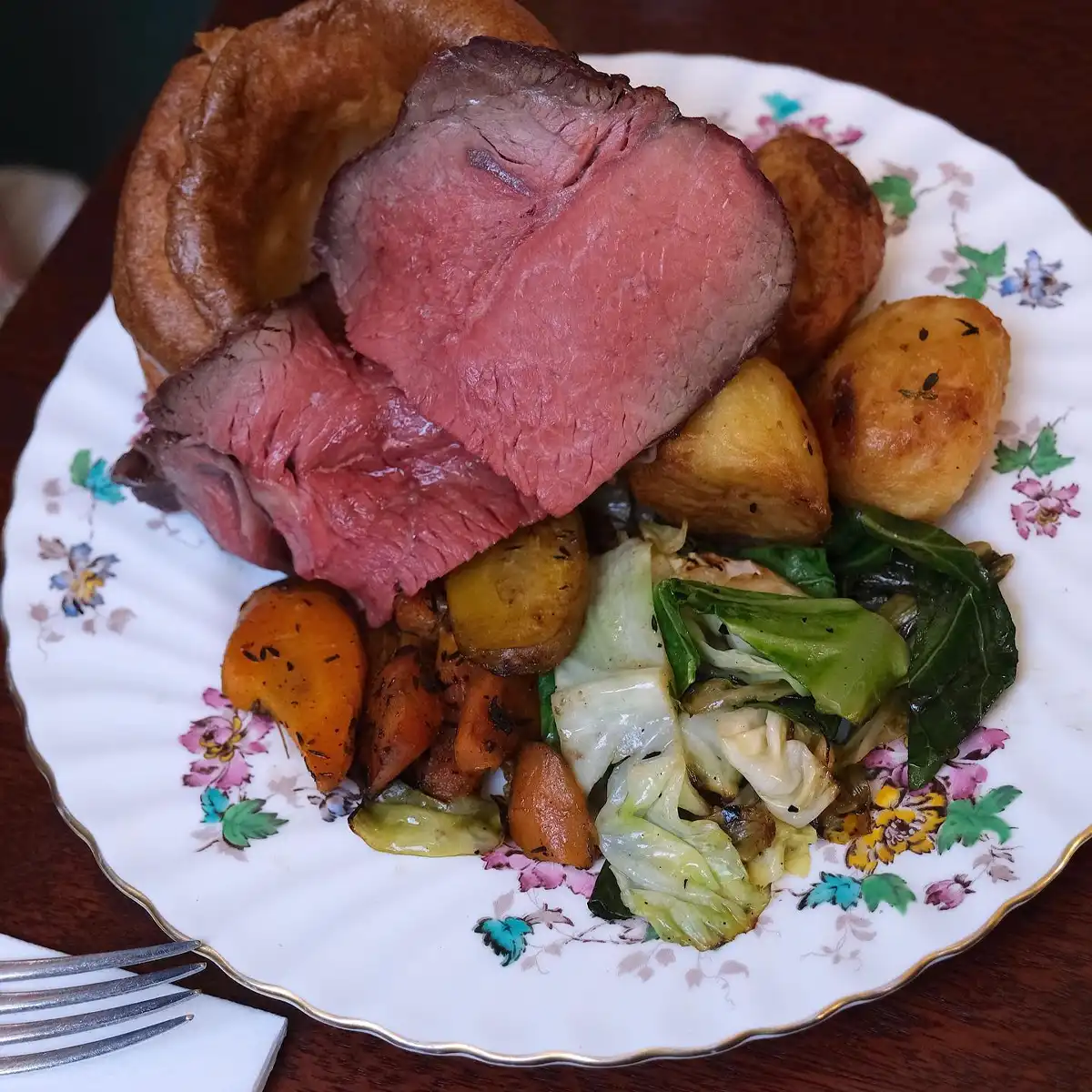
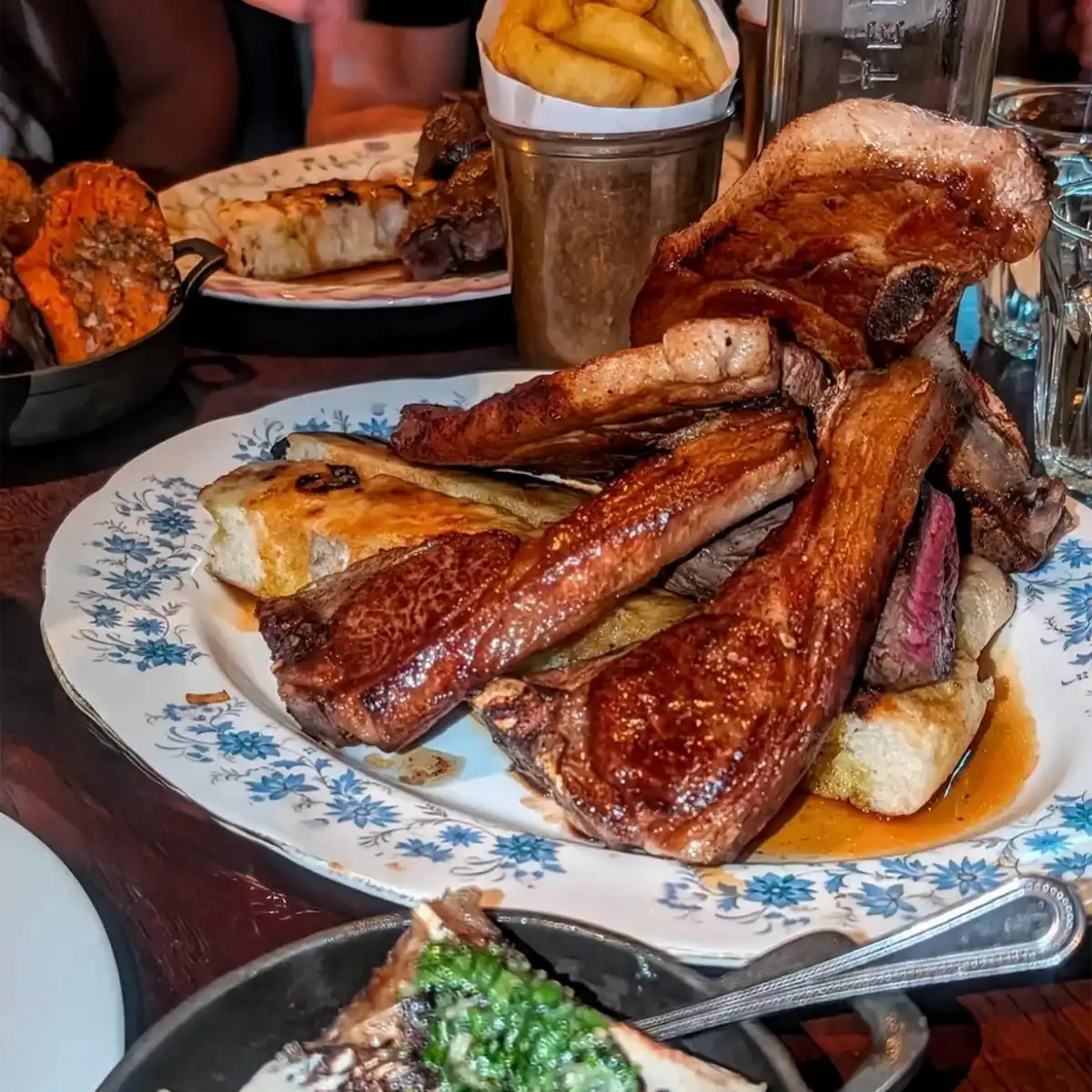
At the centre is the "All In" format, offered on weekdays with grilled chops and on Sundays in a roast configuration. The structure is straightforward: pre-chop snacks, followed by a stacked platter of beef, lamb and pork on a base of flatbread, with sides and gravy. Priced at around £28 per person for a minimum of 2 diners, it serves several strategic purposes. It pulls groups into a shared experience, increases the likelihood that tables order cocktails or additional sides, reduces decision friction and allows the kitchen to focus on a narrower range of outputs during peak periods.
Individually priced chops and specials still feature. "Skinny chops" sit around the £8 mark and reflect the historical chophouse idea of quick-cooked portions over fierce heat. Thinner cuts cook faster, which helps table turn while still delivering the sought-after char and Maillard flavours. Offal-based dishes such as Pig's Head on Toast occupy an important niche: they showcase the whole-animal approach, justify the partnership with a traditional butcher and offer margin-friendly starters that are distinctive enough to attract food-savvy diners.
Price architecture extends into the edges of the week. "Butcher Price Mondays" features large cuts, such as prime ribs, sold at or near retail butcher prices. The headline appears generous, but the offer encourages bookings on a traditionally softer trading day and pairs naturally with the £10 corkage policy, which allows guests to bring in premium bottles from outside. For a certain demographic of wine-literate Londoners, this combination turns Monday into the best value steak night in the West End, while still delivering volume and ancillary sales to the business.
At lunchtime, options such as the steak sandwich provide lower-ticket entry points, keeping the venue relevant to office workers and central London visitors who may not commit to a full feast. The net effect is a menu that appears simple but is highly tiered, with clear pathways from budget-conscious visits to more expansive group celebrations.
Supply Chain Whole Animal Butchery And Sustainability
The partnership with Philip Warren & Son, a third-generation Cornish butcher, is central to both the economics and storytelling of Blacklock Soho. Rather than cherry picking fillet or ribeye, the group commits to entire carcasses from native and rare breeds, raised predominantly on grass and moorland.
From an operational perspective, this offers two major advantages. First, purchasing whole animals can lower the average cost per kilogram compared with spot buying premium cuts. Second, it creates an incentive for the kitchen to design dishes that make use of lesser-known muscles and offal, turning what might otherwise be difficult stock into signature items. Starters like Pig's Head on Toast and slow-roasted "sixth rib" specials directly embody that logic.
From a sustainability standpoint, the approach aligns with broader discussions around regenerative agriculture and meat consumption. By supporting smaller, pasture-based farms and taking whole animals, Blacklock positions itself as a partner rather than a transactional buyer. The B Corp certification strengthens that narrative, with the group publicly emphasising commitments to its supply chain, team welfare and environmental footprint.
This ethos extends into the drinks programme. The bar's "pip to peel" philosophy uses offcuts and peels from the kitchen to create syrups and garnishes for cocktails, reducing waste while adding a talking point for guests. House wines are served on tap, a decision justified partly on carbon grounds, as kegs minimise the volume of glass in circulation and the emissions associated with bottle transport.
It is essential to recognise the limits of such claims. Serving meat at scale is inevitably resource-intensive, and many of the environmental gains in this context are relative rather than absolute. Nonetheless, the combination of whole-animal purchasing, waste-reducing drink design, and B Corp verification signals an attempt to align a high-volume restaurant with contemporary expectations for sustainability and transparency. For diners, those choices sit in the background of the meal but increasingly influence where ethically minded guests choose to spend their money.
Fun fact: The Soho basement, now home to Blacklock, once housed the notorious Le Reims lap dancing club, with the nearby Nosh Bar long serving salt beef to theatreland regulars.
Corporate Structure, Governance, And B Corp Status
Behind the packed tables and charcoal smoke sits a relatively intricate corporate structure. The Soho site trades through Blacklock & Company Ltd, incorporated in 2014 and registered at the Great Windmill Street address. As the group has expanded into the City, Shoreditch, Covent Garden, Canary Wharf and Manchester, additional entities have been created, including a group holding company and separate vehicles for new openings. This pattern is typical of growing restaurant groups, allowing investors to back expansion while ring-fencing risk.
Founder Gordon Ker, a former lawyer, is a visible part of the brand narrative. Interviews frequently reference his decision to stage at established steakhouses, notably Hawksmoor, to understand the fundamentals of butchery, cooking and service before taking on the Soho site. That storyline has practical implications: an awareness of licensing, leases and employment law can be an asset in a regulated, property-intensive sector, while an understanding of guest expectations at the upper end of the steak market helps Blacklock calibrate its offer.
The group's B Corp status, confirmed in 2023, places additional obligations on governance. Certification involves external assessment across areas such as workers, customers, community and environment and requires legal changes that lock a commitment to wider stakeholders into the company's constitution. In practice, this means that decisions around expansion, procurement and HR must be justified not only on financial grounds but also against explicit social and environmental criteria.
One tangible expression of this at the restaurant level is the tipping policy. Menus make clear that the discretionary 12.5% service and hospitality charge is shared across the team, rather than being absorbed into general revenue. That aligns with growing pressure on operators to be transparent about gratuities and may help with recruitment and retention in a labour market where hospitality workers have many alternatives.
For policymakers and campaigners interested in fair work and responsible growth, Blacklock offers a live example of a mid-sized restaurant group attempting to embed these principles without chasing luxury pricing. Whether that model proves durable through economic cycles will be a key question over the coming decade.
Regulation Licensing And Operational Compliance In Soho
Operating in Soho brings brand benefits and regulatory complexity in equal measure. The area forms part of Westminster's West End Cumulative Impact Zone, where licensing authorities assume that additional alcohol-led premises or later hours are likely to add to crime, disorder and pressure on public services unless applicants can demonstrate otherwise.
Blacklock Soho functions primarily as a seated restaurant, rather than a vertical drinking bar. That positioning is significant, as Westminster's policy framework is more receptive to food-led venues that can show they manage dispersal, noise and intoxication risks. Hours, conditions on door supervision and the balance of seating to standing room are all shaped by this relationship with the council and its licensing committees.
The site is also subject to the Westminster Late Night Levy if licensed beyond midnight, a charge that contributes to policing and management of the night-time economy. For operators, the levy is another factor feeding into decisions about hours, staffing and the commercial value of late-night trading. For local authorities, it is one of the few fiscal tools available to offset the costs associated with a dense cluster of licensed venues.
Food safety compliance is another area where Blacklock's model is closely scrutinised. As of the most recent inspection, the Soho restaurant holds a Food Hygiene Rating of 4 out of 5, categorised as "Good", following an assessment in October 2024. While this rating is compliant, it sits one step below the top score of 5 achieved by many competitors and reflects areas where inspectors judged that procedures or documentation could be strengthened. In a business that handles high volumes of raw meat and cooks in an open kitchen, maintaining or improving that rating will be an ongoing operational priority.
For consumers, food hygiene scores are increasingly accessible via council and third-party websites, and they form part of the decision mix alongside price, reviews and convenience. For regulators, a busy chophouse in a basement setting represents a complex environment in which ventilation, cleaning, cross-contamination controls and training must all be continuously monitored.
Guest Experience, Atmosphere And Accessibility Trade-Offs
The experience at Blacklock Soho is deliberately intense. Guests descend a flight of stairs into a low-lit room where the soundtrack is loud, tables are placed close together, and the ceiling is low enough for the noise to rebound. For some, the effect is convivial and energising. For others, particularly those seeking quiet conversation or older diners sensitive to high decibel levels, it can be overwhelming. Reviews across platforms frequently praise food and service while flagging noise as a drawback.
Seating is a mix of communal trestle tables and smaller booths. The design encourages groups to share platters and interact, echoing the sociable nature of traditional chophouses. However, the density of the room can make it challenging for guests who value personal space, and movement through the dining area during peak times is tight.
Accessibility is a clear weak point. The Soho site has no lift, and access is via stairs only. That presents significant barriers for wheelchair users and guests with limited mobility, as well as practical difficulties for families with prams. While the wider Blacklock group points guests toward more accessible branches in Shoreditch or Canary Wharf, the lack of step-free access in Soho reflects a tension between occupying characterful historic basements and meeting contemporary inclusion expectations.
The booking system is designed to manage demand within this constrained footprint. Lunch is fully bookable, while evenings blend reservations and walk-ins. After around 18:00, many tables are held for walk-ins, particularly smaller parties, with a virtual queue system allowing guests to leave their details and be called back when a table is ready. On Friday and Saturday nights, as well as Sunday lunchtime, waits of 1 to 2 hours for walk-ins are not uncommon, particularly for those who have set their sights on the Sunday roast.
For some, queueing is part of the ritual of eating at a cult restaurant. For others, especially visitors with limited time in the city, it is a deterrent. The system places a premium on planning: guests who reserve early, particularly on Sundays, secure the experience most often seen on TikTok and Instagram; those who do not may be turned away.
Digital Sentiment, Social Media And Demand Patterns
Across major review platforms, sentiment towards Blacklock Soho is strongly positive. Diners frequently highlight the value of the "All In" platters, the quality of roasting and the warmth of front-of-house teams. Negative comments cluster around three themes: noise, perceived saltiness in some dishes and the difficulty of securing a table at peak times.
Social media has amplified the brand's reach well beyond Soho. Short-form video platforms are filled with slow-motion shots of gravy being poured over stacked roasts, close-ups of charred chops and the dramatic moment when a spoon sinks into tableside cheesecake. The Sunday roast "All In" in particular has become a staple of "London food" content, with creators pointing to its combination of price, quantity and theatre.
This visibility has material consequences. Viral clips can drive weekend bookings and push guest demographics younger, especially on Sundays when phone-first diners seek out experiences they have seen online. For the business, that creates advantages and risks. A steady stream of social media coverage reduces the need for traditional advertising, but it also raises expectations and can concentrate demand into specific time slots and dishes, putting additional pressure on kitchen and front-of-house teams.
In parallel, traditional reviews from newspapers, food blogs and city guides continue to frame Blacklock as one of the best value roast options in London, often contrasting its price point with more formal steakhouses. That hybrid of digital word-of-mouth and legacy media endorsement has helped the brand move from "insider tip" to established institution within a decade.
Competitive Landscape In The Accessible Premium Steak Market
Within a 1-kilometre radius, Blacklock Soho shares its catchment with Flat Iron, Sophie's Steakhouse, Hawksmoor and Zelman Meats, among others. Each occupies a distinct slice of the market.
Flat Iron built its model on a single affordable steak, typically priced in the mid-teens, accompanied by a concise menu and fast service. It caters to guests who want a focused experience, modest spend and minimal ceremony. By contrast, Blacklock positions the "All In" as a broadened feast: multiple meats, sides and shared plates that push spend per head higher, but also feel more like an occasion.
Sophie's Steakhouse, supplied by the same Cornish butcher, leans into large sharing steaks and a more spacious dining room, with an imposing fire pit at its heart. Where Sophie's aims at date nights, families and business dinners, Blacklock Soho targets a tighter, more boisterous experience that feels closer to a night out than to a boardroom lunch.
Hawksmoor, although not immediately adjacent, looms in the background as the template from which Blacklock partly diverges. It offers grand rooms, expansive wine lists and higher price points. Regulars often describe Blacklock as delivering much of Hawksmoor's meat quality at a lower cost, in exchange for noisier rooms and a simplified drinks list.
Zelman Meats, meanwhile, focuses on global beef cuts and a darker, sleeker aesthetic. It appeals to diners who are interested in provenance in terms of country and breed, and who may be prepared to pay more for specific steaks rather than shared trays.
In this context, Blacklock's competitive edge is the combination of whole-animal sourcing, B Corp credentials, group-friendly formats and pricing that remains attainable for a wide audience. The key strategic question is whether that balance can survive rising costs of labour, energy and rent while maintaining staff pay, supplier relationships and perceived value.
Consumer Guidance: How To Get The Best From Blacklock Soho
For prospective guests, the decision to book Blacklock Soho is less about whether the food is good and more about whether the overall experience suits their needs. Several practical considerations stand out.
First, this is a restaurant for those who enjoy noise, bustle and shared eating. Couples seeking a quiet, intimate dinner may find the sound levels challenging. Groups of friends, colleagues celebrating a win or visitors looking for a London night to remember are more likely to thrive in the environment.
Second, access matters. Anyone with mobility issues or with companions who use wheelchairs will find the Soho staircase a serious and, for many, insurmountable barrier. In such cases, Blacklock's more accessible branches, particularly in newer developments with lifts, are likely to be better options.
Third, timing and planning make a significant difference. For Sunday roasts, booking ahead is strongly advised, as allocations regularly sell out. On Friday and Saturday evenings, guests should be prepared either to dine early, around 17:00 to 17:45, or to embrace the virtual queue, putting their name down and visiting a nearby pub while they wait.
From a food perspective, first-time visitors looking to understand the concept should treat the "All In" as the default, supplementing it with at least one offal or vegetable dish to see how the kitchen handles less familiar cuts and non-meat plates. Cocktails built around otherwise wasted fruit and a carafe of keg wine give a representative view of the sustainable drinks programme without dramatically inflating the bill.
Finally, guests with specific dietary needs should check menus in advance and discuss requirements with staff. While the kitchen has worked to include vegetarian options and accommodate allergies, the core identity remains robustly carnivorous, and cross-contamination risks in a compact, meat-heavy environment need to be considered.
What Blacklock Soho Reveals About London's Hospitality Economy
Blacklock Soho is more than a busy basement restaurant. It encapsulates several of the fault lines and innovations shaping London's hospitality sector in the mid-2020s.
It demonstrates that whole-animal butchery and ethical sourcing can be embedded into a high-volume model, provided there is tight menu engineering and a willingness to educate guests. It shows how B Corp principles can move from corporate documentation to visible commitments around staff, suppliers and environmental footprint, even in a business built on meat.
At the same time, it highlights persistent structural challenges. The West End Cumulative Impact Zone continues to constrain operating freedoms, forcing venues to balance commercial ambition with stringent licensing conditions. Basement sites with colourful histories add character and story telling power, but also create barriers for disabled guests and families, raising questions about who central London dining rooms are really for.
For diners, Blacklock Soho offers one of the capital's most reliable expressions of the modern chophouse: noisy, generous, relatively affordable and grounded in British beef, lamb and pork. For regulators and researchers, it offers a case through which to consider hygiene standards in complex kitchens, the impact of levies and licensing on mid-market operators and the role of accreditation schemes in driving better corporate behaviour.
Perhaps the best way to think about Blacklock Soho is as a kind of pressure cooker for the wider industry. High heat, multiple ingredients and constant movement produce an experience that feels joyful to many and exhausting to some. The question facing restaurateurs and policymakers alike is whether more of London's future dining rooms will look like this: packed basements trading on strong ethics and strong drinks, or whether quieter, more spacious, more rarefied formats will reassert themselves. For now, the queues on Great Windmill Street suggest that the chophouse, reimagined for the age of TikTok and B Corp audits, is very much back in business.
More in the Soho restaurants guide
Part of our Soho restaurants guide.