Step out of Leicester Square station on a Friday night and Soho arrives all at once. Neon over Old Compton Street, kitchen extractors humming along Dean Street, queues forming outside basement bars, theatre crowds drifting down Shaftesbury Avenue. From the end of 2026, something new will be watching that scene. The Metropolitan Police plans to bring live facial recognition to the West End, with Soho among the central London streets lined up for the cameras. For a district built on Soho nightlife, late dinners and after-show drinks, this is a meaningful shift. The technology scans the faces of people walking past, checks them against a watchlist of wanted suspects, and alerts officers to a possible match. Supporters say it could make a night out in Soho safer for visitors, hospitality workers and residents alike. Critics warn it risks turning one of London's most open neighbourhoods into a permanent biometric checkpoint. The truth, as so often in Soho, sits somewhere in between. This piece sets out what facial recognition in Soho and the West End actually involves, why the Met is rolling it out, and what it could mean for the area's restaurants, bars and venues.
What Live Facial Recognition Means for a Night Out in Soho
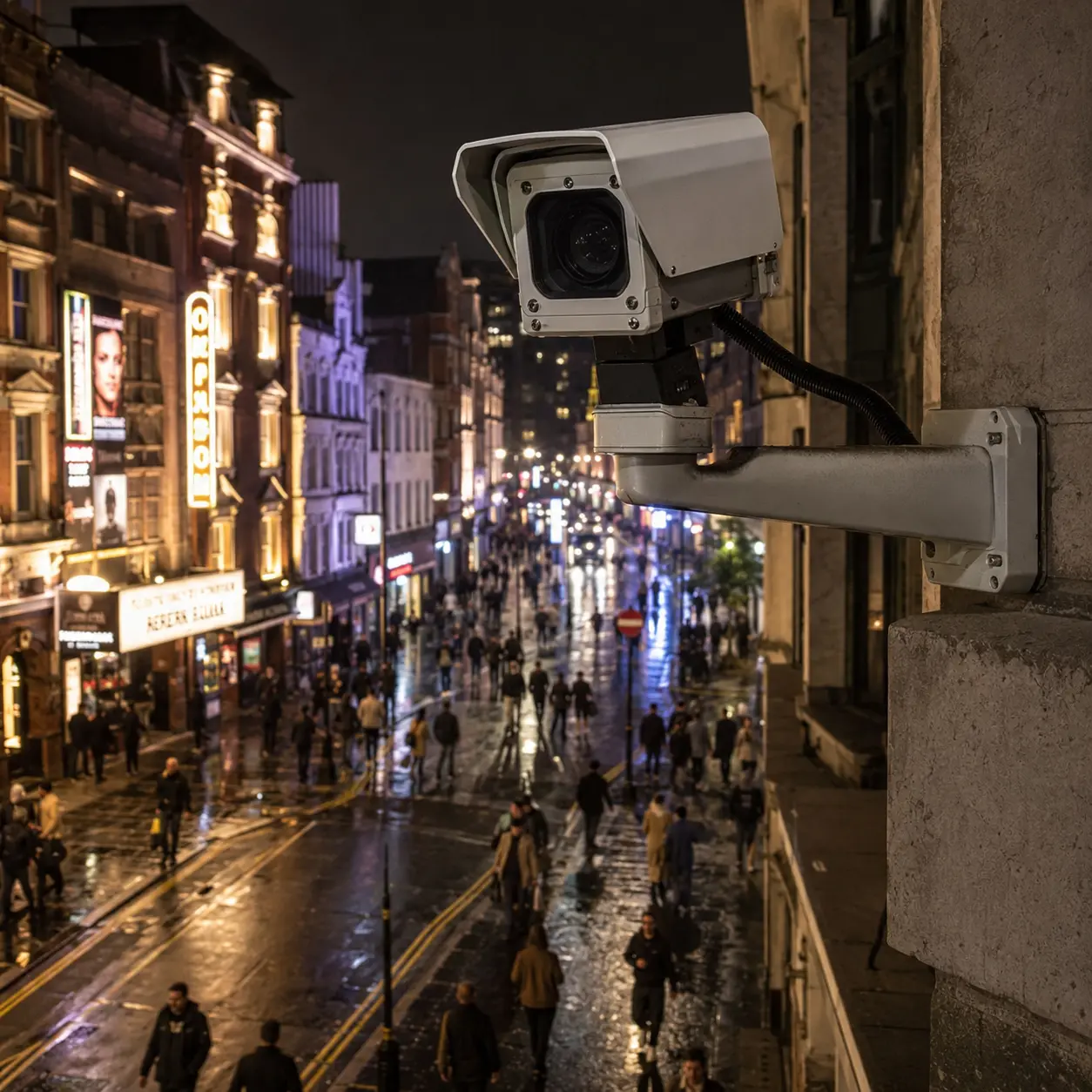
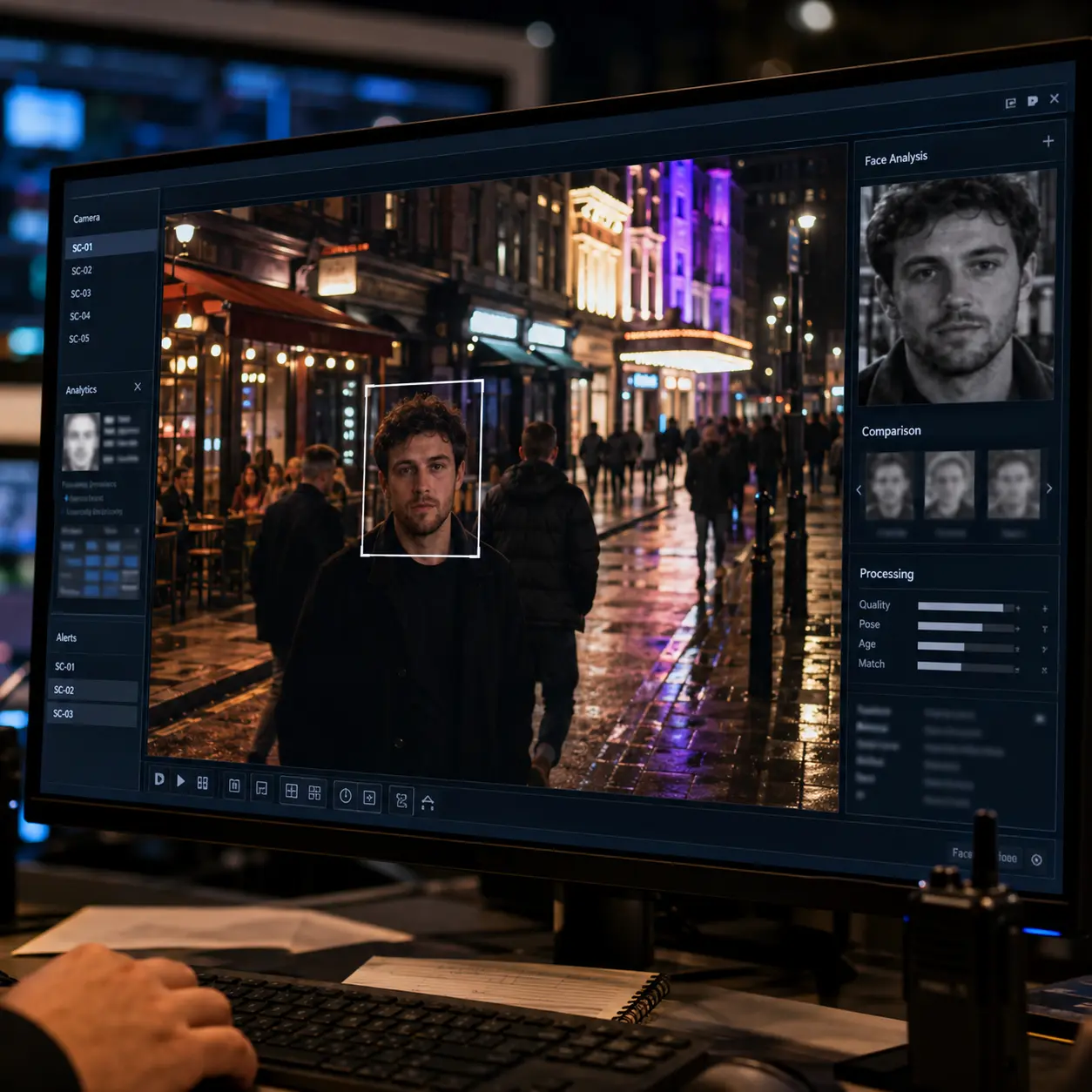
Live facial recognition, or LFR, uses cameras mounted on lampposts or police vans to scan the faces of passers-by in real time. Each face is compared against a bespoke watchlist of people wanted by police. Where there is no match, the biometric data is deleted within moments and the person is never identified.
This is the part many visitors misunderstand. The system is not a permanent record of everyone who walks through the West End. It is a live filter, looking only for the faces on a specific list. When the cameras flag a possible match, a human officer reviews the alert and decides whether to stop and speak to the person. The aim is to find a small number of wanted individuals within a very large crowd, the kind of crowd Soho produces every weekend.
Why the Met Is Bringing Facial Recognition to the West End
The expansion follows a six-month pilot in Croydon, south London, that the Met judged a clear success. Between October 2025 and March 2026, officers ran 24 deployments, scanned more than 470,000 pedestrians and made 173 arrests, with a single false alert recorded across the entire period. One case involved a registered sex offender who was later sentenced to 2 years in prison.
Those numbers, as reported by the BBC and others, are why the West End is next. Commissioner Sir Mark Rowley has said he wants to significantly step up the use of the technology, alongside drone units and AI analysis of London's network of around 1 million CCTV cameras. His argument is straightforward. The Met is policing a growing, late-opening capital with stretched resources, and tools that put officers in front of wanted suspects quickly are, in his view, worth the investment.
How Safer Streets Could Help Soho Restaurants and Nightlife
A safer West End is good for the West End. Soho's economy runs on confidence, the willingness of people to travel in, eat late, drink well, catch a show and move between venues long after the last train. Anything that strengthens that confidence supports the Soho restaurants, bars and clubs that depend on the after-dark crowd.
The benefits are most obvious for the people who keep the area moving. Bar staff closing up alone at 2am, theatre-goers walking back toward Piccadilly Circus, women crossing Soho Square at night, and the bartenders, chefs and door staff who finish their shifts when most of London is asleep. Street theft, phone snatching and antisocial behaviour cluster around Leicester Square and the West End theatre district, exactly the approaches where the cameras are most likely to sit.
Safety carries particular weight on Old Compton Street, the heart of LGBTQ+ Soho. This is a community with a long memory of violence, from the 1999 Admiral Duncan attack to more recent street assaults, and a genuine stake in feeling protected as well as welcomed. A West End that feels secure after dark is one where visitors stay later, spend more time on the pavements and treat Soho as a place to linger rather than pass through. For an area still rebuilding its night-time economy, that reassurance has real commercial value, provided the technology performs as promised.
What Critics Say About Privacy and Accuracy
Not everyone welcomes the cameras. The civil liberties group Big Brother Watch argues that permanent biometric surveillance of the public square is incompatible with policing by consent, and warns that normalising face scanning in a place as open as Soho sets a worrying precedent. Campaigners point to documented cases of misidentification and to long-standing concerns about how accurately the technology performs across different ages, genders and ethnicities.
There is also the question of character. Soho has spent a century as a refuge for people who did not fit in elsewhere, from artists and musicians to the LGBTQ+ community. Critics fear that constant facial scanning could chill the very openness that makes the area what it is. The Met counters that its safeguards are strict. Watchlists are built no more than 24 hours before a deployment and deleted afterwards, faces that do not match are discarded instantly, and the Croydon pilot logged just 1 false alert against more than 470,000 scans. Both sides, tellingly, cite that same figure.
How to Enjoy Soho at Night as the Cameras Arrive
For most visitors, very little changes. You can still book the table on Dean Street, catch the show on Shaftesbury Avenue and finish the night in a basement bar off Wardour Street. The cameras are aimed at wanted suspects, not at ordinary diners and theatre crowds, and the law permits members of the public to decline to be scanned, although officers may take an interest in anyone who actively avoids them.
Practically, expect the cameras at the busy gateways into the area rather than buried in the side streets, around Leicester Square, Piccadilly Circus and the main Shaftesbury Avenue approaches. Plan your exit as you always would. The last Underground trains run from about 00:30 on weekdays, with the Night Tube serving Leicester Square on the Victoria, Central, Northern and Piccadilly lines on Friday and Saturday nights, backed by frequent N-prefixed night buses across the West End. The evening itself, the food, the drinks, the late licence and the energy, stays exactly as Soho intends it.
Fun fact: During the Met's Croydon pilot, the cameras scanned more than 470,000 faces yet logged just 1 false alert, a single figure that supporters and sceptics now quote for completely opposite reasons.
What Facial Recognition Means for the Future of Soho
Soho has always absorbed change, from the coffee houses of the 18th century to the clubs, theatres and queer venues that define it today. The arrival of facial recognition in Soho and the wider West End is simply the latest chapter, and the open question is whether it becomes invisible background like CCTV, or a line the public decides to push back on. For now, the sensible move is to plan your evening exactly as before. Book the restaurant, see the show, find the bar, walk the streets that have entertained London for generations. Like a doorman you never quite see, the cameras will watch the crowd at the velvet rope. Whether that reads as reassurance or intrusion may depend entirely on which side of the rope you are standing.