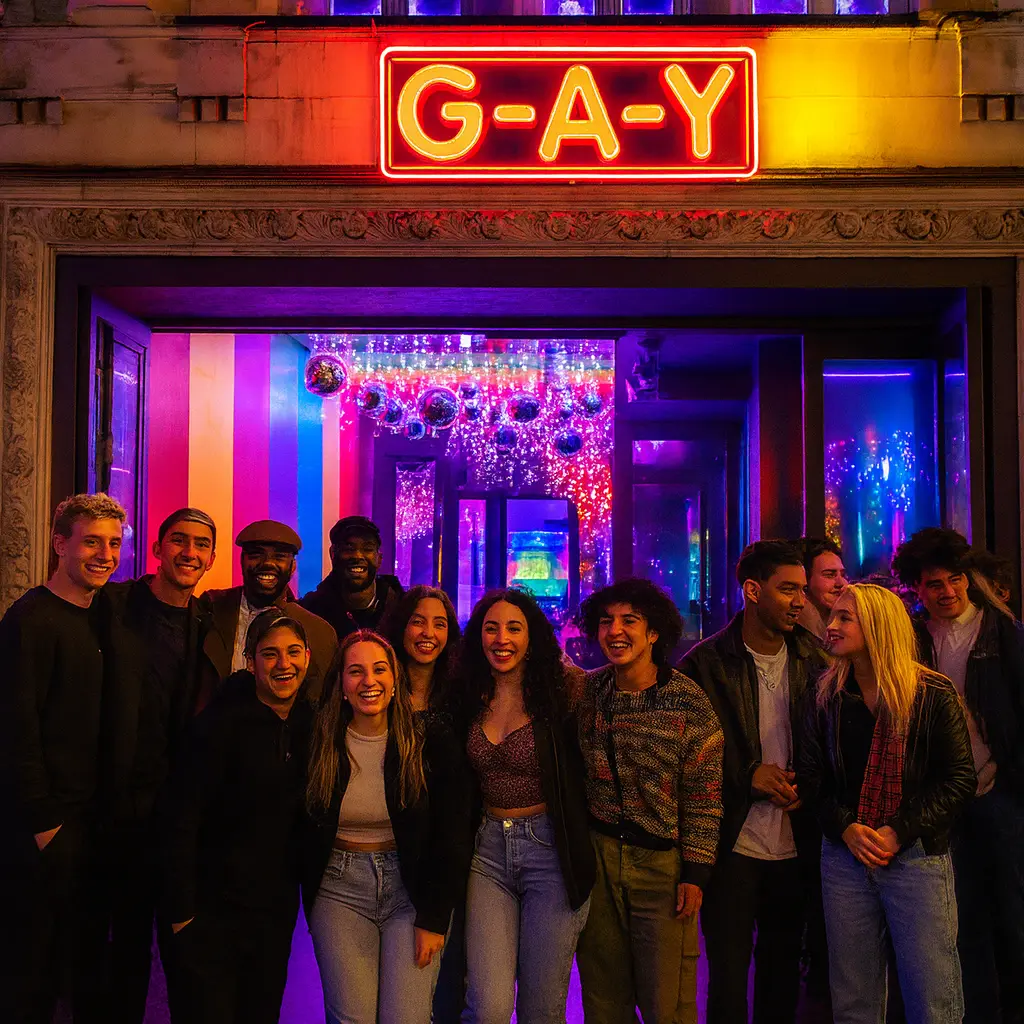
On the first weekend of October 2025, the music at 30 Old Compton Street sounded like a farewell. Inside G-A-Y Bar, regulars toasted the venue where many first stepped into queer London. Days earlier, owner Jeremy Joseph confirmed the bar would shut. He framed the decision as a strategic move to protect Heaven nightclub near Charing Cross. One much loved site would close so another, older institution could survive. The choice captures a wider story. Queer cultural heritage in London sits under economic stress, planning pressure and shifting patterns of nightlife. The final night at G-A-Y Bar closes a chapter yet also marks a pivot point for how the city sustains LGBTQ+ venues in the years ahead.
How a landmark venue reached its end
G-A-Y Bar did not collapse through lack of demand. The decision followed a long fight over rent at Heaven and a hard look at business resilience. After a 23-month rent arbitration with landlord ArchCo, Heaven faced a rent rise that, while smaller than feared, still doubled costs. Legal fees exceeded £100,000. Joseph called the process make or break. The outcome was survivable for Heaven, but only with focus and capital.
By contrast, relations with Soho Estates, the G-A-Y Bar landlord, were cooperative. They had allowed rent relief during lockdowns and agreed to a lease exit to help consolidate the group. The closure was not an eviction. It was a choice to back the venue with deeper history and stronger operating prospects. In a sector of tight margins, owners increasingly favour fewer, larger sites that can spread risk and shoulder compliance, staffing and security costs.
Consolidation as a survival strategy
The shuttering of G-A-Y Late in November 2023 set a pattern. That site suffered from surrounding construction, safety concerns and limited late-night policing. In January 2025, G-A-Y Bar was placed on the market at an annual rent of £410,000, after the shock of a temporary closure at Heaven in November 2024 following a serious allegation against a contractor. Heaven later reopened and the individual was acquitted, but the interruption rippled through group finances. Independent operators often run slim cash buffers. A one-month shutdown at a flagship site can tip the rest of the portfolio into hard decisions.
The G-A-Y story shows a sequence common across hospitality. An external shock drives liquidity strain. Liquidity strain triggers asset sales or closures. Operators then concentrate resources into one or two core venues with scale. The move may preserve a brand, yet it also reduces the number of accessible, low-barrier entry points for new patrons.
What changed on Old Compton Street
Joseph linked the closure to a broader cultural shift in Soho. He said Old Compton Street had “lost its identity.” He recalled nights when artists like Madonna turned the street into a communal stage. He cited more recent weekends with cordons and rising reports of disorder. He criticised businesses that trade on Pride month without visible year-round support. He also argued that post-pandemic policy choices had hurt safety and atmosphere. Outdoor seating, which had drawn crowds and eyes on the street, was curtailed. He viewed this as a mistake that made nights feel less secure.
The point is not just nostalgia. It is a claim about how planning and licensing shape social life. When venues are replaced by restaurants oriented to early evening trade, late-night diversity thins out. When residents’ noise complaints dominate licensing risk, dance floors shrink. The result is a sanitised version of a district once defined by pluralism and edge.
Gentrification, commercialisation and the paradox of acceptance
Soho’s transformation follows a familiar arc. As a neighbourhood gains visibility and safety, investment flows in. Larger chains pay higher rents. Independent bars are priced out. Queer spaces, once formed as refuges, become marketable concepts. Symbols of inclusion appear on marketing materials in June, yet lease terms and fit-out budgets favour operators with corporate backing. This is not unique to London. It is the paradox of success. Wider acceptance reduces the perceived need for dedicated safe spaces at the same time as it makes those spaces attractive to mainstream investors.
Safety, policing and the limits of city support
Venue operators report stretched police response times, increased street disorder and higher security costs. Joseph described an eight-hour response to a 999 call at another site. He argued that City Hall and the borough have limited resources and mixed priorities. The removal of al fresco licensing after Covid-era measures is emblematic. What had made streets lively and predictably occupied was rolled back. Fewer eyes on the street at night can translate into less perceived safety. For independent venues, extra security and stewarding add to fixed costs already rising with energy, business rates and staff wages.
The data on closures across London
Academic and city data show the scale. Research by UCL’s Urban Laboratory for the Greater London Authority reported a fall in LGBTQ+ venues from 125 in 2006 to 53 in 2017, a drop of 58%. GLA monitoring suggested a low point of 50 venues by 2022 and a fragile uptick to around 60 in mid-2024. The core drivers were planning and property: redevelopment, rent and rate rises, conversions to other use classes, and negotiations weighted toward freeholders.
The contraction has not been even. Spaces serving women, trans people and Black, Asian and Minority Ethnic communities experienced disproportionate loss. When the overall number shrinks, under-represented groups lose options first. Recovery figures must be read in that light. A single new mixed venue cannot replace the function of several specialist spaces.
Fun fact: The term “Old Compton Street” became a shorthand in 1990s British media for the visible centre of gay London, to the point that some foreign guidebooks simply called it “the gay high street.”
A national night-time downturn
The squeeze extends well beyond queer venues. The Night Time Industries Association estimates the UK lost roughly 26.4% of late-night venues since March 2020. London’s count fell from 433 to 343 in that time. One quarter fewer sites means fewer ladders for new promoters, DJs and performers. It means longer journeys home for staff finishing at dawn. It also means a thinner safety net of places to go if one space closes or changes policy. Night-time economy resilience is a public interest question, not only a commercial one.
Global parallels and shifting social habits
Studies in the United States show a 36.6% decline in gay bars from 2007 to 2019, with steeper falls for lesbian bars and bars serving people of colour. Contributing factors include gentrification, higher fixed costs, changing patterns of meeting through apps, and stricter licensing environments. The technology shift matters. If many first encounters move online, spontaneous bar footfall drops on weeknights. Operators must rely on weekend peaks and ticketed events. That pushes programming toward large rooms and known brands, reinforcing consolidation.
G-A-Y as icon and as argument
G-A-Y’s cultural role is significant. For almost 30 years, the bar was a low-threshold door into LGBTQ+ London. It was a place to meet, to watch live pop performances close-up, and to feel part of a wider culture. The brand’s ties to major acts and to Heaven nightclub amplified queer visibility in mainstream media.
Yet the community view is not single. Some patrons and local voices criticise the owner’s approach, alleging hard-nosed practices and limited solidarity with other venues during earlier closures. Others say the bar felt dated by the mid-2020s, with programming that leaned on nostalgia more than discovery. Both positions can be true. An institution can be foundational and still lose pace with a fast-moving scene. Recording these tensions avoids flattening a complex history into a simple elegy.
Where the energy has moved
While Soho contracts, other districts have grown. Vauxhall has become the centre of late-night clubbing for large-room events, fetish nights and Sunday-into-Monday parties in railway arches at sites such as Fire, Union and Eagle London. East London has hosted the alternative and performance art strands, with spaces such as Dalston Superstore and VFD fostering experimental drag and DIY culture. These micro-scenes overlap yet offer different codes, aesthetics and price points. The city’s map is now polycentric.
Beyond the bar: new community models
One of the most significant developments since 2020 is the rise of sober or low-alcohol spaces, daytime programming and intersectional hubs. The London LGBTQ+ Community Centre in Bankside provides a café, co-working areas and a schedule that includes yoga, craft sessions, mutual aid, mental health groups and sexual health services. It treats community life as a 24-hour continuum. Nightlife remains vital, but it is no longer the sole infrastructure.
Other projects explicitly prioritise groups that mainstream bars have underserviced. QTBIPOC-led art spaces, trans-inclusive programming and women-centred nights build trust where it was lacking. This is not a retreat from nightlife. It is an expansion of what counts as a queer venue. The approach spreads risk across formats and time slots and grows the pool of people who feel welcome.
Policy levers and their limits
City policy has tried to respond. The Mayor of London’s Culture at Risk Office works to support threatened venues. The LGBTQ+ Venues Charter sets principles on inclusion and community engagement. The Night Czar role acts as a mediator in disputes over licensing and development. These tools can help in individual cases. They do not rewrite rent schedules or force landlords to renew leases. Voluntary charters cannot offset structural incentives to convert nightlife spaces into higher-yield uses.
One legal route offers communities a pause. Under Asset of Community Value rules and the Community Right to Bid, a listed site’s sale can be delayed for six months to allow a group to raise funds. Community ownership and co-operative models give users a direct stake and align operations with social benefit. These options require organisation, capital and time. They are not quick fixes, but they can anchor critical spaces where commercial leases would not.
Heaven’s preservation and what it signals
The decision to close G-A-Y Bar in order to fortify Heaven suggests a future shaped by scale. Heaven’s capacity, brand equity and location near major transport links give it tools to weather shocks. It also carries historic protection and ACV status, which can strengthen its case in planning disputes. If London’s mainstream queer nightlife centres on a few super-venues, the risk is reduced diversity and fewer casual entry points. The counterweight is the growth of small, specific spaces across more boroughs, and the steady rise of community-run and sober venues that operate outside the old Friday-Saturday model.
What closure means for young people entering the scene
A practical question follows from the sign on the door at 30 Old Compton Street. Where will newcomers go for a first night out that feels unthreatening and convivial. Some will head to Heaven, where pop events and drag shows remain entry routes. Others will try East London bars with open decks, cabaret and low-cost tickets. Community centres now host mixers and skill-shares that can be a first point of contact without alcohol. For would-be patrons outside Zone 1, local queer socials in Walthamstow, Brixton and Haringey reduce travel costs and bring community closer to home. Access is a map problem and a money problem. The answer must be many doors, not one.
What success looks like from here
A resilient ecology has three parts. First, anchor institutions with scale that can host large events and draw international talent. Second, mid-size rooms and bars that incubate new performers and give promoters regular slots. Third, community hubs that run daytime services, sober programming and identity-specific groups. Planning policy can help by treating venue clusters as cultural infrastructure, offering rates relief, flexible outdoor seating and night-time transport guarantees. Landlords can adopt covenant clauses that protect use. Operators can share security resources and coordinate programming to avoid zero-sum clashes.
Actionable steps for policymakers, landlords and communities
Policymakers can align licensing with cultural objectives by setting predictable rules for outdoor seating, late trading and noise mediation. Transport for London can ensure night services match venue closing times. Boroughs can expand ACV listings and support community buy-outs with match funding. Landlords can consider turnover-linked leases that flex in downturns. Communities can formalise friends-of-the-venue groups that fundraise, recruit volunteers and lobby early in planning consultations.
For the private sector, brands that benefit from Pride month visibility can invest year-round in the venues and programmes that sustain queer life. That means sponsorships that pay for staff training, security, accessibility improvements and artist fees, not only logo placement. For operators, transparent anti-harassment policies, diverse line-ups and fair pay signal inclusion as practice, not branding.
Closing reflection
G-A-Y Bar’s last night was not a referendum on whether queer London still dances. It was a reminder that spaces are mortal without policy, capital and care. The music has not stopped. It has moved to different rooms, different hours and different formats. Heaven stands as a preserved main stage. Around it, a more decentralised network of bars, clubs and community centres is taking shape. If London can accept that culture lives in both the midnight drop and the daytime workshop, the map that emerges may be more inclusive and durable than the one that went before.
In short: the sign has come down at Old Compton Street. The question now is how London ensures that many other signs, in many other postcodes, stay lit.