On a busy corner of Brewer Street and Warwick Street, Nessa Soho restaurant has become a helpful case study in how hospitality in central London is changing. At street level it presents as a Modern British bistro with a confident, informal tone. Behind it sits a broader ecosystem: the private members' club 1 Warwick above, the Maslow's Group as owner-operator, and an apparent attempt to build a post-pandemic "third space" that folds work, culture and leisure into one address.
Open from early morning on weekdays and from brunch at weekends, Nessa trades across breakfast, all-day dining, pre-theatre and late-evening drinks. It draws tourists stepping away from Regent Street as easily as it does media workers, local residents and members heading upstairs. Under Executive Chef Tom Cenci, the kitchen applies fine-dining techniques in a relatively relaxed setting, folding global flavours into a British seasonal framework. The result is an operation that attempts to be both neighbourhood fixture and destination restaurant, while also functioning as the public front door to the 1 Warwick members' house.
Strategically, Nessa occupies a sensitive position in the West End. It must be commercially robust in an area with rising costs, satisfy regulars in a dense hospitality cluster, and still feel distinctive in a market crowded with concept-driven venues. Its focus on ESG, mental health advocacy and low-waste cooking suggests a deliberate push to align urban hospitality with sustainability and staff welfare, rather than treating those concerns as afterthoughts.
Brand Story And Maslows Group Structure
To understand Nessa's positioning, it helps to examine the parent company. The Maslow's Group, founded by Guy Ivesha, takes direct inspiration from Maslow's Hierarchy of Needs. In practical terms, this is translated into an estate model where one building serves multiple tiers of need, from basic comfort to professional and social fulfilment.
At 1 Warwick, Nessa occupies the most accessible tier. It is open to the public, serving food and drink that satisfy "physiological" needs but also providing an informal social hub. Above, the private floors house workspaces, lounges, fitness facilities and event spaces designed around ideas of belonging, esteem and professional self-expression. In commercial terms, the open bistro at ground level broadens the customer base and softens the building's image, while the members' club offers more predictable recurring revenue. The two sides support each other: members bring reliable trade; the bistro introduces new guests who may later convert into members.
Nessa's identity is built around the painter Vanessa Bell, a central figure in the Bloomsbury Group and Virginia Woolf's sister. The name "Nessa" signals familiarity rather than formality. The restaurant references the Bloomsbury salons, where writers and artists debated, drank and ate together. This is more than branding language. The horseshoe bar and banquette seating are configured to promote conversation; event programming under the "Salon of the Unruly" banner brings artists, DJs and drinks brands into the space; and the custom ceramics for cocktails, inspired by Bell's "Abstract Painting" from 1914, reinforce the art-led story.
The restaurant positions itself as bohemian but not chaotic, creative but organised. That balance is central to Maslow's overall proposition: spaces that feel expressive and social, while remaining carefully engineered to support productivity and repeat custom.
Location And The Soho Neighbourhood Context
Nessa occupies the ground floor of a Grade II listed Neo-Baroque building completed in 1910 at 86 Brewer Street. The address sits within walking distance of Piccadilly Circus, Regent Street and the tighter grid of Soho's traditional nightlife streets. It benefits from heavy footfall and excellent transport links, but also faces intense competition for attention.
The architecture lends the venue a sense of occasion. Ornate stonework and a substantial corner presence contrast with the simpler glass frontages of many recent developments. Inside, the design team plays this historic shell against a more contemporary interior, aiming for a "classic yet current" atmosphere that is well suited to pre-theatre dining Soho, post-work cocktails and weekend socialising.
Soho's mixed economy works in the restaurant's favour. The nearby theatre cluster around Shaftesbury Avenue and the newer @sohoplace theatre generate a steady demand for early evening service. The enduring concentration of film, television and advertising companies ensures a daytime trade of meetings, working breakfasts and informal client lunches. Proximity to cultural institutions such as The Photographers' Gallery and Frith Street Gallery aligns neatly with the restaurant's art-centred narrative, attracting a culturally engaged audience inclined to pay for quality.
Culinary Leadership And Modern British Philosophy
Executive Chef Tom Cenci brings experience from both high-volume and chef-led projects. His time at Duck & Waffle sharpened skills in running a busy 24-hour kitchen, while Loyal Tavern and Stoney Street allowed for more ingredient-focused, seasonal work. At Nessa, he applies this background to what he and the owners describe as bistronomy: fine-dining techniques applied in a more relaxed, bistro-style context.
Cenci's approach combines a commitment to British sourcing with an open attitude to global influences. The menu is structured around seasonal British produce. Still, dishes frequently incorporate ingredients such as vadouvan, miso, jalapeño or hot honey. Rather than presenting "Modern British" as a fixed canon, he treats it as a living category that reflects London's multicultural reality.
A notable feature of his cooking is the "nose-to-tail" and "root-to-tip" philosophy. Trimmings and by-products are repurposed wherever possible: beef fat enriches charred sourdough for steak tartare; vegetable offcuts become base stocks and garnishes; bar waste is turned into infusions and syrups. This reduces food waste and improves profit margins, but it also adds depth to dishes in ways that are visible to the guest. Menus and staff explanations often highlight these practices, which support the wider sustainability narrative of the Maslow's Group.
Nostalgia plays a prominent role. Desserts such as the "Nessabocker Glory", "Viennessa" and jam roly-poly echo childhood treats, but are reworked with higher-grade ingredients and more precise technique. The result is a menu that feels recognisably British yet contemporary, with enough talking points to encourage repeat visits.
Menu Structure From Breakfast To Pre-Theatre
Nessa's menu is engineered to capture spend throughout the day while maintaining a coherent identity. There are distinct phases: breakfast and brunch; snacks and small plates; larger courses; the Nessa Express pre-theatre menu; and a dessert offering that leans heavily on reimagined classics.
On weekday mornings, service begins at 08:00, with a breakfast menu that competes with both coffee chains and hotel dining rooms. Key suppliers are mentioned by name to justify pricing and signal quality: St Ewe's eggs from Cornwall, Smokin' Brothers salmon, Fruit Pig black pudding and grains from Hodmedod's. For corporate guests and local freelancers, the combination of business breakfast, Wi-Fi and comfortable seating creates a workable alternative to traditional offices.
Signature breakfast dishes illustrate the restaurant's "high-low" balancing act. The Nessa sausage and egg muffin, priced around £11, deliberately references fast-food formats while using better ingredients and house condiments. It serves the hangover crowd and the curious food-focused diner alike. The "Not Avocado on Toast", built around crushed broad beans rather than imported avocado, positions itself as a sustainability statement, reducing dependence on water-intensive global supply chains while retaining the familiar comfort of the dish.
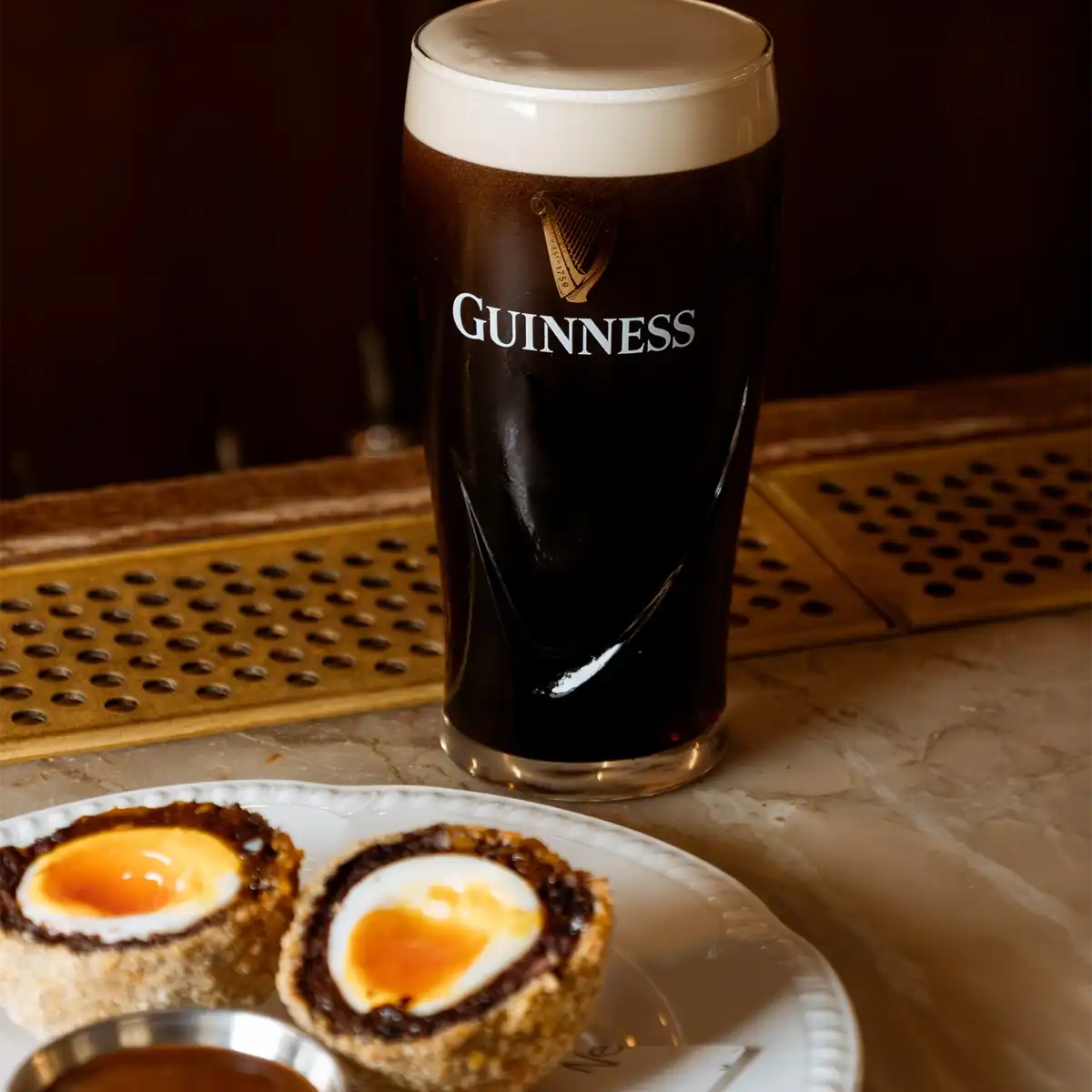
As the day progresses, the menu shifts towards a grazing format that encourages guests to order several plates each. Snacks such as BBQ-spiced crisps and cheese-and-onion croquettes serve as natural accompaniments to cocktails, with high margins and relatively low kitchen labour. The croquettes, with grape mustard mayonnaise for acidity, have drawn particular praise from reviewers and social media users, helping to fix Nessa in the broader London restaurant conversation.
Small plates carry much of the creative weight. The celeriac carbonara has become a cult item: ribbons of celeriac stand in for pasta, enriched with pancetta, truffle, a confit egg yolk and Spenwood cheese. The dish satisfies diners seeking lower-carb or more vegetable-led choices without sacrificing the indulgent feel of a classic carbonara. Steak tartare with beef-fat-charred sourdough demonstrates the low-waste philosophy and emphasises savoury depth over novelty.
Larger plates cater for those who prefer a conventional starter-main structure. Grass-fed Irish sirloin, priced at around £45 for 300g, serves as the menu's price anchor, positioning Nessa alongside premium steakhouses in the area. Seabass pot-au-feu, with roast turnips and a butter-rich sauce, offers a lighter, technique-driven option; flat-iron chicken with garlic mushrooms and sage-and-onion garnishes draws on Sunday roast flavours in a more compact format.
For theatre-goers, the pre-theatre menu at Soho's "Nessa Express" is crucial. Available early evening on weekdays, it offers two courses for £28 or three for £35, with dishes chosen for speed and reliability. Soups, salads and straightforward mains reduce pressure on the kitchen while encouraging guests who need to make a curtain at 19:30. In a market where time-poor diners might otherwise default to chains, this provides a competitive edge.
Desserts continue the theme of reworked nostalgia. The "Viennessa" layers sponge, ice cream, chocolate sauce and Chantilly cream, explicitly referencing the supermarket Viennetta of the 1990s. Ginger cake with caramelised milk ice cream elevates a familiar teatime bake into something more restaurant-appropriate. Prices for sweets typically range from £9 to £12, reinforcing a mid-to-upper bracket positioning without tipping into special-occasion-only territory.
Fun fact: Regular guests have been known to book solely because of the celeriac carbonara, which has developed something close to cult status on social media.
Across the board, menu pricing for 2024/2025 places snacks roughly between £3.50 and £10.50, starters around £12 to £18, mains from the mid-£20s up to the mid-£40s, and sides in the £5 to £7 range, with prix-fixe options providing value for early diners.
Cocktails, Wine And Bar Culture At Nessa Soho
The bar at Nessa is central to both revenue and identity. Rather than acting as a holding pen for diners waiting on tables, it is framed as a destination for cocktails in Soho in its own right. Under Bar Manager Christophe Demoulin Blachas, the list mirrors the kitchen's approach: seasonal, visually expressive and grounded in a broadly British and European palette.
Signature cocktails, typically around £14, lean heavily into the Vanessa Bell narrative. "Abstract 19", inspired by her painting, mixes East London vodka with Aperol, Melonade and strawberry, and is presented in hand-made ceramic cups crafted by staff. "Boho Negroni", with East London gin, nectarine, Mancino Ambrato and saffron, anchors a recurring Negroni Lounge event series supported by Campari. "Cuppa G&T" riffs on the British affection for tea and gin, folding Cotswolds gin, Italicus, rose, cherry and blood orange tonic into a serve that feels familiar yet distinctive.
The bar takes non-alcoholic drinks seriously, reflecting wider changes in drinking culture. Complex "no-lo" serves premium botanical spirits such as Pentire and Everleaf, with ingredients like coriander, raspberry and pineapple creating layered profiles rather than simplistic fruit juices. Price points around £9 to £11 position these drinks as considered choices rather than afterthoughts for designated drivers.
The wine list is European-focused but makes room for English producers, especially in the sparkling section. Entry-level bottles sit in the high-£30s, with a concentration of options between £50 and £80 covering popular appellations such as Sancerre and Chianti Classico. Prestige cuvées, including producers like Ruinart and serious white Burgundies, top out at roughly £200. English sparkling wines from estates such as Nyetimber and Highweald are placed prominently, aligning with the group's emphasis on British sourcing.
Beer and lager avoid global mass brands in favour of London producers. Forest Road Brewing offers a "Posh Lager" and a session IPA; Lucky Saint offers a 0.5% option for drinkers seeking low-alcohol choices that still carry flavour. This focus reinforces Nessa's positioning as a modern, quality-driven venue rather than a generic bar.
Design Atmosphere And Guest Experience
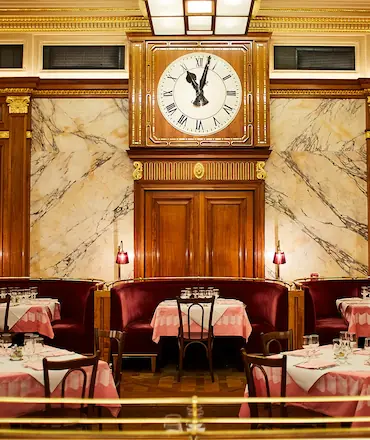
Internally, Nessa balances the grandeur of its Neo-Baroque shell with a softer, mid-century-inflected fit-out. Materials such as marble, oak and brass signal longevity and investment. Velvet banquettes in deep, jewel-like colours nod to Bloomsbury bohemia and help absorb noise, making long conversations more comfortable.
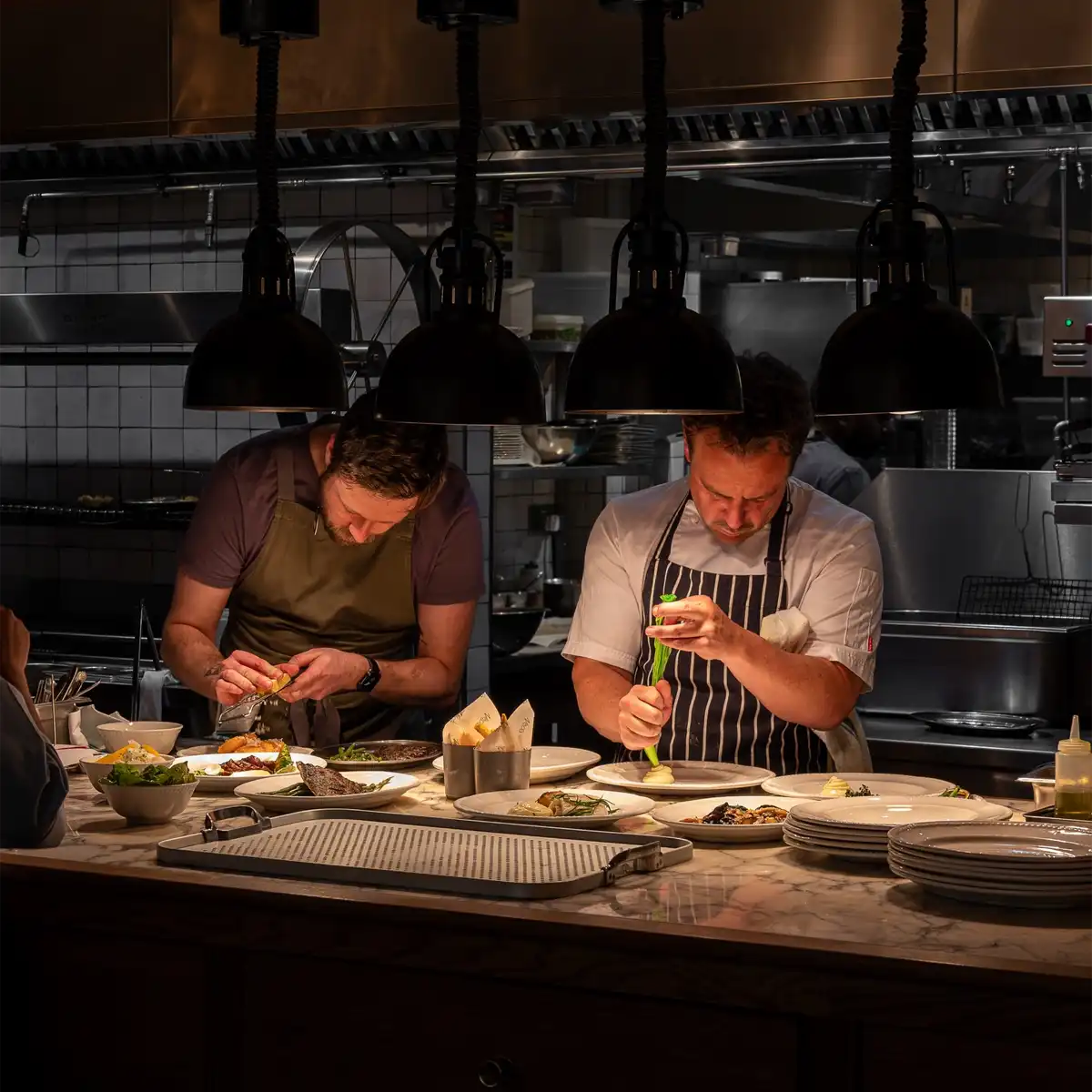
Large corner windows deliver abundant natural light during the day, which is vital for breakfast and lunch trade as well as for the perception of openness from street level. In the evening, lighting is lowered to create a more intimate environment. The open kitchen provides visual theatre, encouraging trust in the cooking and adding a sense of movement to the room.
The horseshoe bar is the key organising feature. It breaks up the 98-cover dining space into manageable zones, enabling guests at the bar, couples on banquettes and larger groups on tables to coexist without overwhelming one another. Staff movement is choreographed around this structure, which supports both efficient service and a feeling of constant but controlled energy.
Accessibility has been carefully considered. Unlike some older Soho venues with cramped staircases and awkward split levels, Nessa offers step-free entry, wheelchair-friendly seating areas and an accessible toilet. These elements widen the potential guest base and align with broader expectations for inclusive design in the London hospitality sector. Reliable Wi-Fi, often taken for granted, is explicitly part of the offer, helping the venue function as a flexible workspace outside peak hours.
Operations Private Dining And Guest Policies
Nessa operates long hours: from 08:00 to midnight on weekdays, from 09:00 to midnight on Saturdays, and from 09:00 to late afternoon on Sundays. This schedule demands careful staff management and a service style capable of shifting tone from early-morning coffee and eggs to pre-theatre sprints and late-evening cocktails. The floor team must adapt quickly as the room's demographics and energy levels change throughout the day.
Reservations are handled via SevenRooms, giving the venue detailed data on guest preferences, visit history and spending patterns. This allows Nessa to deliver personalised touches, such as remembering favourite dishes or dietary requirements, and helps the management balance walk-ins against bookings in a market where spontaneity remains important.
Cancellation policies are designed to reduce the impact of no-shows, particularly for larger groups, where credit card details are typically required. At the same time, Nessa holds back a proportion of covers for walk-ins, understanding that Soho's street traffic and tourist flow can be valuable revenue streams.
Group dining is a significant part of the business model. For parties of nine or more, a feasting menu priced at around £60 per person is the norm, featuring sharing dishes such as roast neck of West Country lamb or chargrilled seabream. This simplifies kitchen logistics, reduces ticket-time pressure and secures a clear minimum spend per head.
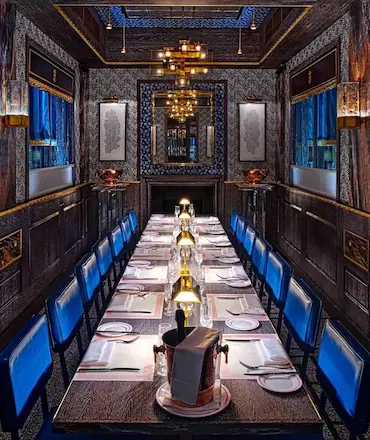
For more private occasions, the main restaurant can host semi-private groups of up to 14. Within the wider Maslow's portfolio, spaces such as the Lexington & Marshall rooms at 1 Warwick and the Loft & Gallery at Mortimer House extend capacity for sit-down meals or standing receptions, allowing the group to pitch for corporate events and larger celebrations.
Reputation Competition And Market Position
Since opening in March 2023, Nessa has attracted positive attention from critics and guides. Reviews have highlighted the combination of charm, credible cooking and a sense of fun, with multiple outlets picking out dishes such as cheese and onion croquettes, beef tartare and celeriac carbonara as standouts. Listing platforms have been quick to include it in round-ups of best British restaurants in London, which reinforces its visibility among search-led diners.
The restaurant's competitive set includes Dean Street Townhouse, Quo Vadis and 10 Greek Street, among others. Dean Street Townhouse offers clubby comfort and heritage dishes in a darker, more traditional setting; Quo Vadis leans on history, an established chef and a semi-private club structure; 10 Greek Street runs a tighter, wine-driven format with a frequently changing menu.
Nessa slots between these poles. It is less formal than Quo Vadis and more contemporary in its menu construction than Dean Street Townhouse, but more design-led and sizeable than 10 Greek Street. Its connection to 1 Warwick adds facilities and spaces that its immediate competitors do not, while the vegetable-forward creativity and sustainability messaging help it speak to a younger, more climate-conscious guest.
By combining accessible pricing bands with a few higher-ticket items, Nessa has created a mixed audience: local office workers, pre-theatre couples, tourists seeking an aesthetically pleasing dinner, and hospitality insiders drawn by the chef's reputation. This breadth improves resilience in a market that has seen significant cost pressures and closures.
Sustainability, Ethics And Staff Welfare
Sustainability is not marketed as a side project at Nessa; it is embedded in both building and operations. The 1 Warwick property targets a BREEAM "Excellent" rating, indicating significant investment in energy-efficient systems, responsible materials and modernised infrastructure within the constraints of a listed building.
In the kitchen and bar, low-waste practices are explicit. Offcuts and trimmings are repurposed; fruit peels become infusions; rendered fats enhance breads; filtered water systems like Bewtr reduce the need for bottled water; and partnerships with producers such as Necense Soda help limit single-use containers. This structure reduces the restaurant's environmental impact, but it also improves cost control in a high-inflation environment.
The group has policies around responsible procurement, focusing on animal welfare, labour standards and ethical lending. While such statements are increasingly common in hospitality, Nessa's operational details suggest meaningful implementation rather than purely marketing language.
Social sustainability is particularly visible in the restaurant's association with Beder, a charity dedicated to suicide prevention and mental health awareness, for which Chef Cenci serves as an ambassador. In an industry where long hours, pressure, and instability have historically damaged staff wellbeing, this connection signals that mental health is taken seriously at the leadership level.
Practical Information For Visiting Nessa Soho
Nessa is located at 86 Brewer Street, Soho, London, W1F 9UB. The nearest Underground stations are Piccadilly Circus on the Bakerloo and Piccadilly lines (around three minutes' walk), Oxford Circus on the Central, Victoria and Bakerloo lines (about five minutes), and Tottenham Court Road on the Elizabeth and Northern lines (around eight minutes). Numerous bus routes serve Regent Street and Shaftesbury Avenue, placing the venue firmly within the West End dining circuit.
The dining room seats approximately 98 guests, with additional capacity for private and semi-private events. Pricing for mains runs broadly from the high-teens into the mid-£40s, placing the restaurant in the ££, £££ bracket.
Why Nessa Soho Matters To The Future Of West End Dining
Nessa has moved beyond its "new opening" phase into something more stable: a restaurant that locals and visitors now treat as part of Soho's regular landscape. Its significance lies not only in its food and drink, but in the way it demonstrates a broader shift in how central London venues are conceived.
By combining a neighbourhood welcome with destination-level cooking, embedding sustainability into both building and menu, and linking a public bistro to a private members' house above, Nessa offers a template for mixed-use hospitality in dense urban environments. It respects the artistic heritage associated with its Bloomsbury inspiration and the history of its building, while operating with modern expectations of accessibility, ESG responsibility and flexible use of space.
As Soho continues to absorb pressure from rising rents, shifting tourism patterns and changing working habits, restaurants that can operate across multiple day-parts and appeal to varied audiences will be better placed to survive. Nessa's integration of art, sustainability, mental health advocacy and rigorous operations suggests one possible path for hospitality businesses seeking to stay relevant in the West End over the coming decade. It is, in effect, a case study in reconciling past and future in a single dining room.
Frequently Asked Questions About Nessa Soho
Does Nessa cater for gluten-free diners? Yes. Nessa offers a range of gluten-free dishes, marked clearly on the menu. Options have included items such as cheese-and-onion croquettes and slow-roasted lamb, and the team is trained to handle allergen information with care. Guests are encouraged to flag requirements when booking or on arrival so that the kitchen can advise.
Is Nessa suitable for business meetings? It is. Weekday breakfast from 08:00 and early lunch services are especially suited to informal meetings, with tables large enough for laptops or documents, reliable Wi-Fi and a sound level that allows conversation. The setting is more relaxed than a hotel dining room but more structured than a coffee shop, making it attractive for professionals in the area.
What is the Salon of the Unruly? Salon of the Unruly is an event series hosted at Nessa that brings together artists, DJs, drinks partners and sometimes masterclasses, often themed around cocktails such as the Negroni. It draws on the Bloomsbury-inspired idea of a salon as a space for creative exchange. It helps keep the bar programme culturally engaged.
Can I bring my dog to Nessa? Well-behaved dogs are generally welcome in the bar area. Space is at a premium in Soho, so it is advisable to mention that you are bringing a dog when booking, allowing staff to allocate a suitable table.
Is there a dress code at Nessa? The dress code is best described as smart-casual. Many diners choose to dress up for dinner, especially when pairing a meal with the theatre, but there is no formal requirement for jackets or ties. The emphasis is on comfort and enjoyment rather than strict formality.
Related reading: Pre-theatre dinner in Soho by West End theatre 2026, Book pre-theatre dinner in Soho before curtain.