You have done Soho once already. The first visit was Carnaby Street, a restaurant someone recommended, the obvious bars on a Friday night. It was good, but it was the version everyone gets. This time, the reward is in the quiet, and Soho's quiet side streets are where the neighbourhood keeps the parts a first visit never reaches.
These are the narrow lanes and Georgian terraces a step off the busy stretches, often a 2-minute walk from a crowd you can still hear but no longer feel. They carry more genuine history per metre than the marquee streets, and they are best explored slowly, on foot, with no fixed destination.
What follows is a return visitor's route through the calmer corners, with what is on each one and why it rewards the detour. Treat it as the second chapter of a place you thought you already knew.
Where to find Soho's quiet side streets
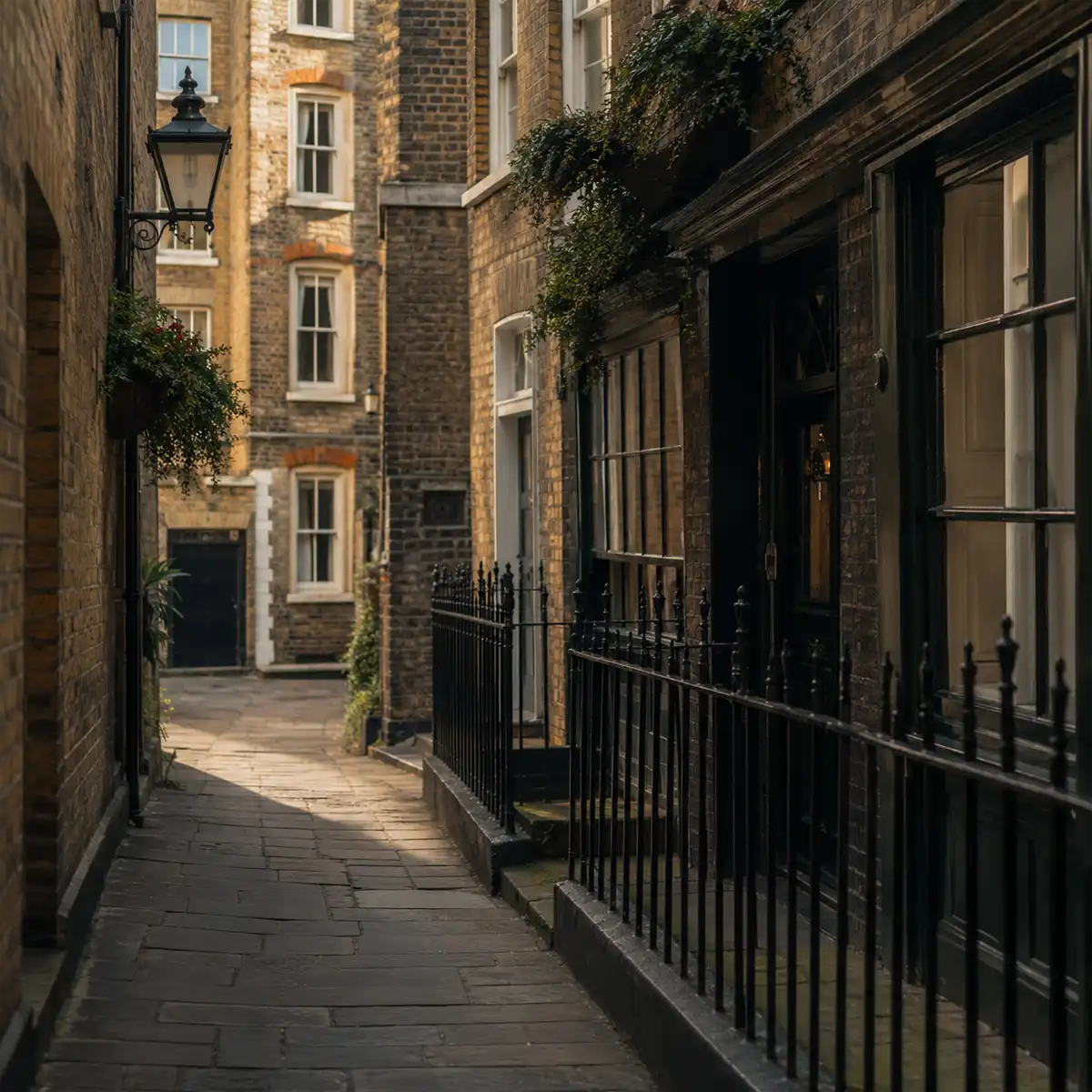
Soho's quietest streets sit a step off the busy stretches. St Anne's Court is a narrow alley between Dean Street and Wardour Street, D'Arblay Street runs from Poland Street to Wardour Street crossing Berwick Street, and Meard Street keeps a row of Georgian houses. All are minutes from the crowds.
You can walk the lot in an unhurried hour, which makes them the ideal slow afternoon after a first visit spent on the headline streets.
St Anne's Court and its musical history
St Anne's Court is the one to start with. A narrow pedestrian alley running between Dean Street and Wardour Street, it dates to the late 17th century and keeps a pronounced kink midway, a leftover from the field boundaries of the farmland Soho was built on. It is easy to walk past the entrance entirely.
It would also be a mistake to. From 1968 to 1981, number 17 housed Trident Studios, one of the most important recording rooms in British music history. The list of records made behind that unremarkable door is extraordinary, and standing in the alley with that knowledge changes how the whole quarter feels.
Fun fact: The Beatles recorded Hey Jude at Trident Studios on St Anne's Court, the narrow Soho alley where David Bowie also made The Rise and Fall of Ziggy Stardust and the Spiders from Mars.
D'Arblay Street and Lexington Street for slow Soho
D'Arblay Street runs from Poland Street to Wardour Street, crossed only by Berwick Street, and it is independent Soho at an everyday scale. Laid out in 1735 and named after the writer Frances Burney, it keeps a run of small cafés and specialist shops, with The George pub at number 1 trading on a site that has held a tavern since 1739.
A short walk south, Lexington Street offers the same low-key character with a candlelit wine-led room in Andrew Edmunds and an easy, unhurried pace. These are streets for browsing and a slow coffee rather than a fixed itinerary, and they are at their calmest on a weekday afternoon.
Meard Street and the Georgian corners
Meard Street is the architectural pause. A short, largely residential street, it preserves a terrace of early Georgian houses that survived the demolitions which reshaped much of Soho, and it gives a clear sense of what the 18th-century neighbourhood looked like before the bars and studios arrived.
Nearby, the older institutions reward a look, including the French House, the Dean Street pub that became a haven for the Free French during the Second World War. None of this needs a ticket. It needs only that you slow down and look up.
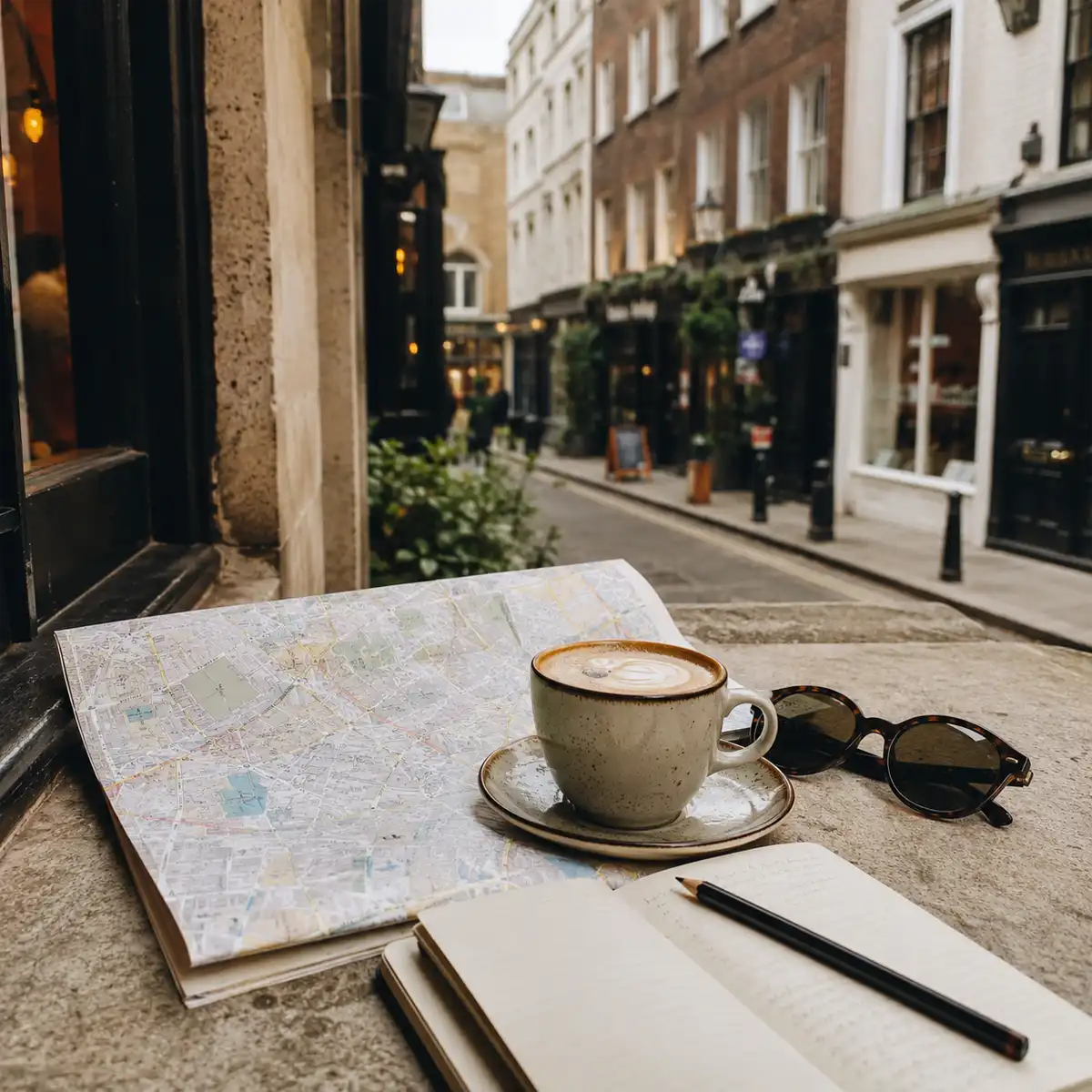
Planning a return visit that goes deeper
A second visit also means catching what has changed. Since a first trip, Soho has gained a strong run of 2026 restaurant openings, from Khao Bird on Brewer Street to the fire-led Alta and MOI, and the new COVEN venue is opening on Old Compton Street in June 2026. The quiet streets give you the calm between those busier stops.
Practically, this is a daytime or early-evening walk, when the lanes are at their most peaceful. The whole loop sits a short walk from Tottenham Court Road station on the Central, Northern and Elizabeth lines, with Oxford Circus serving the northern end near D'Arblay Street. Wear shoes you can walk in and leave the timetable at home.
Here is the plan for the day. Begin at St Anne's Court for the music history, cut through to D'Arblay Street and Lexington Street for slow browsing and a coffee, then finish among the Georgian houses of Meard Street before rejoining the busier streets for dinner. The pleasure of Soho's quiet side streets is that they reward the second visit far more than the first, the way a record you have played once gives up its best detail only on the third or fourth listen. Walk them slowly, look up often, and the neighbourhood you thought you had seen opens a quieter door.
how to get to Soho in the first place the Old Compton Street LGBTQ+ scene