When the London Stock Exchange’s September quarterly review takes effect at the start of trading on Monday 21 September 2026, easyJet and Ithaca Energy will formally join the FTSE 100. The changes were implemented at the close of business on Friday 18 September, following FTSE Russell’s confirmation of the rebalance.
Index reshuffles are routine housekeeping, but they arrive this year against an unusually eventful backdrop. The FTSE 100 passed 10,000 for the first time in its history in the opening days of 2026, after rising 21.5% in 2025 — its strongest calendar year since 2009. It has spent the late summer hovering near record highs, supported by resilient corporate earnings and improving expectations around Bank of England policy.
Beneath that steady headline, however, the market has been anything but calm.
A Market Defined by News Flow
Volatility across the index has increased through 2026, with sharp sector-level swings as investors react to shifting interest rate expectations, commodity moves and geopolitical headlines. The escalation between the United States and Iran, and the resulting disruption to Gulf energy exports, has fed directly into the FTSE’s heavy weighting in energy and mining names.
The effect has been to compress reaction times. Analysts have noted that today’s volatility is driven less by deterioration in company fundamentals than by speed: a constant stream of news flow that encourages frequent trading rather than long-term thinking. That, they caution, is a difficult environment for private investors to sustain.
It is also the context in which a particular style of market participation has drawn increasing attention — one positioned between the two familiar extremes.

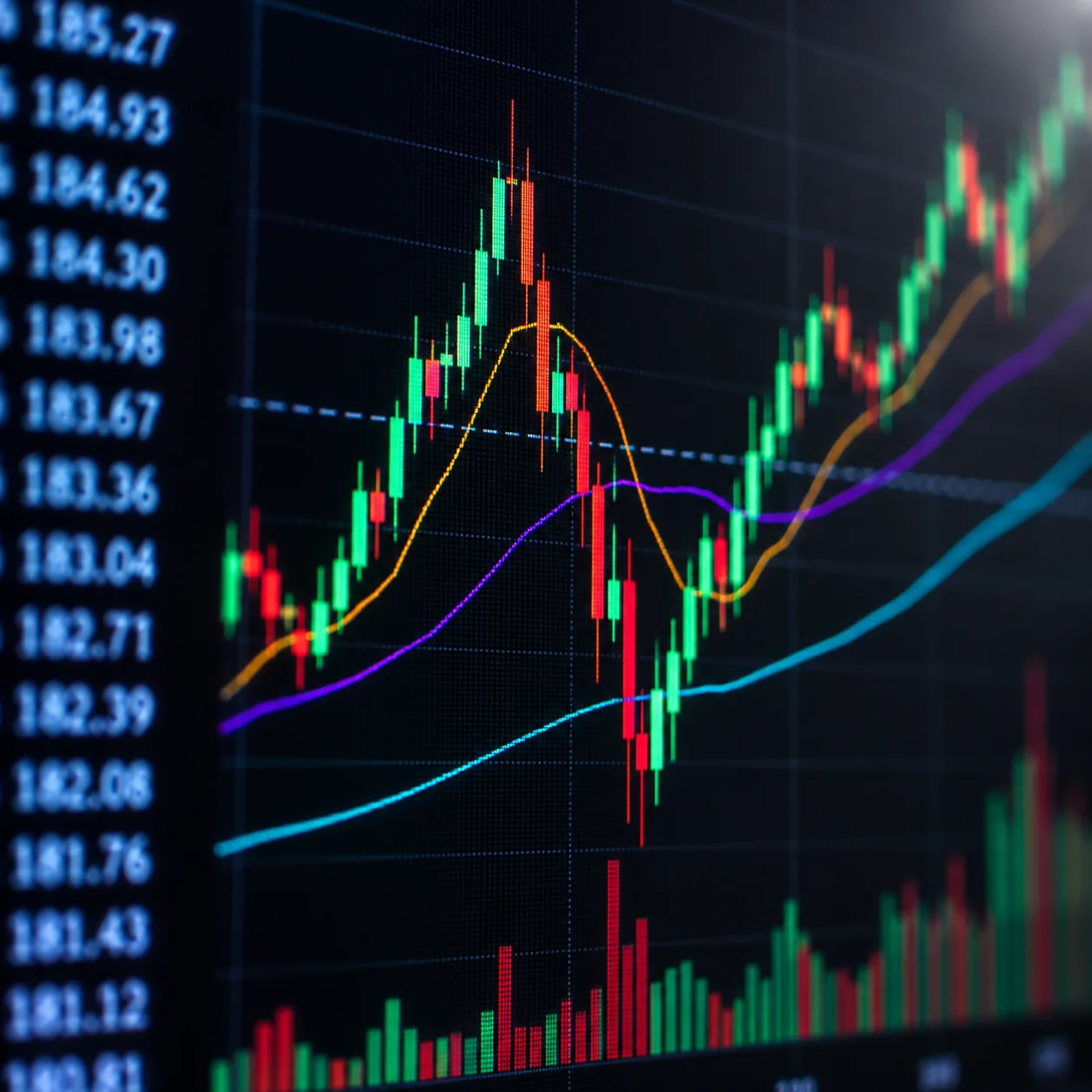
Where Medium-Term Positions Fit
At one end sits long-term investing: buying a stake in a business and holding it for years while it grows. At the other sits intraday activity, where positions are opened and closed within a single session and nothing is held overnight.
Between them, swing trading involves holding a position for several days to several weeks, with the aim of capturing one directional move rather than the minute-by-minute noise inside a session. Analysis is typically conducted on daily or four-hourly price data rather than one-minute charts, and decisions are usually made outside market hours.
The practical appeal is obvious in a city where most people are working during the trading day. For Soho’s freelancers, hospitality operators and creative businesses, continuous screen monitoring is not an option, and an approach that requires reviewing positions once a day rather than constantly fits around a working week.
That convenience, however, carries a specific and often understated cost.
The Overnight Question
A position held beyond the close is exposed to everything that happens while the market is shut. Markets do not move continuously; they close, information arrives, and they reopen at whatever price reflects it. The resulting jump is known as a gap.
This matters because a stop-loss order does not protect against it. A stop instructs the broker to begin exiting once a level is reached, not to exit at that level. If a market reopens well beyond it, the exit occurs at the first available price.
Scheduled events make the risk partly knowable in advance. Company results, central bank decisions, OPEC meetings and index rebalancing dates are all published, and any position held across one of them is a different proposition from the same position held during a quiet week. Weekends, when geopolitical developments have repeatedly moved energy markets during 2026, are the least controllable exposure of all.
Costs Run in Two Directions
The cost structure sits between the two extremes as well, and it is worth modelling properly before assessing whether any approach is viable.
Transaction costs are lower than for intraday activity, because there are fewer round trips. Someone taking four positions a month crosses the buy-sell spread eight times, against several hundred times for an active day trader. That is a materially lower hurdle for a strategy to clear.
Financing costs, however, move the other way. Leveraged positions held beyond the session typically incur an overnight charge, and that charge accrues for every night a position remains open. Hold something for three weeks and financing can exceed transaction costs several times over.
What the Reshuffle Illustrates
The September index changes are a useful example of how scheduled events interact with market behaviour. Constituent changes force tracker funds to adjust holdings, which can produce identifiable flows around the implementation date. Travel and energy names, both represented in this quarter’s changes, sit in sectors already responding to fuel costs and geopolitical developments.
None of this constitutes a prediction. It illustrates the more general point that the calendar is public information, and that knowing which events a position will be exposed to is a basic part of managing it.
Risk and Regulation
Firms offering leveraged products to retail clients in the UK must be authorised by the Financial Conduct Authority, which imposes leverage caps, requires negative balance protection so that losses cannot exceed deposits, and mandates disclosure in promotions.
Those disclosures are consistent and worth reading. Across regulated providers, the published proportion of retail accounts losing money on these products generally sits between 68% and 80%. The FCA register is public and searchable, and verifying a provider on it takes minutes.
Conclusion
The FTSE 100 enters the final quarter of 2026 near record levels, with a refreshed constituent list and a volatility profile shaped more by news flow than by company fundamentals. That combination has drawn more participants towards medium-term approaches that do not require constant attention.
The trade-off is not eliminated by holding positions for longer. It is relocated: from execution speed and transaction costs to overnight exposure and financing. Understanding which of those risks an approach actually carries is the distinction between a considered method and an assumption that has not yet been tested.