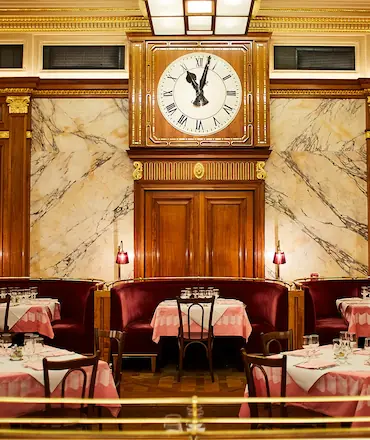
Soho has never been a jewellery district and has never pretended to be one. Hatton Garden owns that title, 20 minutes east. What Soho has always owned is the independent shop: the record dealer on Berwick Street, the tailor off Brewer Street, the tiny goldsmith working above a doorway near Soho Square who takes commissions by appointment and advertises nowhere.
Those businesses share a modern problem with every small retailer in W1. They compete against national chains whose websites are better funded than their entire operation. For independent jewellers in particular, that gap has been widening for a decade, and over the past 2 years it has started to close for a reason almost nobody outside the trade has noticed. The software that lets a shop sell certificated diamonds online stopped costing more than the shop earns in a year.
Why Independent Jewellers Lost the Online Decade
Independent jewellers lost ground online for a structural reason rather than a competitive one. Selling diamonds on a website requires a live, searchable, priced inventory, and building one was a software project priced far beyond an independent's reach.
The numbers explain the whole story. Agencies routinely quoted between £15,000 and £40,000 simply to connect a wholesale diamond marketplace to a retail website. Building a full catalogue from first principles has been costed at around £50,000 across 18 months. For a shop with 4 or 5 staff and a lease in central London, that was never a rational spend.
So the independents did the sensible thing and stayed offline, publishing a brochure site with a contact form and 30 photographs. Meanwhile the funded national brands built the catalogues and captured the search traffic. The loss had nothing to do with product knowledge, which the independents generally had in far greater depth. It was a budget outcome dressed up as a market outcome.
What Changed for Small Retailers in the Past Two Years
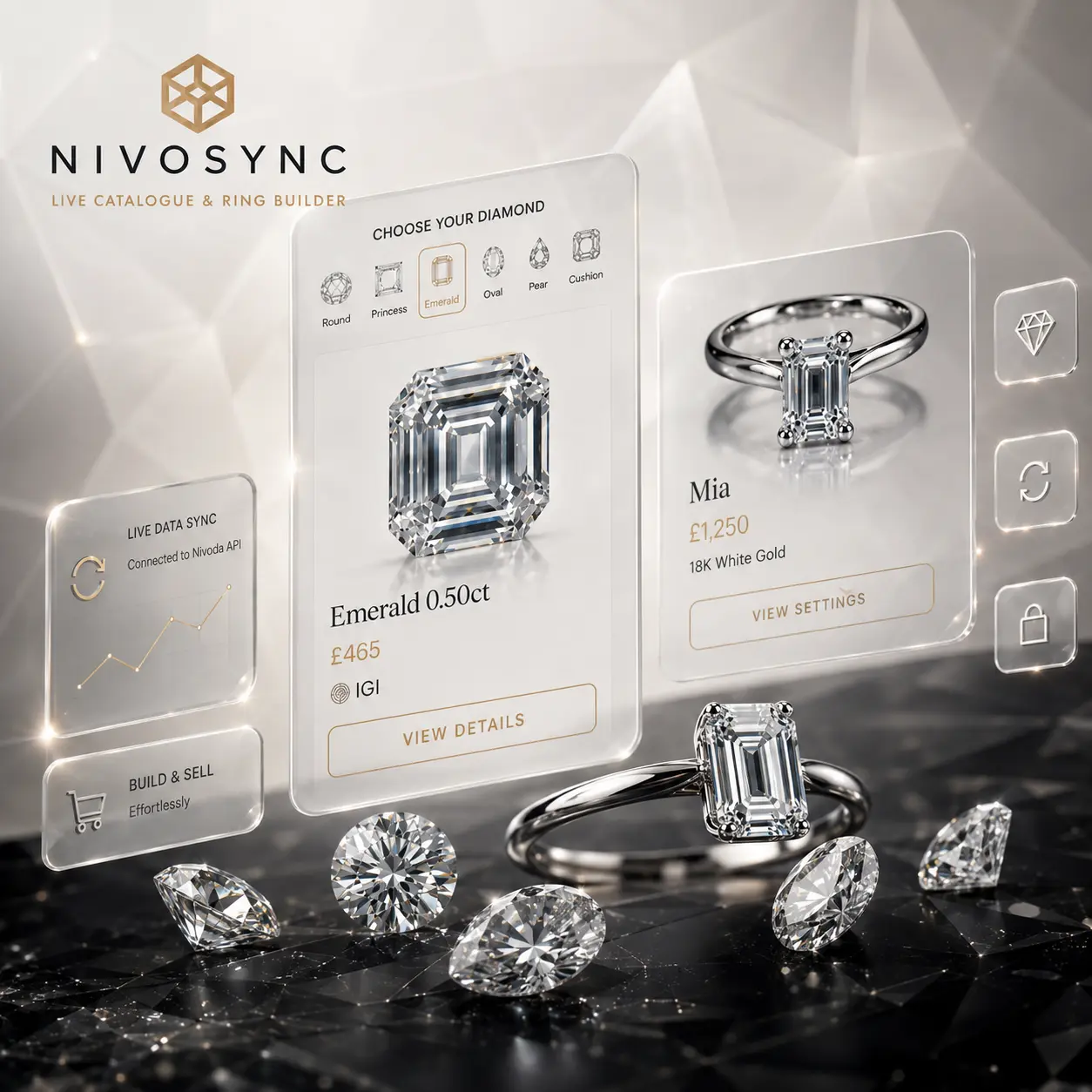
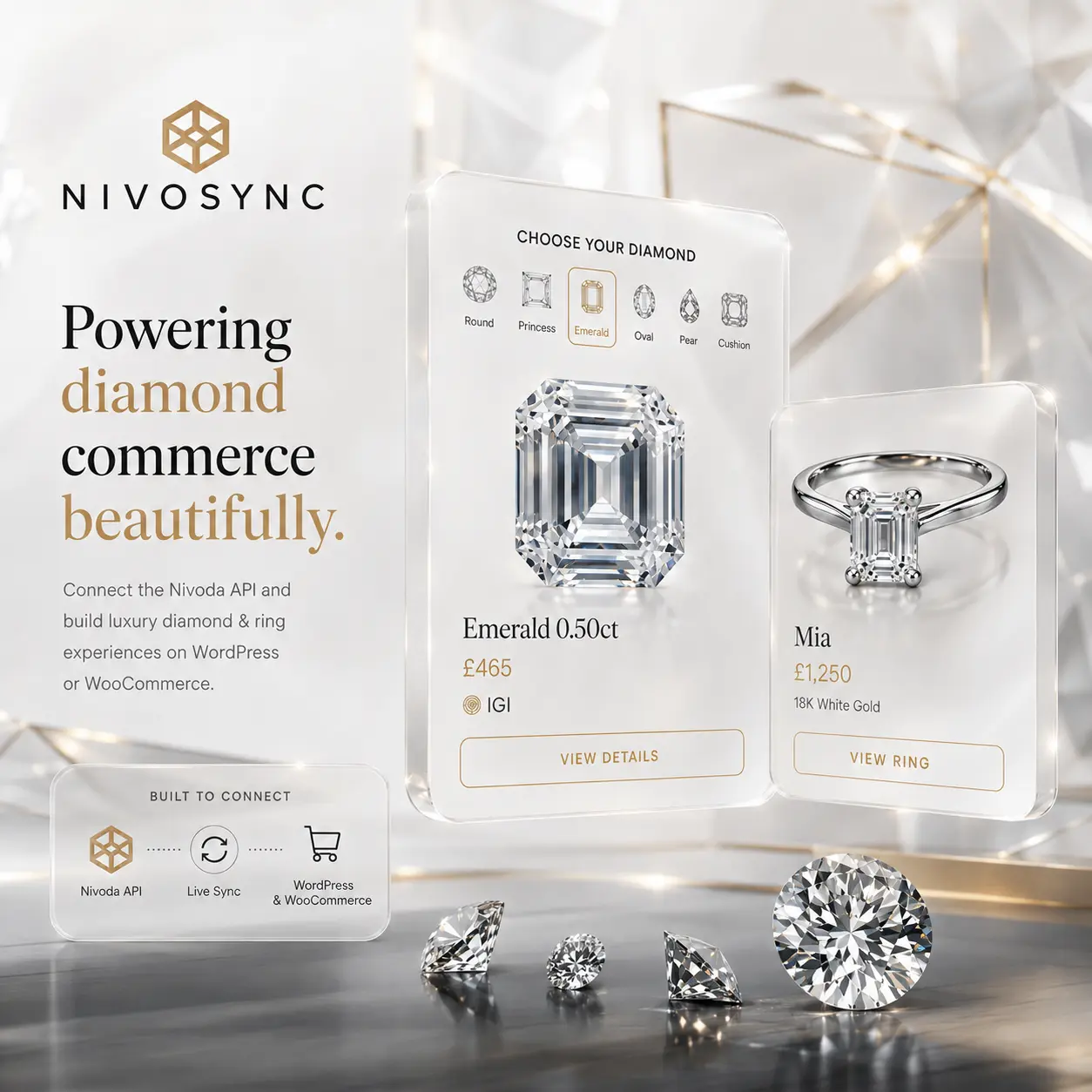
What changed is that the catalogue became a licensed product rather than a bespoke commission. A wholesale marketplace such as Nivoda aggregates stock from independent suppliers in India, Belgium, Israel and Hong Kong, and packaged plugin software now handles the connection, the caching, the pricing rules and the checkout as a single installation.
The practical effect is that a small jeweller can publish a searchable inventory of certificated diamonds on their own domain in an afternoon, priced with their own margin, for an annual licence in the hundreds rather than a capital project in the tens of thousands. The tools to connect a Nivoda account to a WordPress storefront are now bought rather than built, which is the entire reason this is happening now and did not happen in 2019.
None of this requires the retailer to hold stock. The stone is ordered from the supplier only once a customer has committed, so the shop takes no inventory risk. That matters enormously for a business paying central London rent, because it means the online range expands without the working capital expanding alongside it.
How This Fits the Soho Retail Model
Soho's independents have always run a version of this model without calling it that. The record shop orders a rare pressing on request. The tailor holds cloth books rather than 400 finished suits. Selling on demand from a deep catalogue is not a new idea in W1, it is simply arriving in fine jewellery about 15 years later than in music and menswear.
The district's retail culture suits it for a second reason. Soho shopping has always been discovery-led rather than destination-led, with buyers wandering in from Carnaby Street or Berwick Street rather than travelling specifically to buy. A shop that can show a walk-in customer a filterable catalogue on a tablet converts curiosity into a considered purchase without needing the stone to be in the safe that afternoon.
It also plays to a preference Soho buyers already have. Anyone who has read our look at the independent shops hiding beyond the Carnaby crowd will recognise the pattern. Customers come to this part of town specifically to avoid the chains, and they will reward a small business that offers chain-level range with independent-level advice.
Fun fact: Berwick Street's market has traded continuously since 1778, making it one of the oldest surviving street markets in London's West End.
What an Independent Can Offer That a National Chain Cannot
Once inventory stops being a differentiator, the competition moves to ground where independents hold a genuine advantage. Every retailer running a marketplace-fed catalogue is showing broadly the same stones, so the stone itself can no longer be the reason to buy from one shop over another.
What remains is judgement and craft. Setting design, the decision about which mount suits a particular stone, the quality of the stone-setting itself, and the willingness to say that a customer should spend less rather than more. A national call centre cannot do any of that. A person who has been setting stones for 20 years can do all of it in a single appointment.
Aftercare is the second advantage and the more underrated one. Resizing, rhodium replating, setting checks at sensible intervals and insurance valuations are services an independent provides as a relationship rather than as a ticketed transaction. These are the reasons customers return, and they are precisely what a purely online competitor structurally cannot offer. Our comparison of choosing a specialist jeweller over the high street covers where those differences show up in practice.
What Buyers Should Ask a Small Jeweller Selling Online
Ask what happens to your stone between payment and delivery. This one question separates a properly connected catalogue from a periodically updated list, and it is the most useful thing a buyer can ask.
Diamonds above roughly half a carat are individually unique, which means the same physical stone can appear on several retailers' websites at once. A properly built system places an automatic hold on your specific stone with the supplier at checkout and releases it if you cancel. Without that, there is a genuine window in which your diamond is sold to somebody else and you receive an apologetic phone call.
Then confirm the ordinary things. Which laboratory graded the stone, GIA, IGI, HRD or GCAL, and verify the certificate number on that laboratory's own website rather than trusting the retailer's copy. Whether the quoted price covers the loose stone alone or includes the setting and VAT. Whether you can view the stone before final payment, and at whose cost if you decline it. Whether the finished ring will carry a UK Assay Office hallmark, which is a legal requirement above the statutory weight thresholds.
Establish your return position in writing before paying a deposit. The Consumer Rights Act 2015 covers faulty or misdescribed goods in every case. The 14-day cooling-off period for online purchases, however, generally does not apply to a ring made to your specification, and a sourced stone set into a chosen mount is usually treated as bespoke.
Where This Leaves the Independent Shop
The honest position is that this levels one field and leaves the harder work untouched. A small jeweller can now match a national brand on range, which was impossible 3 years ago. They still have to be found, and a catalogue nobody visits is an expensive internal tool rather than a shop window.
The retailers making it work treat the catalogue as the front door to a consultation rather than as a replacement for one. They invest in photography of their own settings, because that is the only part of the listing a competitor cannot replicate. They pair the catalogue with a guided ring configurator so a browser has a route to a decision. And they keep publishing, because a website with 12 pages does not compete with one that has 400 regardless of how good the inventory is. The technical side of that build is set out in our partner analysis of connecting wholesale diamond inventory to a WordPress store.
For anyone buying rather than selling, the takeaway is simpler and more useful. The small shop with the unremarkable website may now be showing you exactly the same stones as the brand spending millions on advertising, at a similar or better price, with somebody behind the counter who can actually explain the difference between two certificates. That is a genuinely good outcome, and it is worth walking a few streets off the main drag to find it. Soho's independent jewellers have spent a decade at a disadvantage that was never about competence. That disadvantage is now largely a software licence, and software licences are affordable.